Get Full Government Meeting Transcripts, Videos, & Alerts Forever!
Get email alerts on the State Budget Licensing Boards topic
No spam. Unsubscribe anytime.
Ways and Means subcommittee advances SB 5524 budgets for health licensing boards after debate over large reserves
Summary
The Education Subcommittee on Ways and Means approved Legislative Fiscal Office recommendations on Senate Bill 5524 and a dash‑2 amendment to fund six health-related licensing boards, after members questioned differing reserve levels and a planned veterinary fee increase.
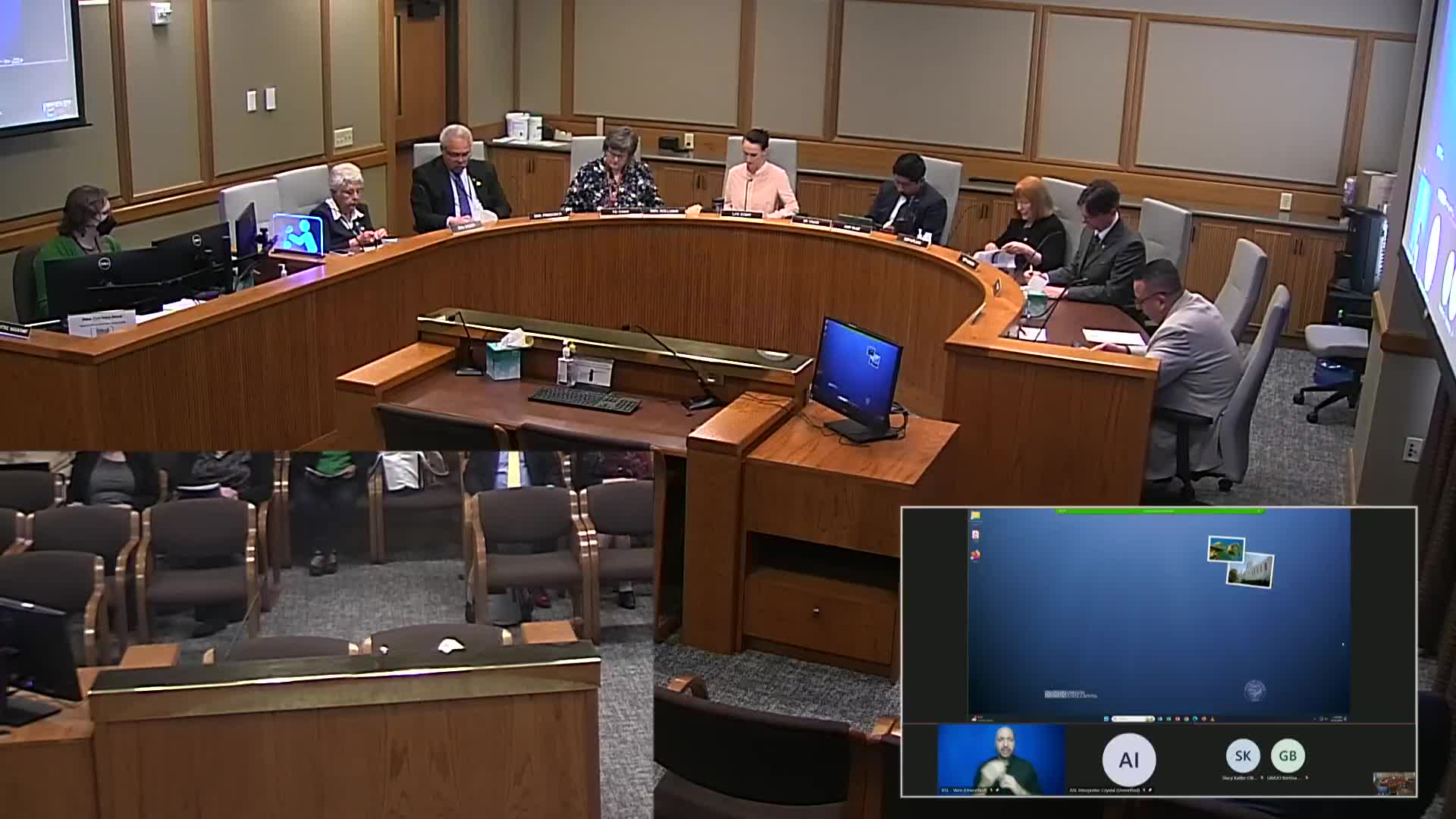
The Education Subcommittee for Ways and Means on May 14 approved the Legislative Fiscal Office recommendation on Senate Bill 5524, the budget bill covering six state health‑related licensing boards, and adopted a dash‑2 amendment before moving the measure to the full Ways and Means committee with a due‑pass recommendation.
The motion to move SB 5524 as amended passed after discussion; Representative Juncker said he would vote no, stating, “I’m gonna vote no because I don't think the budget is right, with having so much reserve.” The committee otherwise had no recorded objections when the chair asked for them and the motion carried.
The bill, as presented by Legislative Fiscal Office staff, sets recommended budgets and other‑funds expenditure limits for the Oregon Mortuary and Cemetery Board; the Oregon Board of Naturopathic Medicine; the Occupational Therapy Licensing Board; the Board of Medical Imaging; the Board of Examiners for Speech‑Language Pathology and Audiology; and the Oregon Veterinary Medical Examining Board. The LFO summary shows differences across boards driven largely by license‑fee revenues, renewal cycles and one‑time civil penalty collections.
Key LFO figures in the presentation: the Mortuary and Cemetery Board recommended budget is $3,555,245 (7 FTE), a 10.6% increase and a projected ending balance of roughly 15 months of operating funds. The Board of Naturopathic Medicine was recommended at $1,176,829 (3 FTE), a 1.4% decrease with an ending balance of just over five months and an LFO note that the board requires a six‑month reserve, implying an expected fee increase in 2026. The Occupational Therapy Licensing Board recommendation is $797,539 (1.05 FTE), a 5.5% increase and an 11.4‑month projected balance. The Board of Medical Imaging is recommended at $1,828,620 (4 FTE), a 12.6% increase and a projected reserve of about 30 months; the LFO package reclassified a part‑time investigator to full time. The Board of Examiners for Speech‑Language Pathology and Audiology is recommended at $1,332,798 (3 FTE) with a roughly 30‑month reserve. The Oregon Veterinary Medical Examining Board is recommended at $1,940,027 (5 FTE), an 11.8% increase and a projected ending balance of just over eight months; the LFO package includes a revenue‑only policy option to raise licensing fees by 50%, estimated to produce about $600,000 in the 2025–27 biennium and a current‑biennium adjustment of $31,500 due to rising case costs.
Committee members pressed LFO and agency representatives on why reserves vary so widely between boards. LFO staff and agency witnesses explained that boards are fee funded (licenses, renewals, examinations and some civil penalty revenue), that renewal cycles (biennial renewals, large out‑of‑state licensee pools) can require larger operating cushions, and that some boards accumulated reserves after recent fee increases or penalty collections. Erin Hague, executive director of the Board of Examiners for Speech‑Language Pathology and Audiology, said boards “only renew our licenses every other year. So therefore, we need a larger balance at the end in order to make sure we can get through that.” She also said her board’s temporary staffing delays had contributed to a larger ending balance.
The committee also approved key performance measure (KPM) changes included in the package: LFO recommended deleting an SLP‑related KPM about continuing SLPA supervision in education settings and replacing it with two measures that report audit results of individual licensees and separately school districts and education service districts that employ SLPAs. For the veterinary board, LFO recommended creating a KPM to measure average business days to process a license once a complete application is received.
Formal actions recorded in the hearing included motions to adopt the LFO recommendation for SB 5524, adoption of the dash‑2 amendment (which added $31,500 other funds expenditure limitation for veterinary case costs and reflected 24 positions/23.5 FTE and a biennial total of $10,631,058 other funds for the package), and a motion to move the bill as amended to the full committee with a due‑pass recommendation. The transcript records Representative Juncker saying earlier he would vote no on the package because he opposed allowing boards to carry what he described as large reserves; the committee chair nonetheless reported the motions carried with no formal objections raised at the microphone when the question was put.
The subcommittee record shows LFO will continue to work with agencies and the Legislature on fee‑setting and reserve practices; members asked for more documentation or a “best practice” framework explaining appropriate operating‑reserve targets for different board types.
The bill now proceeds to the full Ways and Means committee for consideration.