Get Full Government Meeting Transcripts, Videos, & Alerts Forever!
Get email alerts on the Predevelopment Loans topic
No spam. Unsubscribe anytime.
Committee hears bill to expand predevelopment loans to unlock faith‑owned land for affordable housing
Summary
Lawmakers and housing advocates told the Senate Committee on Housing and Development that small tweaks to an existing Oregon predevelopment loan program (House Bill 29 64 a) would allow churches and small nonprofits to pay feasibility costs and convert surplus land into affordable housing.
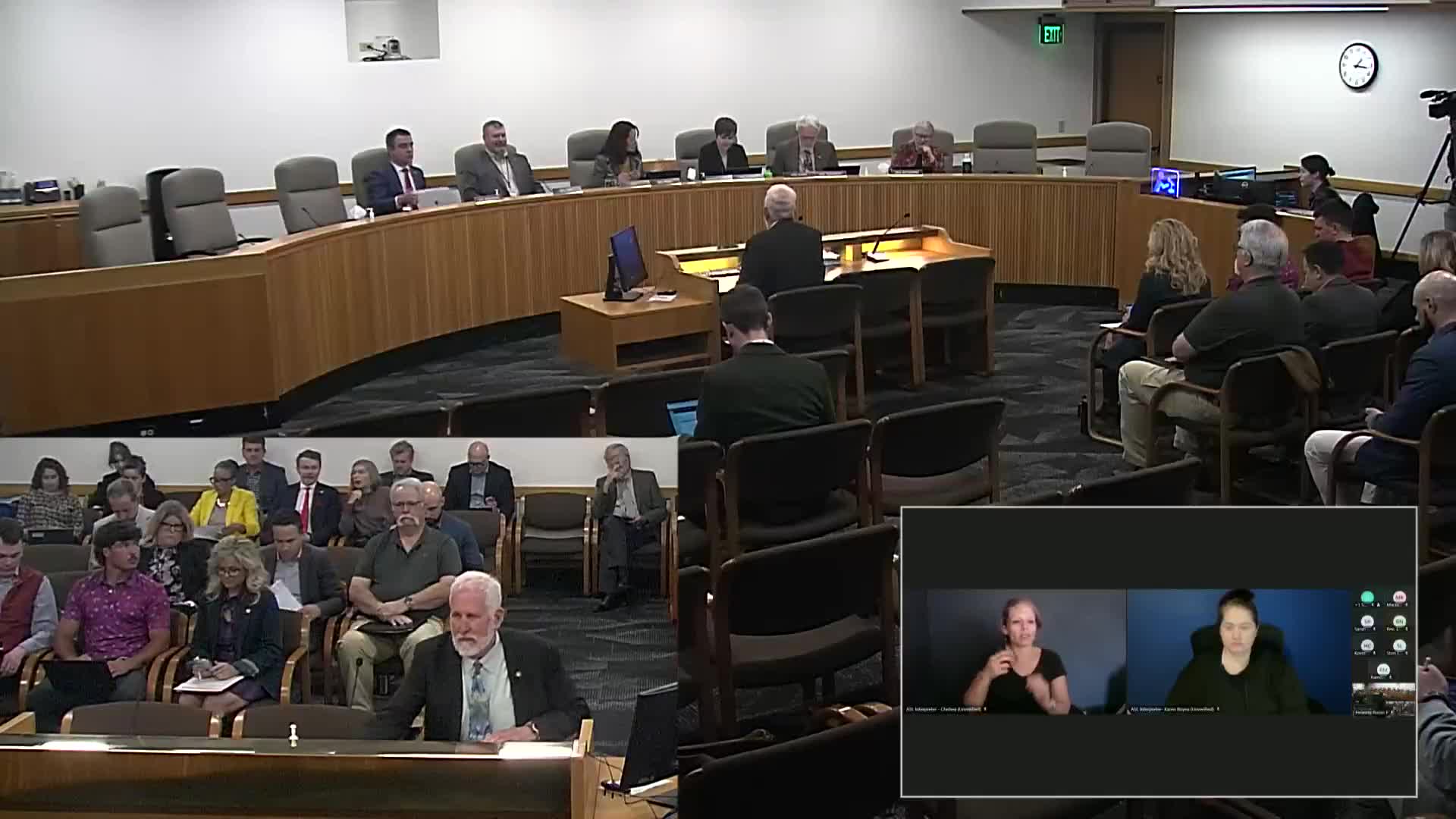
House Committee on Housing and Development Chair Pham opened a public hearing on Wednesday, May 14, 2025, on House Bill 29 64 a, a measure introduced by Representative Mark Gamboa that would expand an existing Oregon Housing and Community Services (OHCS) predevelopment loan program to more entities, including faith congregations and limited‑equity cooperatives.
The bill would allow OHCS additional flexibility to use a small pool of predevelopment funds that currently has no applicants, permit nonprofit developers to partner with faith organizations when applying for predevelopment loans, and make limited‑equity cooperatives an eligible use of the funds. Representative Mark Gamboa, state representative for House District 41, told the committee the bill’s “ultimate goal … is to allow us to access thousands of acres of land all across the state” that are in or near neighborhoods and suited for affordable housing.
Advocates said predevelopment financing covers feasibility costs — surveys, technical site evaluations, traffic studies and community engagement — that frequently block small or first‑time developers from moving projects forward. Tanisha Bridal, speaking for Oregon Housing and Community Services, told the committee that OHCS currently operates two predevelopment buckets, and that one of those buckets — project feasibility funds limited to culturally specific organizations and rural nonprofits — has about $600,000 and is temporarily closed “until repayment occurs.” Bridal said the typical project feasibility cap is roughly $50,000 and that OHCS is able to absorb any administrative changes needed to implement the bill.
Nonprofit and faith‑based witnesses described projects that HB 29 64 a would help. Dan Bryant, cofounder of Square 1 Villages, described Peace Village, a 70‑member limited‑equity cooperative built on church property in Eugene and the largest such co‑op in Oregon, and said congregations across the state have parcels that could be used for housing if feasibility costs were covered. Reverend Brett Pinder, who supports churches engaging underused land for housing, said the Oregon-Idaho United Methodist Annual Conference includes 153 churches, many with small congregations and underused land that faces the same upfront funding barriers.
Kevin Cronin, policy and advocacy director at Housing Oregon, said most organizations that have used OHCS predevelopment loans are nonprofit affordable‑housing developers and urged recapitalizing the fund so loans do not remain on hold while projects await repayment. Cronin said the bill would also expand eligibility to cover homeowners and homeownership models such as community land trusts and co‑ops.
Several witnesses gave concrete examples: Habitat for Humanity Portland Region described using $1 million in ARPA funding plus $300,000 from Meyer Memorial Trust to buy nearly 5 acres from a church and build 52 affordable homes; Reverend Julia Nielsen said faith communities alone have at least 184 acres ready to develop, valued at more than $104,000,000; and Farmworker Housing Development Corporation said predevelopment loans are typically low risk and repaid in four to five years when projects move to construction financing.
Witnesses and OHCS staff said some loans are forgivable if projects fail, and that the agency will continue internal processes to manage revolving funds. Multiple testifiers asked the Legislature to recapitalize the program to reduce waiting times between loan offerings.
The committee took testimony from roughly a dozen proponents across nonprofits, faith leaders and developers and closed the public hearing without taking a committee vote.
The bill record includes technical details from OHCS about how existing buckets were structured and how the requested changes would broaden eligibility rather than create entirely new spending.