Get Full Government Meeting Transcripts, Videos, & Alerts Forever!
Get email alerts on the Child Welfare topic
No spam. Unsubscribe anytime.
House approves bill to stop using black trash bags to move foster children’s belongings
Summary
Senate Bill 1016 directs the Department of Human Services to provide alternatives — such as clear plastic totes — for transporting foster children’s belongings and to report best practices; testimony on the floor described long-lasting trauma associated with black trash bags.
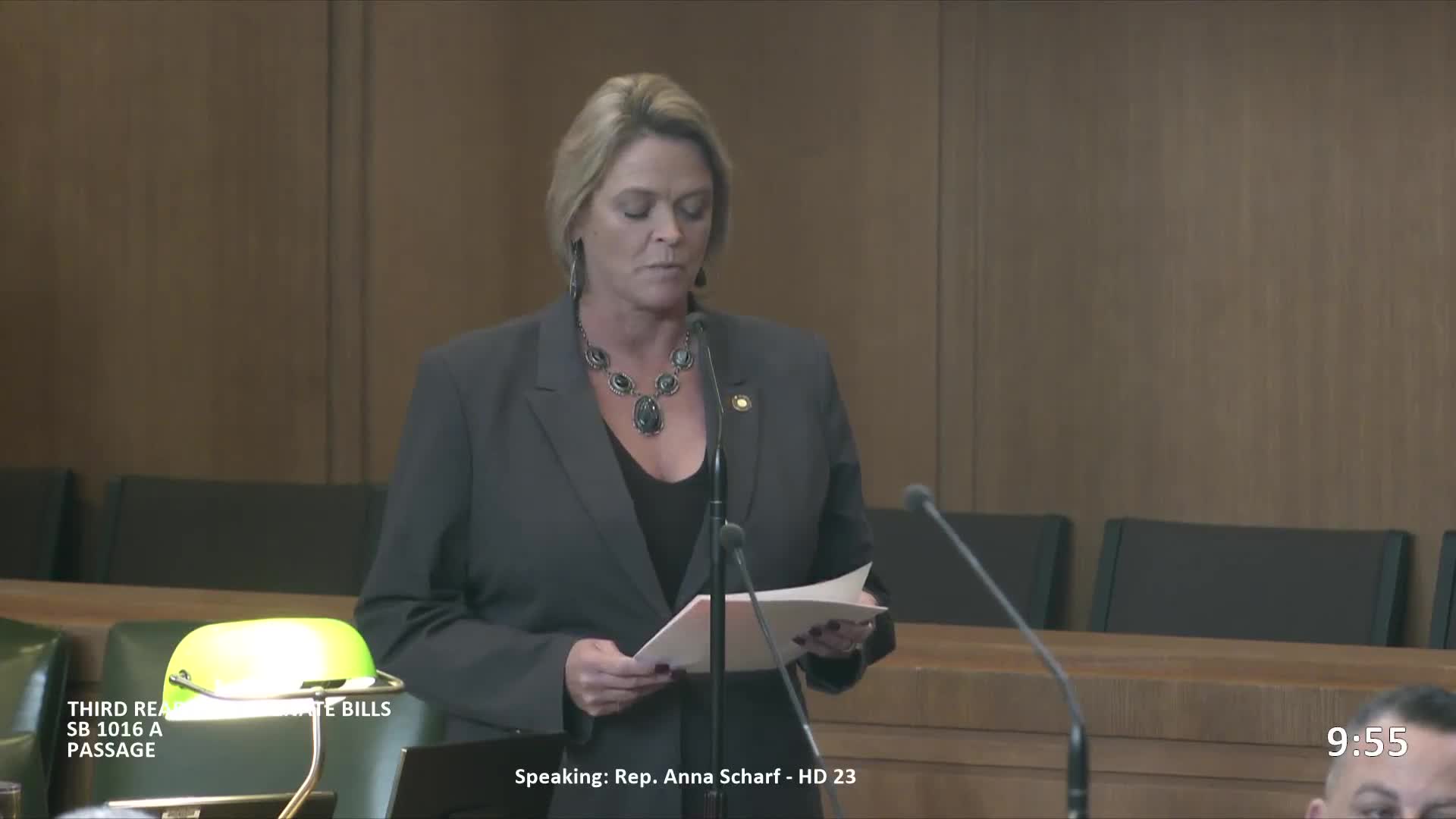
The Oregon House passed Senate Bill 1016, which directs the Department of Human Services to procure, distribute and maintain alternatives for transporting the personal belongings of children in foster care so items are not moved in black trash bags.
Representative Pam Sharp, the bill’s sponsor, told the chamber about Tina, a former foster youth who described being handed “a black plastic trash bag” at age 12 and the long‑term trauma it caused. Sharp quoted Tina: “I will never be able to get forget my first trash bag.” Sharp said clear plastic totes were developed as an alternative through work with advocates and the department and argued that “trash bags are for garbage. Plastic totes are for moving.”
The sponsor said the change grew from earlier legislation and implementation experience, noting the 2023 bill intended to stop trash‑bag transports but that practice persisted in some circumstances. The floor debate emphasized dignity, minimizing trauma, and reusing totes where sanitary to avoid needless waste. The House adopted the bill on third reading; the clerk declared it passed.