Get Full Government Meeting Transcripts, Videos, & Alerts Forever!
Get email alerts on the Tribal Jurisdiction topic
No spam. Unsubscribe anytime.
House approves process for tribes to seek retrocession of Public Law 280 jurisdiction
Summary
Senate Bill 1011 establishes a formal process for federally recognized tribes in Oregon to request retrocession — returning jurisdiction adopted under Public Law 280 back to the federal government and the tribe — and sets timelines for gubernatorial action and Interior Department petitioning.
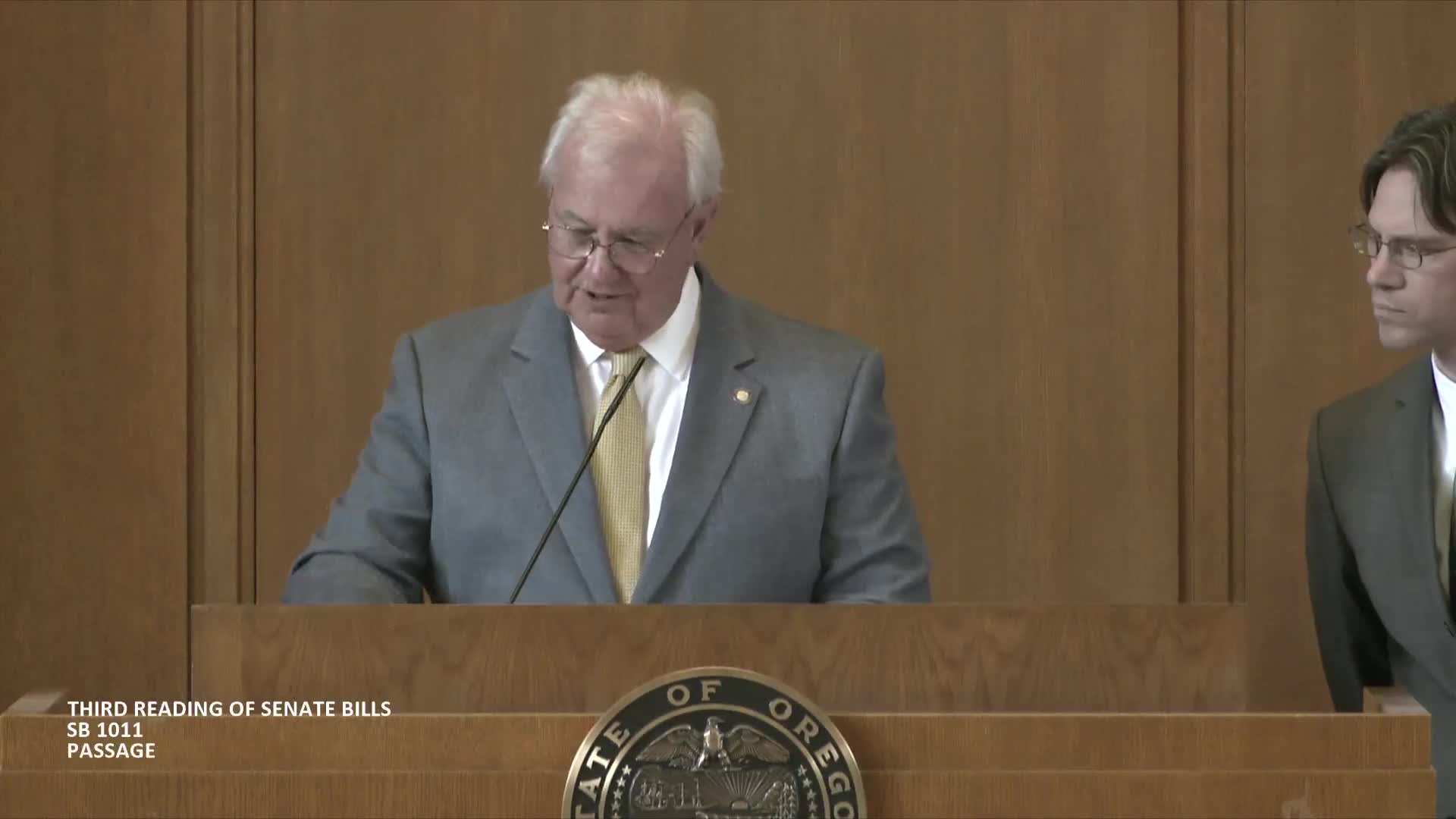
The Oregon House passed Senate Bill 1011, which creates a statutory process allowing federally recognized tribes to request retrocession of Public Law 280 jurisdiction in Oregon.
Representative Caleb Lewis, the bill’s sponsor, said the measure is “pretty straightforward” and stressed that the choice to seek retrocession belongs to the tribes and is voluntary. Lewis described retrocession as returning state jurisdiction granted under Public Law 280 back to the federal government and tribes.
Under the bill, a requesting tribe must submit a petition to the governor; the governor must acknowledge receipt within 10 days, convene a meeting with tribal representatives within 90 days, and accept or deny a request within 180 days. The timeframe may be extended by mutual agreement for up to an additional 180 days. If the governor accepts the request, the governor must petition the U.S. Secretary of the Interior for retrocession within 10 days; if the governor denies it, the denial and reasons must be communicated to the tribe.
Supporters noted the bill passed the Senate unanimously and emerged from the House committee with no recorded opposition. Representative Jasmine Sanchez and others voiced support, linking the measure to addressing longstanding jurisdictional issues affecting tribal safety and justice.