Get Full Government Meeting Transcripts, Videos, & Alerts Forever!
Get email alerts on the Honorary Resolutions topic
No spam. Unsubscribe anytime.
Senate unanimously adopts resolution honoring Lily Reynolds Parker
Summary
The Oregon Senate adopted House Concurrent Resolution 31 honoring Lily Reynolds Parker for decades of mentorship, civil-rights work and service to the University of Oregon community.
The Oregon State Senate on May 14 adopted House Concurrent Resolution 31 honoring the life and legacy of Lily Reynolds Parker, who died Aug. 22, 2024, and recognized her decades of work mentoring students and advancing racial justice.
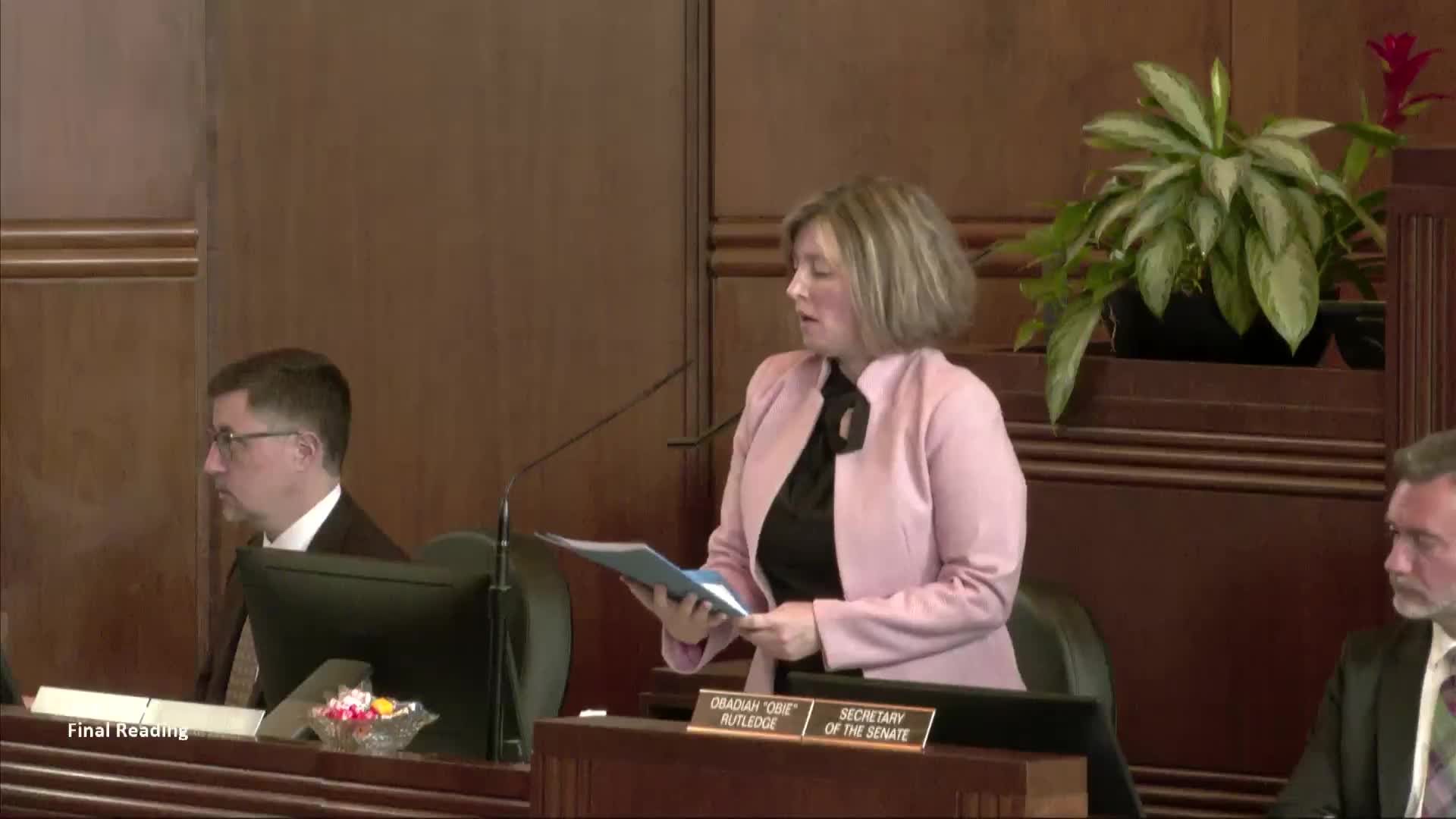
Senator Marty Manning Jr. presented the resolution on the Senate floor, saying the measure “honors the life and legacy of Lily Reynolds Parker, who lived from 1946 to 2024 and recognize[s] her outstanding contributions to the University of Oregon, the Eugene community, and people of this great state of Oregon.”
The resolution summarizes Parker’s life: she was born May 8, 1946, in Eugene; her family was among the city’s founding Black families; she served as a longtime student advisor at the University of Oregon from 1995 to 2012; and the university in 2019 named the Lily Reynolds Parker Black Cultural Center in her honor. Manning said the resolution notes that in 1991 Parker earned a bachelor’s degree in sociology with a minor in women’s studies and that she helped students navigate higher education.
Senate President Wagner closed the remarks after the roll call and described Parker as “a trailblazer,” saying her legacy included both “hacking your way through the bushes” and “leav[ing] paving stones behind.”
The clerk called the roll; the final tally was recorded as 30 ayes and the resolution was declared adopted. Family members and university representatives were present on the floor for the third reading and adoption.
The resolution is a ceremonial, commemorative measure recognizing Parker’s mentorship and community leadership; it does not create ongoing funding or policy obligations.