Get Full Government Meeting Transcripts, Videos, & Alerts Forever!
Get email alerts on the State Federal Relations Sovereignty topic
No spam. Unsubscribe anytime.
Lengthy debate on proposed 'Texas Sovereignty Act' and a permanent joint committee to challenge federal actions
Summary
A committee substitute to House Bill 796 would create a permanent 12‑member joint legislative committee to review federal actions, report findings, and—if adopted by resolution—allow Texas to refuse to implement actions it deems unconstitutional.
A committee substitute to House Bill 796, described by the sponsor as the "Texas Sovereignty Act," would establish a permanent joint legislative committee on constitutional enforcement to review federal actions that may affect Texas sovereignty and, where it finds a federal action unconstitutional, to forward concurrent resolutions for adoption by both chambers and notification to the governor and federal officials.
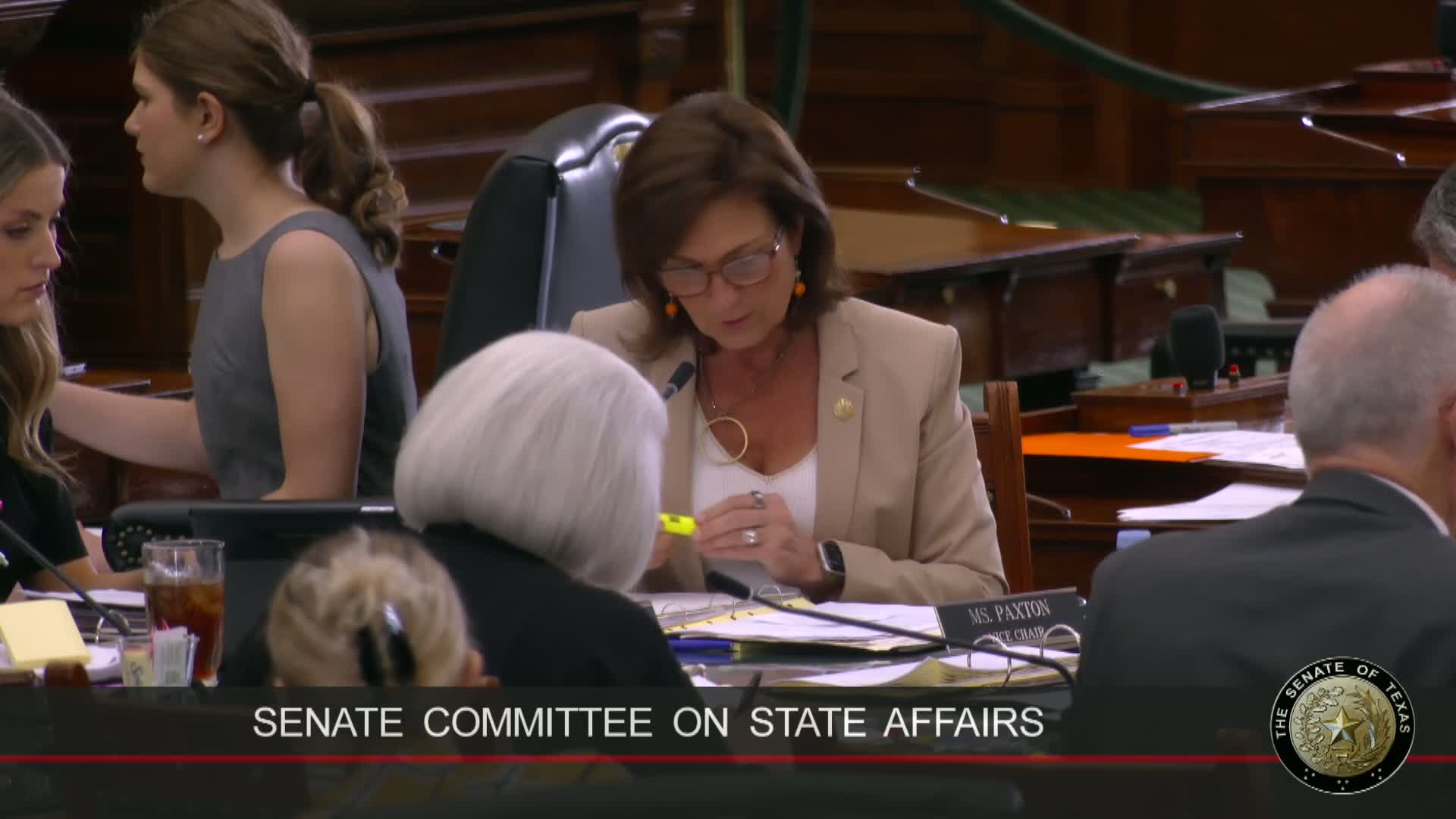
Senator Hall, who presented the committee substitute, described the joint committee as a 12‑member panel (six House members appointed by the speaker and six Senate members appointed by the lieutenant governor), with no more than four members from a single party on either chamber's appointments and joint chairs designated by each presiding officer. The substitute lays out a three‑stage process: committee findings reported in session, adoption by concurrent resolution in both chambers, and transmission to the governor; if the governor approves or does not object, the state would declare the federal action to be unconstitutional and direct that no public money or resources be used to implement or enforce it in Texas. The substitute also authorizes the Texas attorney general to seek legal remedies and for the Secretary of State to notify federal actors and the state's congressional delegation.
Senators questioned many structural elements: whether the committee's constitutional analysis would apply to the Constitution as amended (including post‑Civil War amendments); quorum provisions that might allow a majority from a single chamber to meet without adequate representation from the other chamber; the choice to require a supermajority (two‑thirds) to repeal an adopted concurrent resolution while allowing adoption by a simple majority; and whether the measure could place state courts, local officials, and other state actors in legally fraught positions by compelling determinations on federal constitutionality. Senator Birdwell pressed on the committee's interpretive frame that looks to "the plain reading and reasoning of the text of the United States Constitution and the understood definitions at the time of the framing and construction of the Constitution by our forefathers," noting that later amendments and historical developments post‑1789 would also have to be considered.
Public testimony included supporters who argued Texas must have structured tools to resist federal overreach and historical perspectives urging use of all legal means to defend state authority. Critics and some senators urged caution, preferring narrower approaches such as prior Senate Bill 707 or reliance on the attorney general's existing role. Several senators committed to work with the sponsor on clarifying language regarding the committee's scope, quorum mechanics, interaction with courts, and the vote threshold for rescission.
The committee received extended public testimony and engaged in a wide-ranging policy debate but took no final vote; the bill was left pending for further work and possible amendments.