Get AI Briefings, Transcripts & Alerts on Local & National Government Meetings — Forever.
Committee reviews utility wildfire and pole‑inspection bills; co‑ops and utilities seek clarified reporting rules
Loading...
Summary
Senators heard House Bills 144 and 145, measures aimed at improving pole inspection plans and wildfire mitigation planning for utilities. Electric co‑ops and municipal utilities supported required plans but urged limits on PUC jurisdiction and monthly report burdens; the bills would also allow self‑insurance in certain wildfire circumstances.
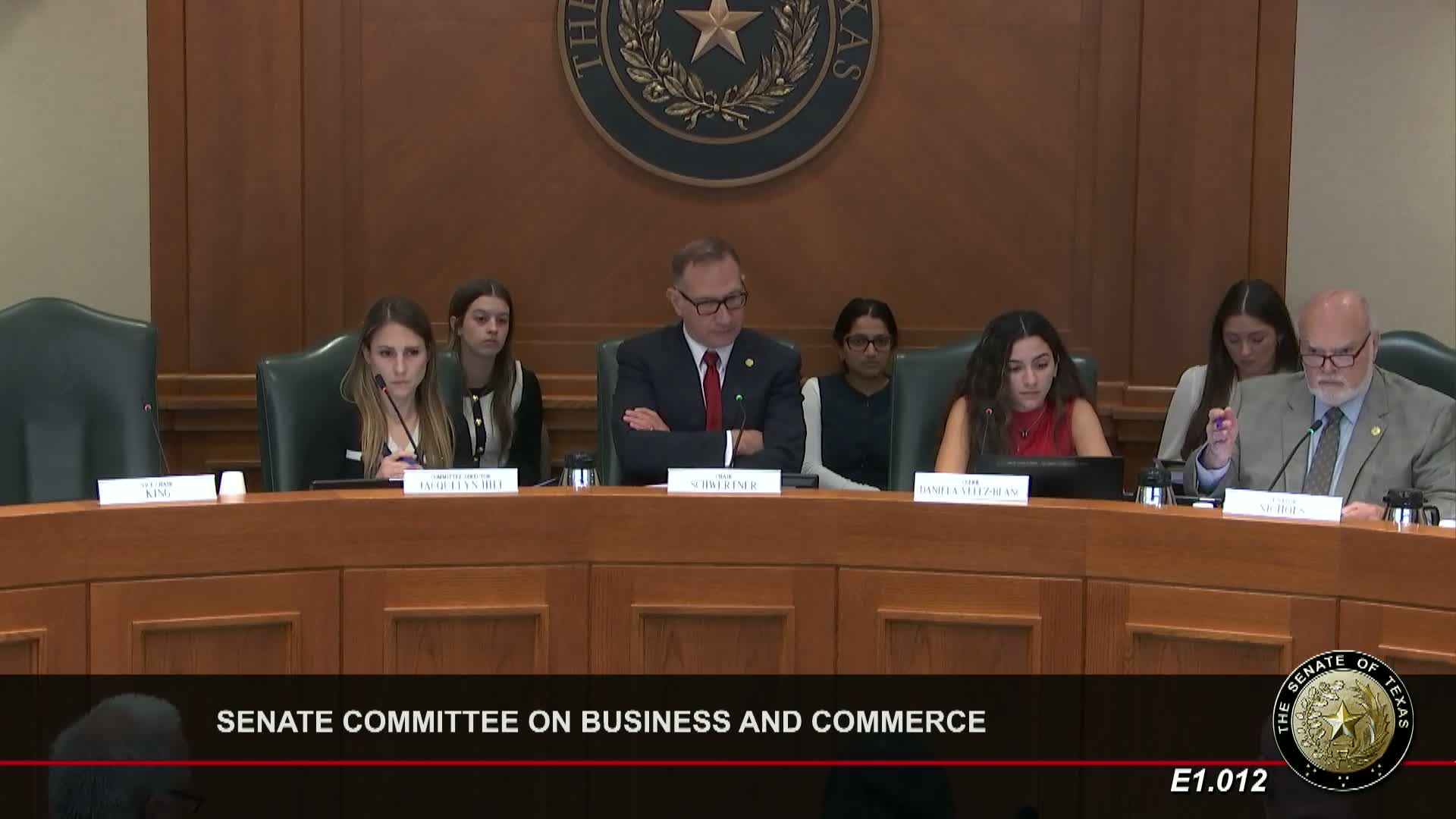
The committee examined two related utility measures meant to reduce wildfire risk and improve pole‑inspection transparency: House Bill 144, which would require utilities to file distribution pole inspection plans with the Public Utility Commission, and House Bill 145, which would require wildfire mitigation plans and permit utilities to self‑insure for wildfire losses under specified conditions.
Julia Harvey of Texas Electric Cooperatives told the committee that co‑ops support greater visibility and planning but warned the bill’s monthly reporting could impose burdens on rural utilities. "The volume of PUC reporting under the bill, the monthly reporting may pose a burden to our members… about 1,600 filings from co‑ops over the next two years," she said, and asked that the bill avoid financial penalties for missing a single filing.
Mark Bell of the Association of Electric Companies of Texas said utilities already run extensive pole‑inspection programs and urged the bill be tailored to focus on processes rather than repetitive activity reporting; he recommended quarterly rather than monthly updates to avoid administrative overhead. Taylor Kilroy of the Texas Public Power Association urged preserving local oversight for municipal systems even as the bill improves statewide accountability.
On HB 145’s self‑insurance provisions, industry and insurance witnesses offered mixed views. Mark Bell urged moving a National Electrical Safety Code reference into the appropriate bill section; Ward Tisdale of the National Association of Mutual Insurance Companies objected to liability immunities that could make it difficult for property owners to obtain recovery after wildfire. Utilities said the plan and approval process at the PUC is intended to provide regulatory clarity and an affirmative defense for utilities that submit approved mitigation plans.
The committee left both bills pending for further stakeholder work to calibrate reporting frequency, PUC review mechanisms and any liability protections.
Why it matters: The bills seek to reduce wildfire ignition risk from utility infrastructure and to create predictable processes for inspection, planning and — where commercial insurance is not available — limited self‑insurance. Rural co‑ops stressed the need to balance public safety goals with administrative capacity.
What’s next: Sponsors will work with utilities, co‑ops and insurers on clarifying reporting cadence and the interplay between PUC approval and potential court review.