Get Full Government Meeting Transcripts, Videos, & Alerts Forever!
Get email alerts on the Zoning Petition Rights topic
No spam. Unsubscribe anytime.
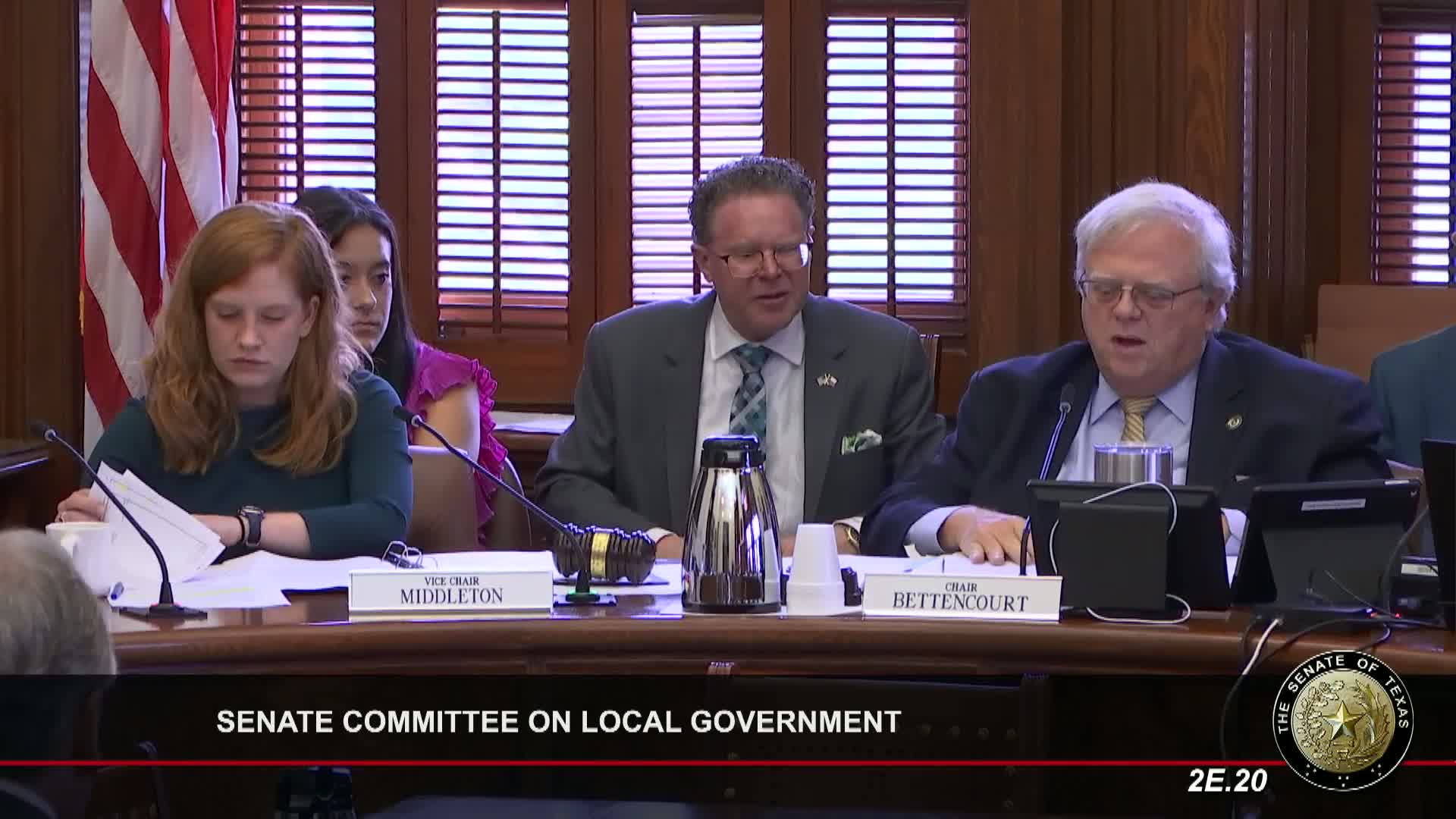
Senate committee hears competing views on HB 24 change to zoning protest petitions
Summary
The Committee on Local Government heard testimony for and against a committee substitute to House Bill 24, which would limit the ability of nearby property owners to veto rezoning by petition and instead require a lower protest threshold for many rezonings affecting residential housing.
The Committee on Local Government on Tuesday heard hours of public testimony and debate on the committee substitute to House Bill 24, a measure that would narrow when surrounding property owners can use petition protests to force a supermajority vote on local zoning changes.
The substitute, offered by Senator Hughes, would limit the protest mechanism to rezonings that “result in more residential development” rather than allowing protests to apply broadly to commercial or industrial changes. Senator Hughes said the change was intended “to address those concerns” about the kinds of projects covered while keeping the bill focused on housing affordability.
The bill’s supporters said it addresses the state’s housing shortfall. Judge Shepherd, a policy analyst for the Texas Public Policy Foundation, testified in favor and cited a state comptroller estimate, saying, “According to the comptroller 2023, Texas is about 306,000 homes short of what’s needed.” He told the committee that a minority of property owners should not be able to block zoning changes that increase housing supply.
Opponents, including nearby residents and neighborhood advocates, said the substitute weakens longstanding protest rights and reduces local checks on zoning changes. Betsy Greenberg, testifying for herself, warned that HB 24 would replace a supermajority safeguard with a simple majority and urged lawmakers, “Please do not pass HB 24.” Barbara McArthur argued the bill “eliminates the longstanding right of families to file written protest against a harmful zoning change next to their home,” and said parts of the substitute could also shorten legal deadlines for court challenges.
Susan Spataro, who said she frequently appears before the committee, told members that recent zoning shifts in Austin already have changed single-family neighborhoods. “This definitely destroys the nature of a single-family neighborhood,” Spataro said, describing tall multifamily projects near long-standing homes.
Supporters including Emily Bridal (as she identified herself to the committee) framed the substitute as a modernization of a 100-year-old statute that they said is often used to block housing. “This statute is used to kill housing,” Bridal said, and thanked the committee for efforts aimed at “improving housing affordability.”
The committee opened public testimony, heard multiple witnesses on both sides and then closed the public record. The committee substitute to House Bill 24 was left pending subject to the call of the chair.
The debate reflected a broader statewide tension lawmakers have pursued this session between easing regulatory barriers to housing and preserving local notice and protest tools for neighbors. The committee did not vote on the substitute on the day it was discussed; members left the item pending for later consideration.
For now, the statute that governs protest petitions and the precise petition thresholds remain unchanged until the committee reports the substitute to the full Senate or takes further action.