Get Full Government Meeting Transcripts, Videos, & Alerts Forever!
Get email alerts on the Quantum Initiative topic
No spam. Unsubscribe anytime.
Senate committee hears plan to create Texas Quantum Initiative to boost research and cybersecurity
Summary
Senators heard testimony supporting House Bill 47 51, which would establish a Texas Quantum Initiative to co‑ordinate university, industry and state efforts on quantum computing, networking and workforce development. Supporters argued the state risks falling behind internationally; some members questioned whether a state initiative is necessary.
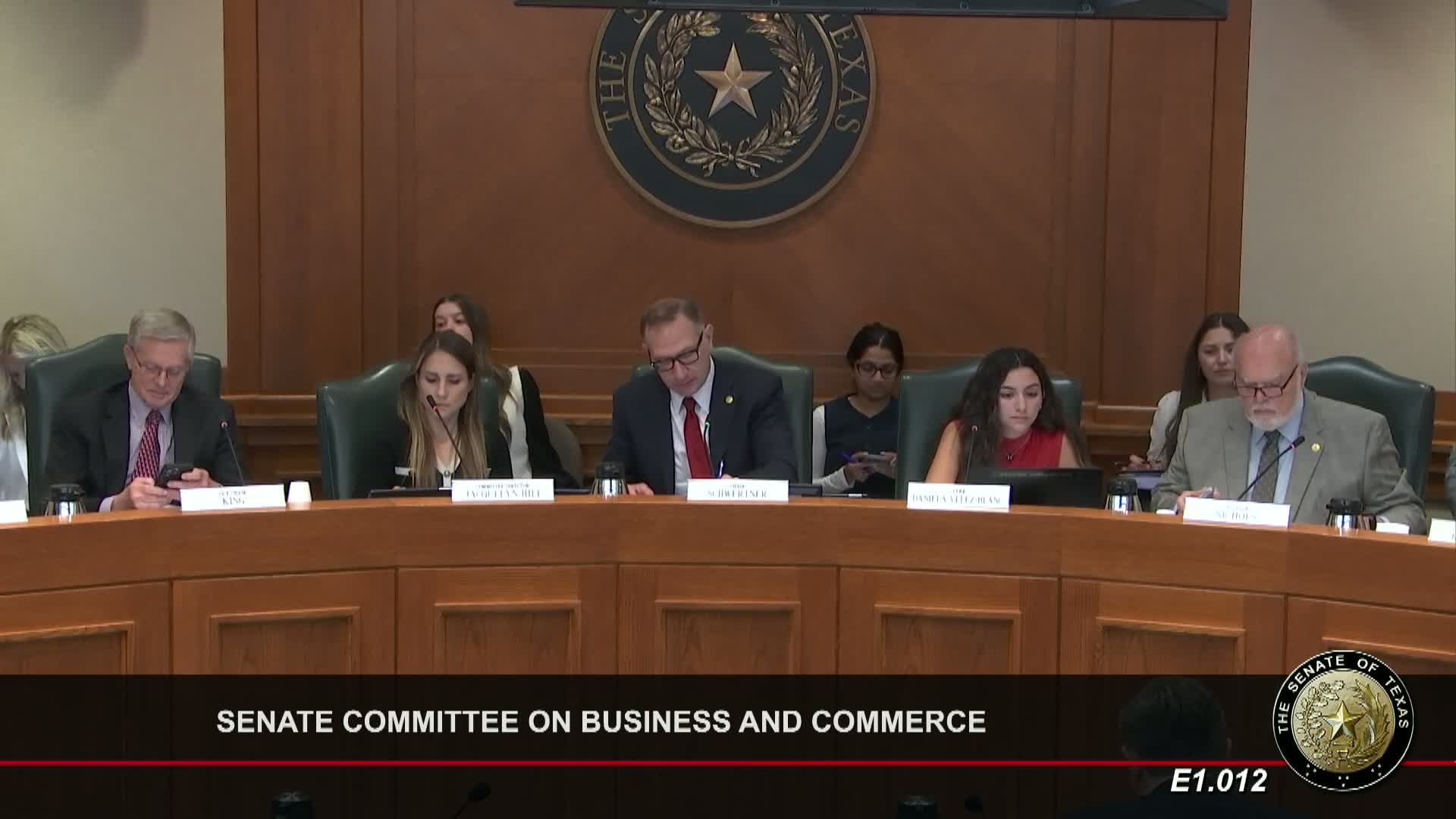
The Committee on Business & Commerce took testimony on House Bill 47 51, which would establish a Texas Quantum Initiative within the governor’s office to coordinate state, university and private-sector efforts in quantum computing, networking and workforce development.
"Quantum technology is no longer a far off concept. It's an imminent reality," sponsor Rep. Sarah Parker told the committee as she described a plan to support research, grants and a new strategic fund for university–business innovation. The initiative would be guided by a seven‑member executive committee appointed by statewide leaders and produce an annual report to the legislature.
University and industry witnesses urged passage. Andre Cisneros of the University of Texas at Dallas described campus programs and a new undergraduate certificate in quantum information; Alexei Sokolov of Texas A&M said the institute he helps run has existed for 25 years and urged state coordination. Niccolo Dimasi, CEO of INQ, a local quantum‑technology company, told senators "Quantum networking represents the next frontier in cybersecurity" and said private firms are prepared to invest in states that back the sector.
Senators probed the need for a state initiative and what it would fund. Senator Nichols asked whether the initiative would duplicate private or university efforts; witnesses said the state role would be coordination, strategy, workforce development and helping attract federal funds and private investment. Senator Parker said the initiative is not a standalone agency and would not by itself create large state expenditures, but could enable federal grants and matching investments if funded later.
The committee left HB 47 51 pending for further consideration.
Why it matters: Supporters argued quantum technologies could give Texas an early advantage in cybersecurity, materials science, drug discovery and advanced manufacturing, and that a state‑level initiative could accelerate commercialization and workforce pipelines.
What’s next: The committee asked sponsors and stakeholders to refine governance details and any future funding approach before a committee vote.