Get Full Government Meeting Transcripts, Videos, & Alerts Forever!
Get email alerts on the Housing Affordability topic
No spam. Unsubscribe anytime.
Senate passes bill restricting "traveling" housing finance corporations, sets tests for tax-exempt deals
Summary
The Senate passed House Bill 21 to curb so-called "traveling" housing finance corporations that sponsor tax-exempt conversions of existing apartments without local approval or demonstrable tenant rent benefits.
The Senate adopted House Bill 21 on Wednesday, a measure the sponsor said is aimed at curbing a national marketing practice that removes multifamily properties from local tax rolls without demonstrable public benefit.
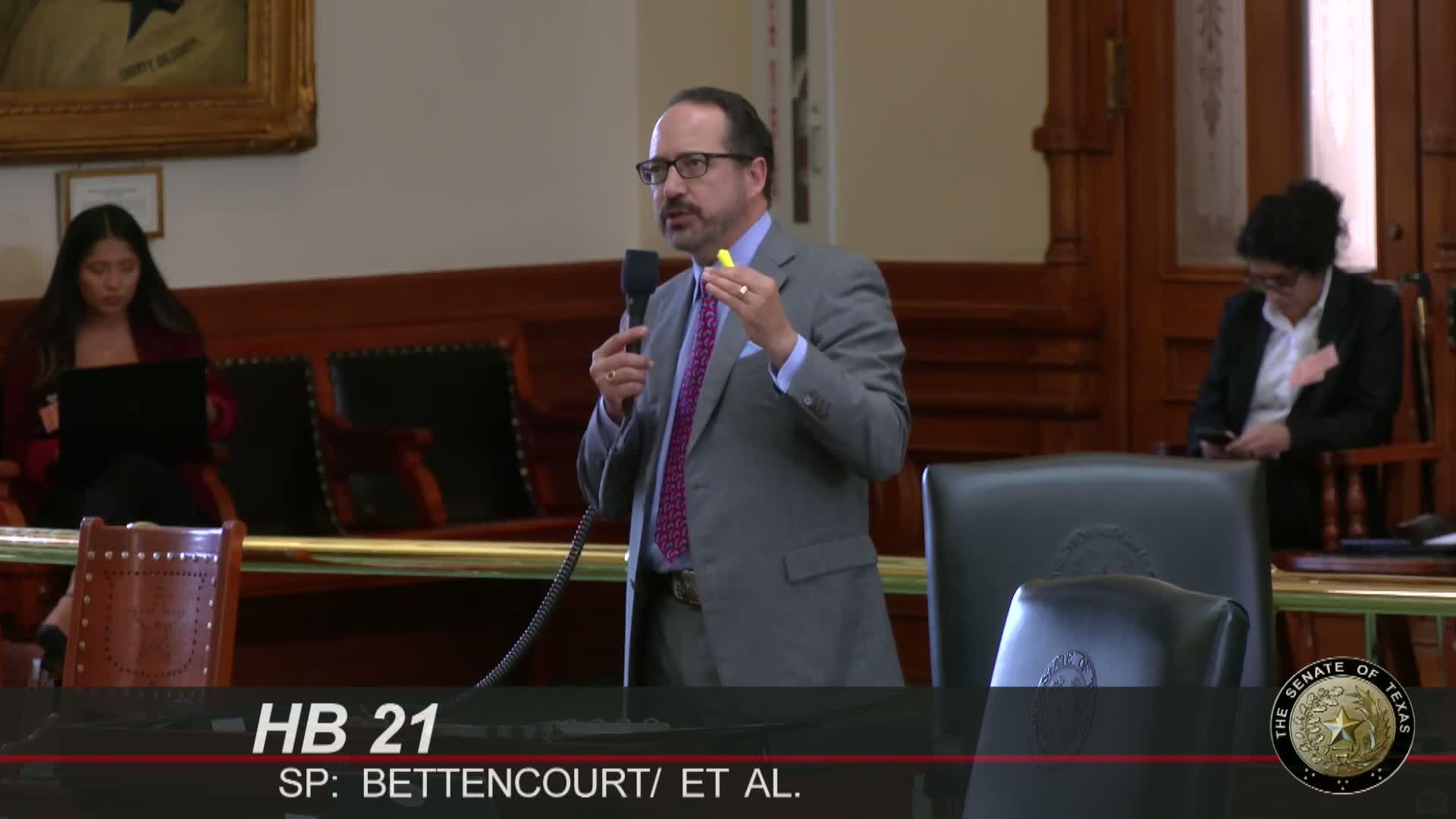
Senator Bettencourt, the Senate sponsor, described the deals in stark terms on the floor: "These deals are being presented in New York, as fait accompli using the entire exemption of property taxes. And importantly, these deals, there's no evidence that, there's been actual rent reductions." He said some offerings claimed tax exemptions for up to 99 years and that the state had seen roughly $16 billion of these transactions.
Under HB 21 as debated on the floor, an HFC conversion or exemption must (as described by the sponsor) secure local approval and demonstrate that at least 50% of the value of the property-tax savings will be delivered as rent reductions for tenants. The bill also sets an off-ramp for existing projects: projects have until Jan. 1, 2027 to make a 50% rent-reduction commitment and up to 10 years after that to comply or change ownership.
Questioners on the floor raised implementation and market concerns. Senator Menendez asked whether a single law firm was behind many of the marketed deals; the sponsor acknowledged marketing activity by outside firms and said courts and the attorney general opinion would also influence outcomes. Senator Menendez and others flagged the complexity of appraisals and the risk of unintended effects for affordable housing financing.
Senator Menendez said he supported shutting down abusive actors but warned, "I don't want to stop the production of new affordable housing units when the need is so great." The sponsor said the bill excludes certain low-income housing tax-credit (LIHTC) projects from its requirements and committed to work on technical fixes with colleagues.
The Senate passed HB 21 on final reading (voice and roll calls recorded on the floor), with the roll showing 30 ayes and 1 nay on final passage. Sponsors said the bill restores local control over HFC-originated tax exemptions and introduces measurable requirements for affordability in conversions.
Why it matters: Lawmakers described a fast-growing practice that can shift major tax burdens away from local jurisdictions and that, in sponsors' view, did not reliably translate into sustained rent relief for tenants. The bill seeks to protect local tax bases while preserving established low-income housing programs.
What to watch next: Technical implementation (how to measure and verify the 50% rent-reduction test), any Attorney General opinions, and pending litigation challenging existing transactions. Sponsors and critics said they would continue to refine the statutory language in conference and with the House author.