Get Full Government Meeting Transcripts, Videos, & Alerts Forever!
Get email alerts on the Right To Repair topic
No spam. Unsubscribe anytime.
Senate committee hears competing views on ‘right to repair’ electronics bill
Summary
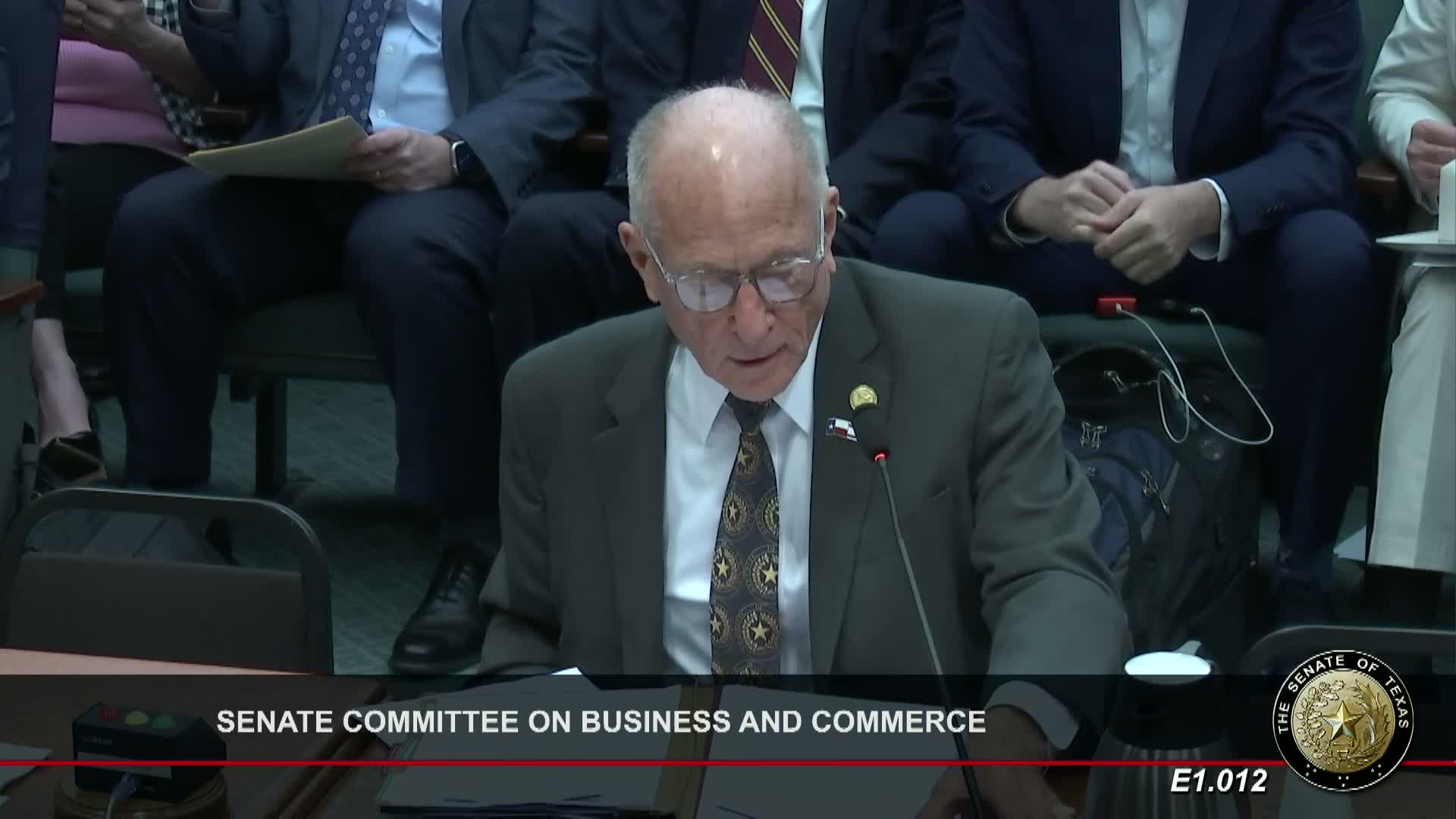
Senators on the Committee on Business & Commerce heard hours of testimony on House Bill 29 63 on the right to repair electronic devices, with witnesses split between consumer and environmental advocates and representatives of repair and automotive businesses.
Senators on the Committee on Business & Commerce heard hours of testimony on House Bill 29 63 on the right to repair electronic devices, with witnesses split between consumer and environmental advocates and representatives of repair and automotive businesses.
“HB 29 63 simply gives consumers who are currently at the mercy of the proprietary repair ecosystem the right to repair their electronic devices,” sponsor Sen. Charles Hall said as he introduced the measure. The bill would require manufacturers selling devices in Texas to make parts, tools and documentation available on "fair and reasonable terms," the sponsor said.
Supporters said the bill would reduce electronic waste and increase competition. Grayson Gee of the Texas Public Policy Foundation told the committee, "When Texans buy a product, they should truly own it. That includes the right to repair." Sofia Dreslinski of Environment Texas said easier repair would cut waste, citing United Nations and EPA statistics on e‑waste and heavy metals.
Industry witnesses offered a mix of support and concern. Tom Tucker of Safelite Auto Glass said his company supports right to repair in principle but objected to sections that rely on nonbinding memorandums of understanding (MOUs) for the automotive sector. "If the committee would amend out the issue of the MOU, we would withdraw our opposition," Tucker told the committee. Kevin Fisk of LKQ Corporation and other repair-industry witnesses raised concerns about telematics and over‑the‑air data that independent shops cannot access today.
Committee members pressed witnesses on the bill’s scope and carve-outs. Senator Sarah King and others asked whether the measure would apply to every product sold in Texas; witnesses responded that the bill targets consumer electronics and includes exemptions for medical devices, certain critical‑infrastructure equipment and motor vehicles that participate in an automotive MOU. The bill also gives the Texas Attorney General authority to enforce violations, according to sponsor remarks.
After public testimony the committee left HB 29 63 pending for further consideration.
Why it matters: The bill seeks to shift how manufacturers control repair markets for phones, tablets, laptops and similar devices, balancing intellectual property and trade‑secret protections against consumer access and environmental concerns. Proponents say repair access lowers costs and landfill waste; opponents warn of unintended operational and safety complications for sectors such as automotive repair.
What’s next: The committee left the measure pending after testimony and questions; several senators asked staff and stakeholders to refine language on automotive MOUs and exemptions.