Get Full Government Meeting Transcripts, Videos, & Alerts Forever!
Get email alerts on the Foreign Influence Property topic
No spam. Unsubscribe anytime.
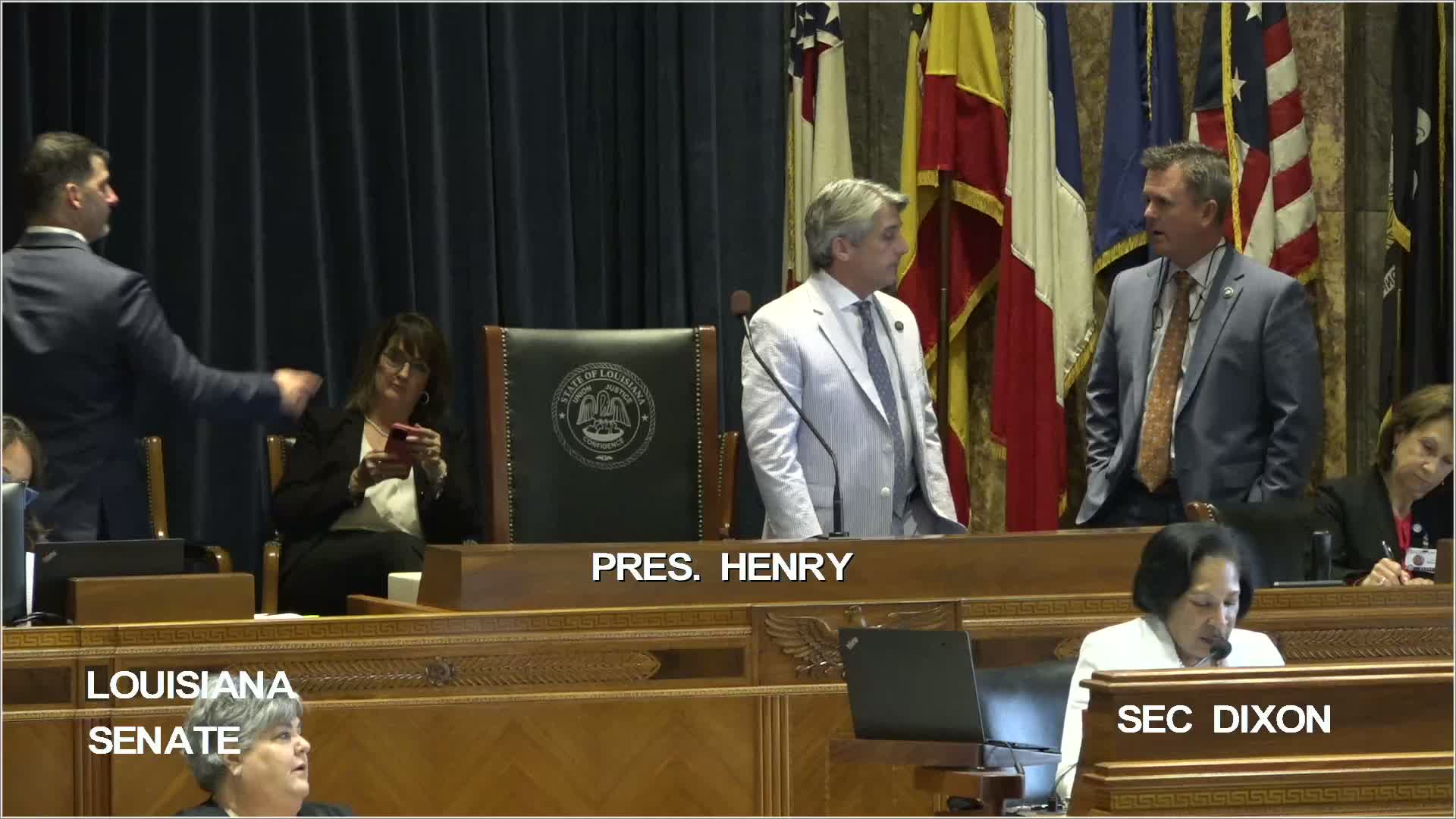
Senate debates bill targeting 'prohibited foreign actors' in state property and business holdings
Summary
A proposal to expand Louisiana authority over property or entities linked to so-called "prohibited foreign actors" drew extended floor debate about scope, due process and military coordination and was returned to the calendar for further work.
The Louisiana Senate spent more than an hour debating a bill by Senator Hodges that would move language addressing certain foreign-linked actors from the agricultural code into Title 9 of state law and expand enforcement tools against persons and entities the bill defines as "prohibited foreign actors." The sponsor told the chamber the measure replaces the term "foreign adversary" with "prohibited foreign actor" and aligns Title 9 with language already adopted in Title 3.
The bill would let state authorities seek civil forfeiture of immovable property tied to a prohibited foreign actor and includes other enforcement options in existing statutes such as civil remedies used in prior legislation. Senator Hodges said the bill has been slimmed and altered in committee: "That's basically my bill in its original form was was gutted," she told colleagues while walking through the changes.
Senators pressed the sponsor on definitional breadth and consequences for individuals legally present in the United States. Several asked whether the measure would sweep in lawful residents or citizens of listed countries who do not act on behalf of a hostile foreign government. Senator Luna noted that text in the bill could apply to a person who is a citizen of a named country unless the person is a lawful permanent resident or otherwise lawfully present; he asked how the measure would treat people who fled political persecution and now legally reside outside the named adversary states. Hodges said hypotheticals could be addressed, but repeatedly told colleagues that the bill gives the attorney general discretionary investigative authority and that the legislation is intended to protect state land and interests from hostile foreign influence.
Other questions focused on military readiness and coordination. Senator Bass asked whether the author had consulted military installations in northern Louisiana (Barksdale) or Fort Johnson; Hodges said she had discussed the issue with military representatives in New Orleans and with the National Guard but not with every base and that a provision exempting entities that certify they maintain a national-security agreement could remain in the bill. Colleagues also flagged federal processes: the conversation mentioned the Committee on Foreign Investment in the United States (CFIUS) and whether the state's rules would duplicate or conflict with federal national-security reviews.
The bill includes an express $50,000 forfeiture threshold in one section as a remedy to offset costs associated with enforcement and restitution language carried over from earlier legislation enacted in 2023. Senators asked what would happen if forfeiture proceeds exceeded costs; the sponsor said existing 2023 statutory language governs disposition and that proceeds were directed to certain state accounts under the earlier law.
After extended questioning and a series of adopted technical amendments, Senator Hodges withdrew one amendment and then asked the Senate to return the bill to the calendar to permit further work with colleagues and with staff. The bill was returned to the calendar rather than being advanced to final passage.
The discussion highlighted tensions between security-focused language and protections for lawful residents or businesses, along with questions about coordination with federal national-security processes and with military installations. Senator Hodges said she will work with members on clarifying amendments before bringing the bill back.
The Senate did not take a final passage vote on the measure; the bill was returned to the calendar for revision and further negotiation.