Get Full Government Meeting Transcripts, Videos, & Alerts Forever!
Get email alerts on the Pbm Pharmacy Reimbursement topic
No spam. Unsubscribe anytime.
Committee hears pharmacy reimbursement bill; debate centers on dispensing fee, PBM pass-throughs and fiscal impacts
Summary
Senate bill to require PBM pass-through and set reimbursement rules for community pharmacies drew pharmacists, insurers and PBMs into a lengthy hearing. Author voluntarily deferred the bill for a week after fiscal and implementation questions surfaced, including whether a proposed dispensing fee would raise employer premiums in some plans.
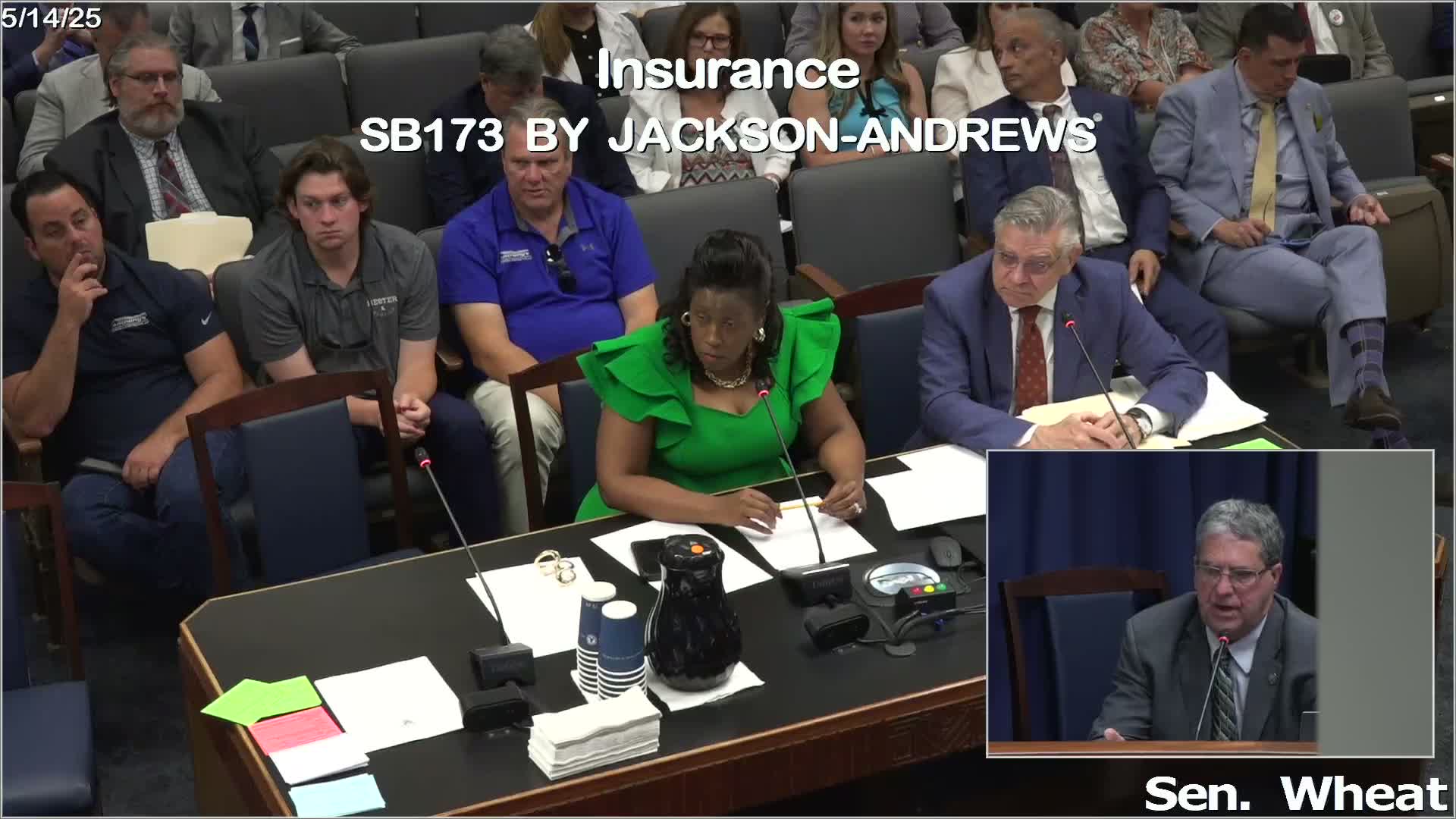
The committee took up legislation to change how pharmacies are reimbursed and to limit certain PBM practices, drawing pharmacists, insurers and plan administrators for testimony. Senator Jackson Andrews, the billauthor, described the measure as a "cleanup" to last year's law that required reimbursement at acquisition cost and said the new bill aims to reduce repetitive appeals and anticompetitive practices.
The bill includes a provision to align certain dispensing-fee payments with the Medicaid dispensing-fee ($11.81 was cited during the hearing) and would bar repetitive PBM denials that force community pharmacies to file multiple appeals to be paid their acquisition cost. Senator Jackson Andrews and proponents said last year's law had left pharmacies subject to underpayment and excessive appeals work.
Pharmacists from across the state described persistent under-reimbursement. "We have been filing appeals ... about 20 appeals per day per pharmacy just on commercial claims," said Dana Antoon, a community pharmacist; she said the appeals work consumes two hours nightly and that denials often recur on subsequent months for the same patient and drug.
Representatives from Blue Cross and Blue Shield of Louisiana told the committee that rebates are passed through to some plan sponsors and that an increase in a prescribed dispensing fee could raise total plan costs; Blue Cross witnesses agreed to provide a plan-level audit requested by a senator to map rebates and the projected dispensing-fee impacts to employer and self-funded plans.
Several industry witnesses including the Professional Independent Agents (PIA) urged caution, saying a higher mandated dispensing fee could deter PBMs or carriers from doing business in-state and could reduce carrier competition. Proponents countered that jurisdictions where pass-through contracting or Medicaid-based dispensing fees are used have not seen the carrier withdrawals critics warn about, and they argued a transparent pass-through approach can reduce total plan costs.
Faced with outstanding fiscal questions about how the dispensing-fee change would flow through to employer costs (a fiscal note cited a projected premium impact in the tens of millions), Senator Jackson Andrews voluntarily deferred the bill a week to allow the department, Blue Cross and other stakeholders to supply the requested audit and for authors to resolve open issues. The sponsor pledged to reconvene stakeholders and said she would not press the measure this week.
Pharmacists said they would return to testify; bill supporters noted similar legislation in states such as Arkansas and West Virginia and cited federal interest in pricing transparency.
The committee recorded the author's voluntary deferral and set the bill for follow-up next week; supporters and opponents agreed to continue technical discussions in the interim.