Get Full Government Meeting Transcripts, Videos, & Alerts Forever!
Get email alerts on the Emergency Response topic
No spam. Unsubscribe anytime.
Committee approves amended bill letting qualified trauma surgeons use emergency vehicle equipment under rules and renewal
Summary
Senators adopted amendments and reported Senate Bill 155, which would authorize credentialed trauma surgeons traveling to Level 1–3 trauma centers to use authorized emergency‑vehicle lighting under rulemaking, annual renewals and possible revocation; committee debated liability and insurance concerns but voted to advance the amended bill.
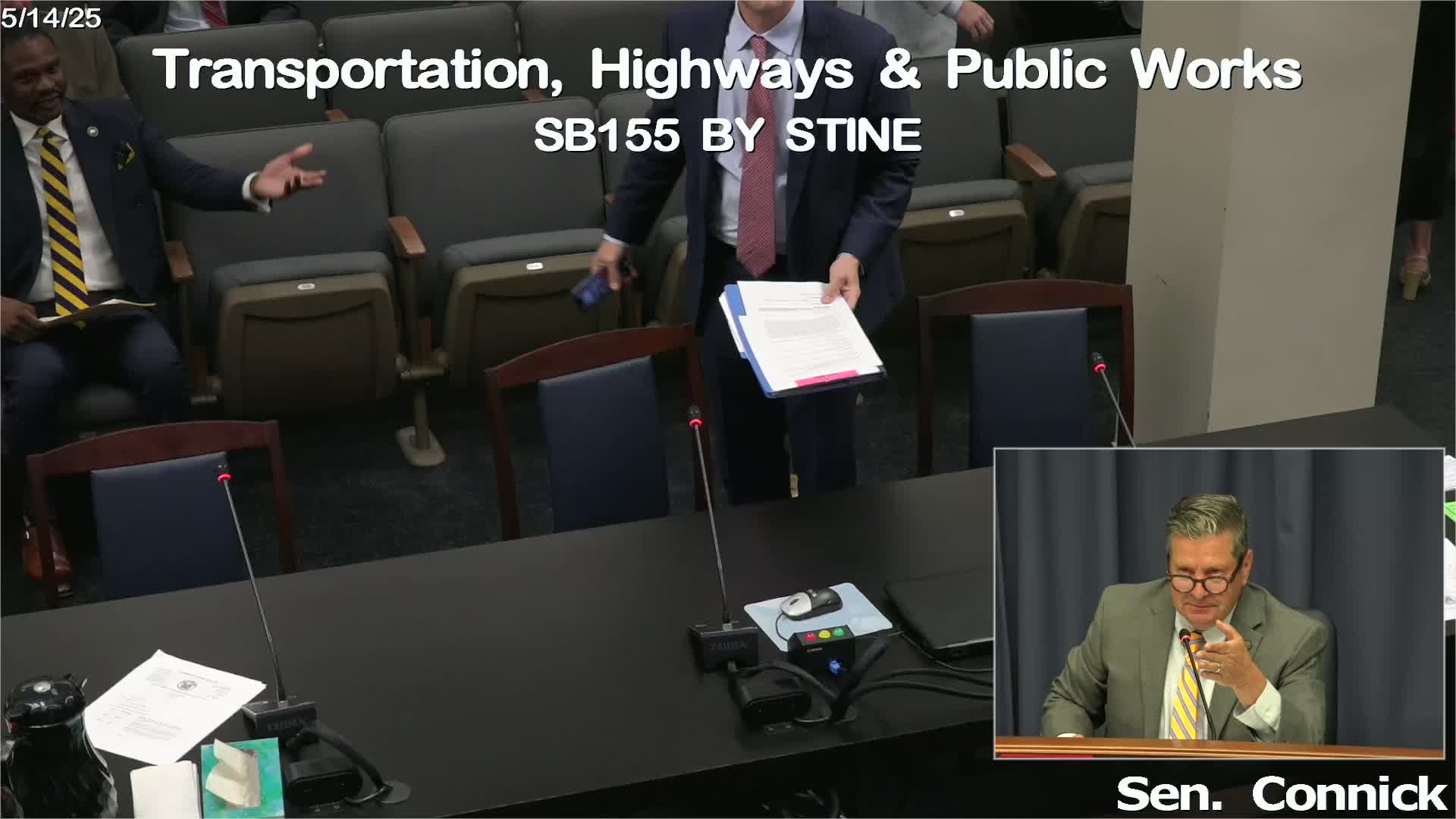
Baton Rouge — The Senate Committee on Transportation on May 14 amended and reported Senate Bill 155, a measure by Senator Stewart Stein that would authorize certain trauma surgeons to use emergency‑vehicle lighting and require credentialing, renewals and oversight.
Senator Stein said the bill and its amendments narrow the authority to credentialed trauma surgeons traveling to Levels 1, 2 and 3 trauma centers and build in oversight. “This is gonna allow them to, to be there to perform that life saving surgery, that the surgeons that we've discussed this with all feel that it's needed,” Stein told the committee when explaining the intent.
The committee adopted amendment set 1508, which clarifies the definition of “authorized emergency vehicle,” requires high credentialing for surgeons, limits use to trauma surgeons responding to qualifying trauma centers, introduces annual renewals and authorizes revocation to ensure compliance. Stein said the language also directs the relevant agency — in the testimony described as OOV — to promulgate rules on training and use similar to existing emergency‑vehicle rules for firefighters and police.
Senators raised liability and insurance questions. Senator Jay Carter asked who would be liable if a surgeon using lights is in an accident while driving to a hospital and whether hospitals could be held liable under respondeat superior; witnesses compared the legal framework to volunteer firefighters and law enforcement, and committee members pressed whether insurance minimums or hospital policies should be required. Witnesses said the bill’s current form does not spell out additional insurance requirements and that rulemaking would be used to address training and operational limits.
Committee members noted several states, including Florida, Texas and Virginia, allow analogous authority for surgeons and that the amendments were intended to tighten scope. After discussion, Senator Stein asked for and received a favorable report; the committee reported SB 155 as amended without objection.
Ending: The committee advanced the amended bill while asking the author and agency staff to clarify how liability, insurance and training will be handled in rulemaking and whether hospitals are prepared to accept liability exposure if surgeons travel to emergency cases under the new authority.