Get Full Government Meeting Transcripts, Videos, & Alerts Forever!
Get email alerts on the Election Law Consents topic
No spam. Unsubscribe anytime.
Bill would require legislative approval for consent decrees that change Louisiana election law; committee reports measure
Summary
House Bill 206 would bar state or local election officials from entering consent decrees or court settlements that conflict with state election law without prior legislative authorization; the committee adopted technical amendments and reported the bill as amended.
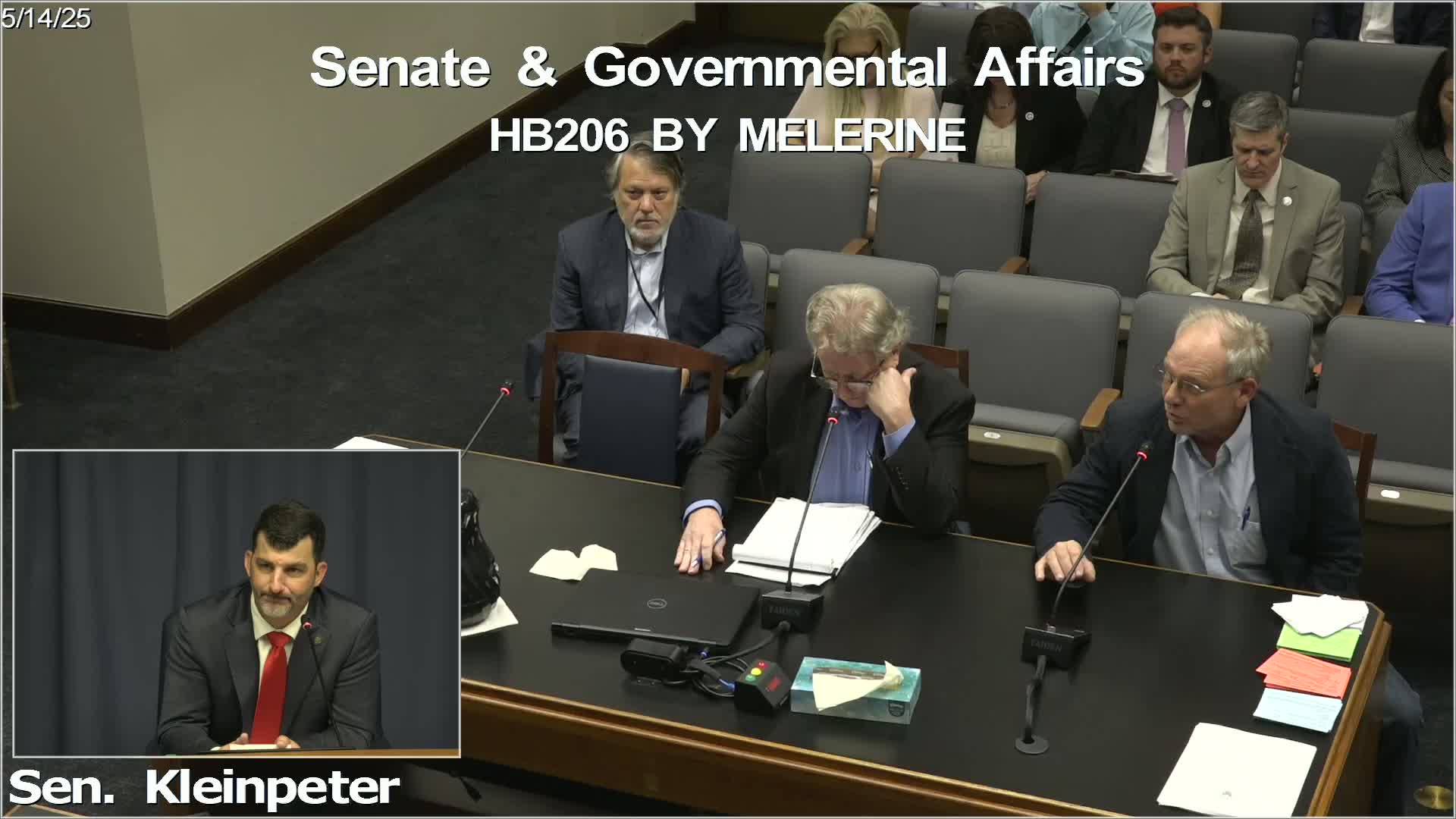
The Senate and Governmental Affairs Committee reported House Bill 206 as amended, a bill by Rep. Mellorin that would prohibit state, parish or local election officials from entering consent decrees or similar legal agreements that conflict with the election code unless the legislature authorizes them by concurrent resolution.
Proponents said the bill protects the legislature's lawmaking role and prevents changes to election rules by settlement; the secretary of state and others said the measure is intended to stop third parties and courts from implementing long-term procedural changes without legislative input.
Rep. Mellorin told the committee HB 206 ''prohibits state, parish, or local election officials and parish or state board of election supervisors from entering into consent decrees and other legal agreements that conflict with the election law unless authorized by a concurrent resolution of the legislature.'' Secretary Nancy Landry said the bill was part of a voter-protection package and that it would not prevent courts from ordering remedies, but would require legislative approval before officials settle and thereby change election law outside the legislative process.
Committee members asked whether the measure would impede federal-court remedies or local governments' ability to respond quickly in emergencies. The author and secretary clarified that a court could still order relief; the bill would bar voluntary settlements that alter law without legislative approval. An amendment (technical, 17-12) and a second amendment (15-45) providing a procedure to act when the legislature is not in session were adopted.
After discussion the committee reported the bill as amended. Supporters said the measure strengthens separation-of-powers checks on changing election procedures; critics asked for clarity on how the rule would work in practice and whether it could delay remedies in urgent civil-rights litigation. The adopted amendments were intended to provide an expedited method for the legislature to consent when not in session.