Get Full Government Meeting Transcripts, Videos, & Alerts Forever!
Get email alerts on the State Revenue Impact Grants topic
No spam. Unsubscribe anytime.
House Resources committee adopts substitute urging 90% state share of federal royalties; debate centers on impact grants
Summary
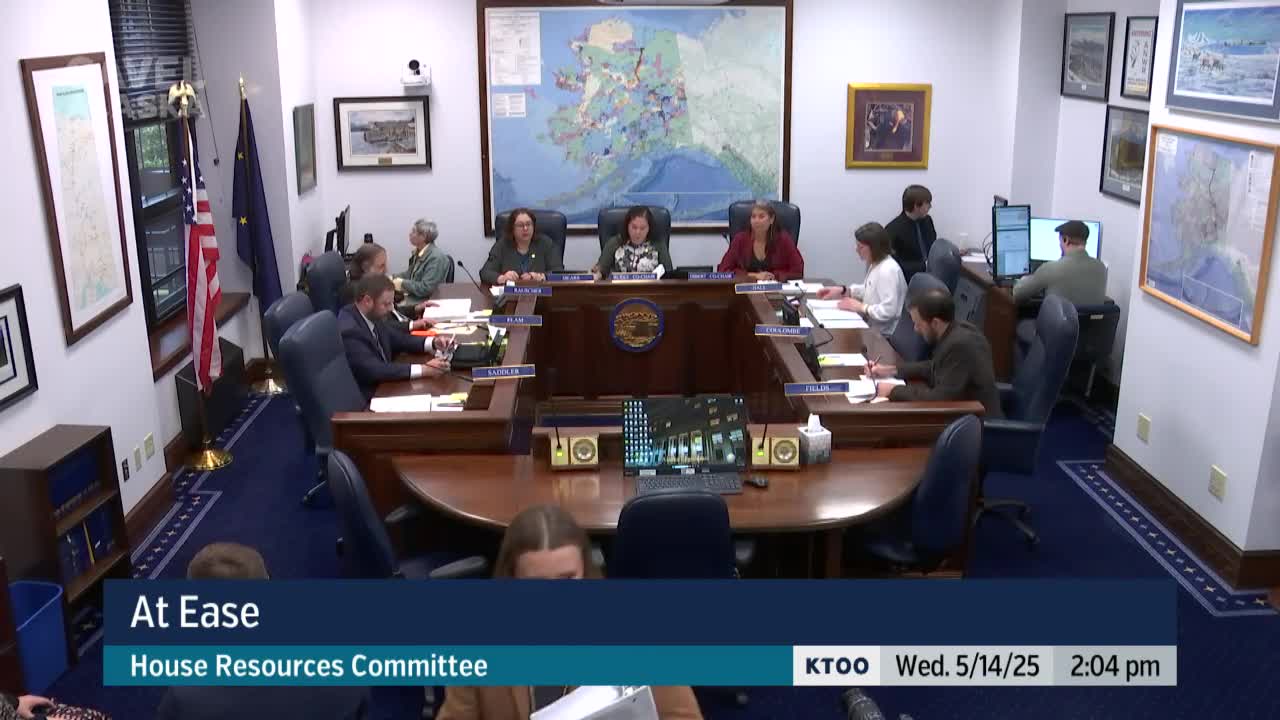
The House Resources Committee on Wednesday adopted a committee substitute for Senate Joint Resolution 19 that urges Congress to secure a 90% state share of federal oil-and-gas royalties, prompting debate over how impact-grant money would be allocated.
May 14, 2025 — The House Resources Committee on Wednesday adopted a committee substitute for Senate Joint Resolution 19 that urges Congress to secure a 90% state share of federal oil-and-gas royalties, setting off discussion over how any additional funds should be apportioned to communities that receive impact grants.
The resolution, advanced out of committee after the co-chair moved adoption of the committee substitute, focuses on securing more state revenue from federal lease bonuses, rentals and royalties. Senator Jesse Bjorkman, sponsor of the resolution, told the committee that while the measure asks for a larger share to come to the state, questions remain about how that money would be distributed once it arrives.
"As we look at this issue, the issue of impact grants are one that our state will need to talk about and discuss," Senator Jesse Bjorkman said. "As more fields are developed on federal land and the size of those impact grants increase, I think there will be a lot more attention paid to the amount of money that is delivered through those impact grants, as well as what the impacts of development and those projects are on these communities."
Why it matters: The discussion matters because the distribution rules for federal lease revenue affect local services and infrastructure in communities that host or border energy development. Committee members repeatedly noted that the underlying amounts at stake could grow substantially with increased production and that the existing impact-grant arrangements and court precedent play a central role in how funds are used locally.
Committee members described competing priorities: preserving mitigation funding for directly affected communities and securing a larger statewide share for other state priorities. Senator Bjorkman told the committee the current dollar figure discussed informally in testimony is roughly $30 million per year today and could increase by "about 8 to 10 times" over time as production grows, a projection he said appears in a referenced revenue appendix. He also said the resolution and the adopted committee substitute do not themselves change the existing impact-grant program.
Committee action and next steps: The committee substitute for SJR 19 was adopted on a voice vote during the May 14 hearing and the committee then moved the resolution out of committee with an attached fiscal note and individual recommendations. Members signaled that the broader policy questions — including how to define "impacted community," how to determine eligible uses of impact-grant funds, and whether Congress should revisit allocation formulas — will require additional floor debate and future hearings.
Discussion vs. decision: The committee formally approved the committee substitute and advanced SJR 19 from committee (a formal action). The substantive distribution questions raised during debate were identified as matters for future discussion rather than resolved by the committee vote.
Ending: Committee members said they expect the conversation to continue as the resolution reaches the floor and as federal discussions progress on revenue allocations related to the NPRA and other Arctic development areas.