Get Full Government Meeting Transcripts, Videos, & Alerts Forever!
Get email alerts on the Hiring Freeze topic
No spam. Unsubscribe anytime.
Supervisors allow CAO and HR to unfreeze positions until budget adoption; will reassess in September
Summary
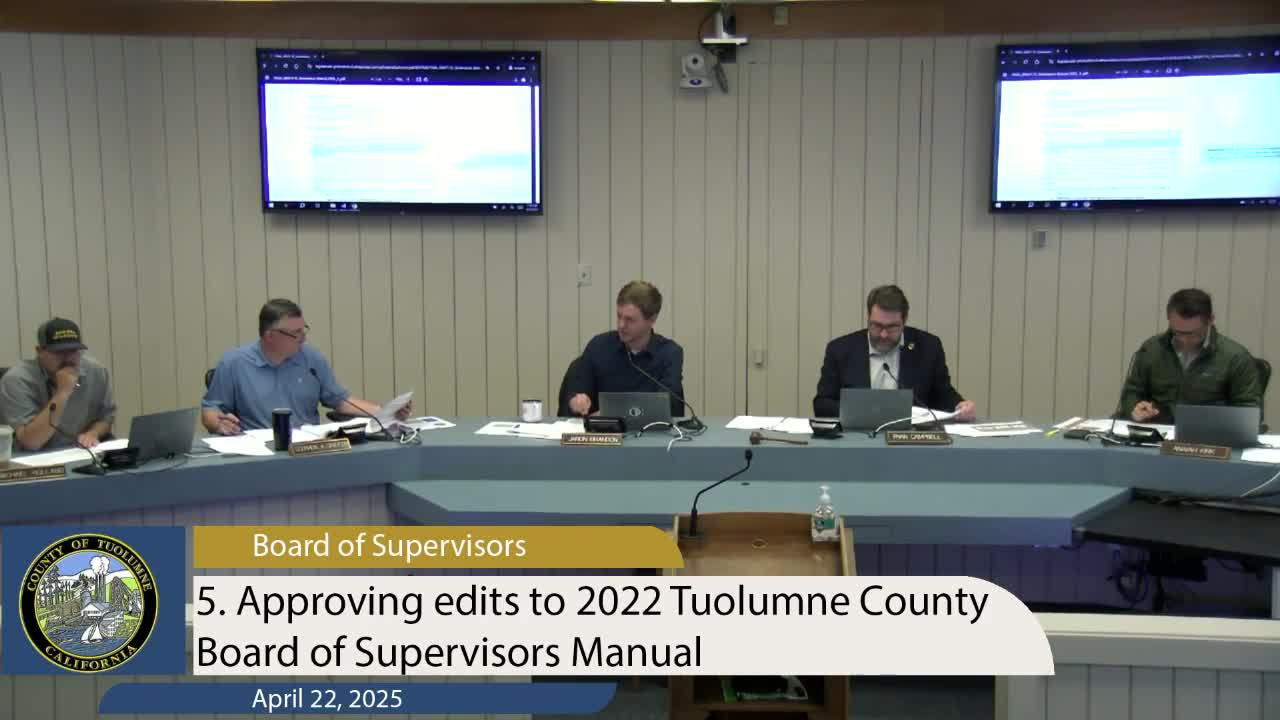
After discussing the board’s November hiring freeze, supervisors directed the acting county administrator and human resources director to approve requests to unfreeze vacant positions on a case‑by‑case basis and to revisit the hiring‑freeze status after the FY25‑26 budget is adopted.
Tuolumne County supervisors gave staff limited authority April 22 to unfreeze vacant positions while the county completes its fiscal planning for the next budget year.
Staff explained the county implemented a hiring freeze in November to reduce general‑fund expenditures and preserve fund balance while the county planned midyear reductions. On April 22 the board considered three options: lift the freeze entirely; retain the freeze but authorize the CAO and HR director to approve select unfreezes; or require every unfreeze request be returned to the full board for approval.
The board directed the county administrator and human resources director to approve requests to recruit for currently budgeted vacant positions as needed, but asked staff to return to reassess the hiring freeze at the adopted budget in September 2025. Supervisors emphasized that approvals should be cautious and consider whether a hiring decision would create subsequent staffing or bargaining complications during any future round of cuts.
County staff said the hiring freeze had not applied to public safety or health and human services, but it had affected general‑fund departments such as the treasurer/tax collector and information technology. The board and staff agreed to a reporting practice: staff will notify supervisors when positions are unfrozen and provide brief updates so the board retains oversight without reviewing each request in a public meeting.
Why it matters: The limited delegation speeds approvals for vacancies that hamper department operations (examples raised in the meeting included a fiscal technician in the treasurer’s office and an IT technician), while keeping the board informed and preserving the board’s ability to re‑impose tighter controls if needed when the county’s full fiscal picture is clearer.
Ending: Supervisors said they expect staff to balance short‑term operational needs against the risk of committing to long‑term positions before the FY25‑26 budget is adopted.