Get Full Government Meeting Transcripts, Videos, & Alerts Forever!
Get email alerts on the Fire Impact Fees topic
No spam. Unsubscribe anytime.
Board adopts Rancho Adobe fire impact fees to fund future apparatus and facilities
Summary
The Sonoma County Board of Supervisors approved a development impact fee program for the Rancho Adobe Fire Protection District to fund future fire facilities and apparatus tied to new development; the fees vary by land use and cannot be used for personnel costs.
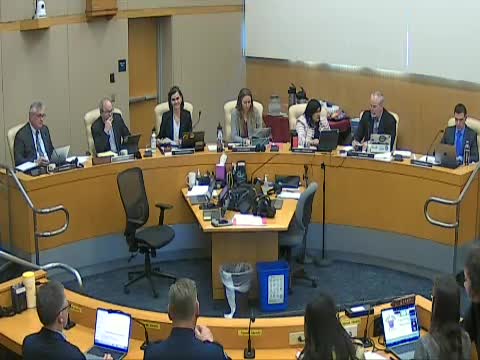
The Sonoma County Board of Supervisors voted unanimously to adopt a development-impact fee program for the Rancho Adobe Fire Protection District, approving a schedule of fees intended to pay for future fire facilities and apparatus associated with new development.
Supporters and county staff said the fees are intended to finance growth-related capital needs, not current operations. Maggie Luce of the County Administrator’s Office told the board the program uses an “existing facility standard” methodology to proportion the district’s capital value to existing development and then charge new development its share.
The fees vary by land use: staff presented an average single-family fee of roughly $2 per square foot — about $4,000 for a typical single-family home — with multifamily units at about $3,000 per unit and mobile homes roughly $2,000. The proposal exempts accessory dwelling units under 750 square feet, applies the residential rate to ADUs larger than 750 square feet, and lists rates for retail, office and industrial uses.
Blair Asse of SCI Consulting Group explained the legal and technical rationale behind the square-footage approach, saying it is the most commonly used method in California and is designed to meet the Mitigation Fee Act’s rough-proportionality rules. “The fee is designed to generate just enough revenue for the district to expand the fire system to serve that growing population — no more, no less,” Asse said.
Supervisors pressed staff on technical details. Supervisor Rabbit asked whether square footage accurately captures demand for fire services, noting that many calls are medical rather than fire-related; staff and consultant representatives replied that state law and prevailing practice favor a square-footage basis and that the fee schedule differentiates land uses to reflect relative demand. Supervisor Rabbit also asked why the ADU exemption threshold was set at 750 square feet; staff said that threshold is the state minimum for ADU exemptions under current law.
Staff also outlined allowable and prohibited uses for fee revenues. Fees may be spent at 100% on new or expanded fire facilities and on apparatus that expands capacity; if used to replace an existing vehicle, only 10% of the replacement cost may be covered by the fee. Fee proceeds cannot be used for personnel costs or to correct existing deficiencies. The district must report fee receipts and uses within 180 days after fiscal-year end and return to the Board every five years with an accounting of the program.
Public comment included resident Duane DeWitt, who urged the board to show the breakdown of medical versus fire calls and to explain how fee revenue would be allocated, and Ryan Williams of SEIU Local 1021, who thanked the board for moving forward on Measure I advisory processes (a separate agenda item) but did not object to the fees.
Supervisor Rabbit moved approval of the fee program and Supervisor Hermosillo seconded. The motion carried on a unanimous voice vote.
The Rancho Adobe Fire Protection District covers the City of Cotati, west Petaluma and surrounding unincorporated areas; speakers said the district responds to about 3,000 calls annually from three stations. District representatives told the board the fees will help pay for additional apparatus, fire facilities and related capital needed to serve new development in the district’s service area.
The board’s action authorizes the county to collect the district’s fee through a collection agreement drafted by County Counsel; staff said the collection would carry only routine administrative costs to the county. Supervisors and staff said stakeholders including cities, building-industry groups and affordable‑housing advocates were contacted during the outreach for roughly 90 days prior to the hearing.
The board’s vote completes the county-level step needed for the district’s fee program to take effect; staff outlined reporting and five‑year review requirements to ensure compliance with state law.
Ending: The board approved the Rancho Adobe Fire Protection District impact fee schedule and the standard collection agreement; county staff will implement the collection mechanism and the district must file periodic reports on revenue and use. The adopted fee schedule, exemptions and the five‑year review requirement will govern how new development contributes to future capital needs in the district.