Lifetime Citizen Portal Access — AI Briefings, Alerts & Unlimited Follows
Senate IP subcommittee hears warning that counterfeit faucets in U.S. market fail safety tests, risk lead and chemical exposure
Loading...
Summary
At a Senate Judiciary Subcommittee hearing, a Fortune Brands executive told senators that independent tests found a high rate of off‑brand faucets failing U.S. drinking‑water and scald‑protection standards and urged stronger platform liability, verification protocols and IP enforcement.
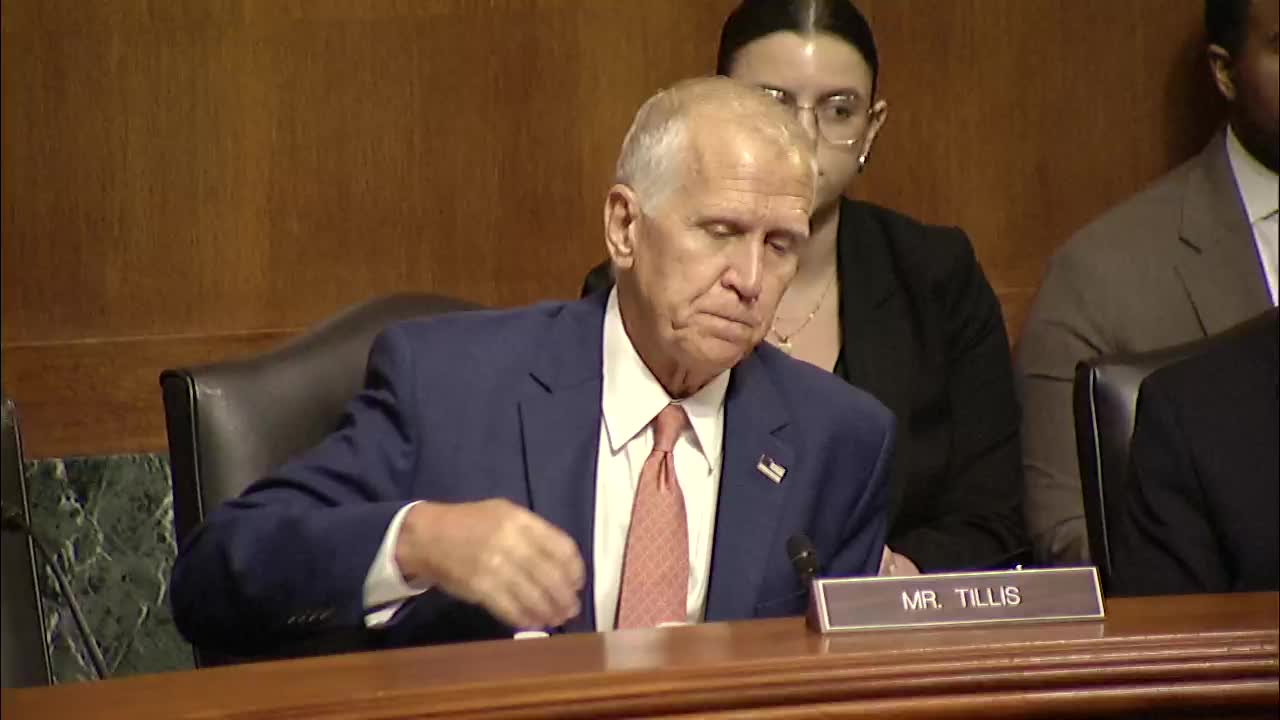
Chairman Thom Tillis convened the Senate Judiciary Committee’s Subcommittee on Intellectual Property for testimony that a Fortune Brands executive said exposes a public‑safety problem tied to counterfeit plumbing products sold into the U.S. market.
M. Boris, executive vice president of product development for Fortune Brands Innovations (Moen), told the subcommittee that independent laboratory testing of off‑brand faucets identified severe safety failures and elevated toxic metals. "We found grave concerns," he said, adding that tests showed widespread departures from U.S. standards.
Why this matters: Moen products touch a large share of U.S. households, and substandard fixtures can directly expose consumers to lead and other hazardous chemicals and can undermine plumbing safety controls designed to prevent scalding.
Boris said Moen estimated roughly 35,000,000 off‑brand units were sold in the United States over the last five years. He said Moen engaged IAPMO, the plumbing‑fixture testing organization, to evaluate top sellers identified from third‑party e‑commerce data. Of 19 top off‑brand faucets evaluated, the witness said 90% "failed the drinking water standard," nearly 60% exceeded lead limits, and "one" sample exceeded the legal limit for a probable carcinogen by 591% as reported to the committee. On valve performance, Boris said IAPMO tested six leading off‑brand shower/bath valves and that all six failed safety standards, with one failing by a factor the witness described as "750."
Boris said the consumer risk extends beyond private homes: "Substandard products can threaten municipal systems and even national infrastructure," he told senators, and that counterfeit listings on e‑commerce sites can be indistinguishable from legitimate SKUs.
Senators pressed for how the products enter U.S. commerce; Boris said the "vast majority" of the suspect products are sold through e‑commerce platforms. Committee members and witnesses discussed recent federal steps, including the INFORM Consumers Act, and invited additional legislative measures to tighten platform verification and liability.
Boris and other industry witnesses said they have shared test results with the Consumer Product Safety Commission, which had already issued consumer warnings tied to some products the committee discussed.
The subcommittee asked the witnesses to provide additional documentation for the record. Chairman Tillis said the committee would keep the record open to receive further substantiation and data.
The hearing included broader policy discussion — including site‑blocking for digital piracy and patent law reforms — but senators framed the faucet testimony as an urgent consumer‑safety example tied to broader IP enforcement gaps.