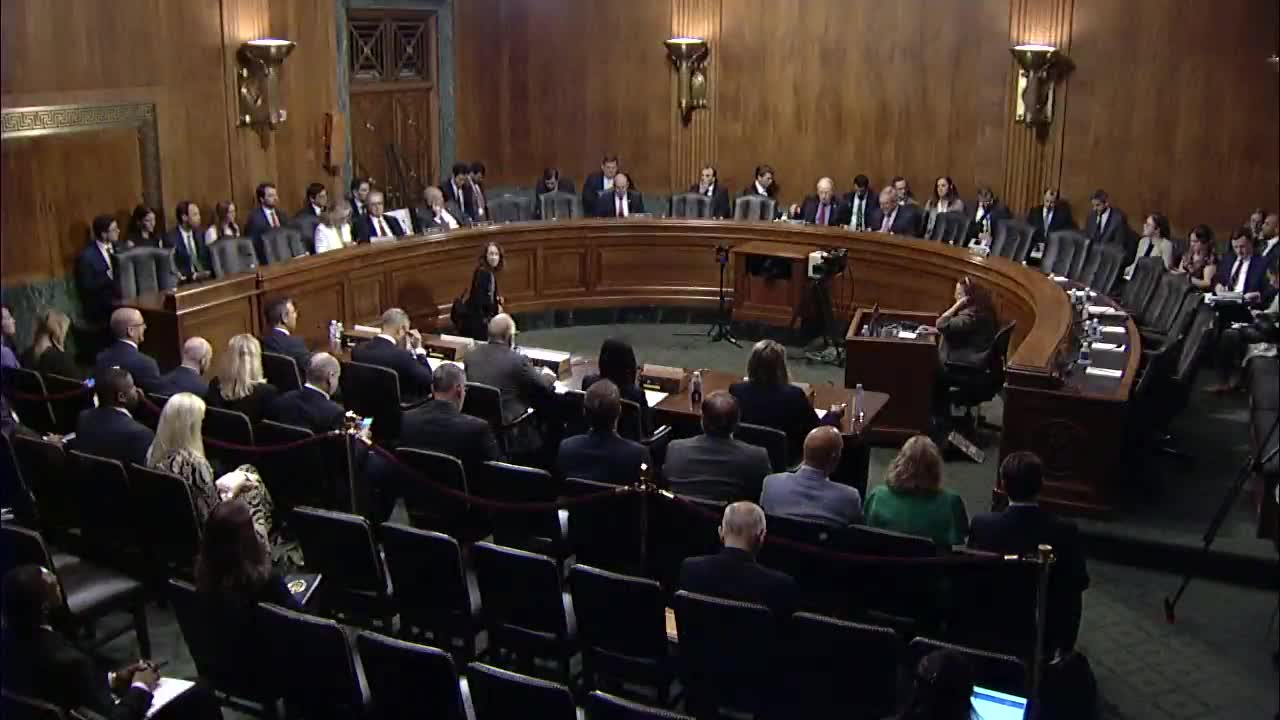
Senate hearing highlights PBM practices, patient delays and calls for transparency and fiduciary duties
Get AI-powered insights, summaries, and transcripts
SubscribeSummary
A Senate Judiciary Committee hearing featured patients' and pharmacists' accounts of delayed care, below-cost reimbursements and pharmacy closures tied to pharmacy benefit manager (PBM) practices, while witnesses and economists urged new transparency rules, fiduciary duties and antitrust scrutiny.
At a Senate Judiciary Committee hearing on competition in the prescription drug supply chain, senators and witnesses described how pharmacy benefit managers, or PBMs, influence which drugs patients receive and how much patients and local pharmacies are paid.
Senator Chuck Grassley, chairman of the committee, opened the hearing by saying: "We're examining competition issues in the prescription drug supply chain. Pharmacy benefit managers, PBMs as we call them, play a significant role in [the] drug supply chain." He and Senator Dick Durbin, the committee's ranking member, joined witnesses in arguing that PBM consolidation, vertical integration and opaque business practices are harming patients and independent pharmacies.
The panel heard two types of firsthand accounts. Medical providers described treatment delays when PBM policies redirected specialty prescriptions away from clinicians' preferred pharmacies. "During that wait, his bowel symptoms worsened, and he desperately wondered why he had not started treatment yet. That is what we're up against," said Sheetal Kircher, a medical oncologist at Northwestern Medicine Feinberg School of Medicine, recounting a patient whose oral chemotherapy was redirected by a PBM to a different specialty pharmacy.
Independent pharmacists described financial pressures that threaten local access. Randy McDonough, co‑owner of Towncrest Pharmacy Corporation and president of the American Pharmacists Association, told senators that a medication his pharmacy supplied cost $728.35 but "our reimbursement from the PBM ... was only $10.33." McDonough said net income across his six pharmacies was negative $116,000 in one recent year, that he converted one rural location to a hybrid telepharmacy and closed another on May 1 because reimbursement levels were unsustainable.
Navitus Health Solutions, a PBM that describes itself as a pass‑through model, said transparency and a low net‑cost focus can align incentives. "Navitus is a transparent pass through PBM," Sharon Faust, chief pharmacy officer at Navitus, told the committee. Navitus said it operates in all 50 states, covers almost 19 million lives and does not practice spread pricing, and she urged lawmakers to design rules that target specific behaviors rather than broadly prohibit ownership models.
Representing the PBM industry, JC Scott, president and CEO of the Pharmaceutical Care Management Association, argued PBMs negotiate discounts and deliver savings to plan sponsors and employers. "Everything PBMs do relates back to our mission of lowering drug cost and creating affordable access for patients," Scott said, while acknowledging the system still leaves many patients exposed to high list prices.
An economist on the panel, Neeraj Sood of the University of Southern California, summarized research about the distribution of drug spending: "Out of every $100 in prescription drug spending, about $40 went to firms in the supply chain," and he said vertical integration and excess returns for some firms suggest the market is not fully competitive. Sood urged policy changes including fiduciary duties for PBMs, greater price transparency, rebate reform so patient cost sharing is based on post‑rebate prices, and antitrust scrutiny of vertical integration.
Senators and witnesses pointed to several specific practices raised repeatedly during the hearing: spread pricing and ‘‘clawbacks’’ that retroactively reduce pharmacy payments; direct‑to‑consumer advertising and high list prices set by manufacturers; PBM steering of prescriptions to affiliated pharmacies; prior‑authorization and other utilization controls that can delay treatment; and rebate arrangements that can inflate list prices and shift costs to patients. Senator Durbin referenced the Federal Trade Commission’s work and said enforcement alone is not enough, urging bipartisan legislation.
Witnesses and senators offered overlapping policy options. Suggested measures included requiring PBMs to operate as fiduciaries to plan members and beneficiaries, mandating pass‑through of rebates or requiring patient cost sharing to be based on post‑rebate net prices, banning spread pricing, increasing auditability and data access for plan sponsors, and directing the Federal Trade Commission and Department of Justice to scrutinize vertical integration and anticompetitive conduct. Senator Grassley and others described legislation already introduced or advanced in committee, including the PBM Transparency Act and the Prescription Drug Pricing for the People Act, which committee members said would require more study, disclosure and enforcement from the FTC.
Committee members from states with rural pharmacy closures emphasized local consequences: lawmakers cited closures in Iowa, Missouri, Tennessee, Alabama and other states and linked them to below‑cost reimbursements, unpredictable retroactive adjustments, and other PBM practices. McDonough and other independent pharmacists warned that pharmacy deserts reduce access to medication and local clinical services and urged near‑term fixes from HHS and CMS as well as statutory reform.
The hearing closed with committee leaders asking witnesses for written follow‑up and encouraging bipartisan work, with senators suggesting both rapid regulatory steps and longer legislative fixes. The committee noted FTC interim staff reports and asked for a fuller FTC study with recommendations.
The record shows broad agreement among many senators and several witnesses that the drug supply chain contains opaque practices that merit congressional and regulatory attention, but the panel differed on structural remedies such as forced divestiture of PBM ownership of pharmacies. Several witnesses recommended more targeted rules (transparency, fiduciary duty, pass‑throughs) while others warned against broad prohibitions that could reduce market options.
Written questions for the record are due to the committee; senators said they will weigh regulatory and legislative options in coming weeks.