Get Full Government Meeting Transcripts, Videos, & Alerts Forever!
Get email alerts on the Trade Exports And Global Markets topic
No spam. Unsubscribe anytime.
Trade nominee David Fogle vows to press non‑tariff barriers while defending administration’s tariff agenda
Summary
David Fogle, nominated to lead the Commerce Department’s Global Markets unit and the U.S. and Foreign Commercial Service, told senators he will focus on non‑tariff barriers that limit U.S. exports while also supporting the administration’s trade and investment priorities, including countering China and attracting foreign direct investment.
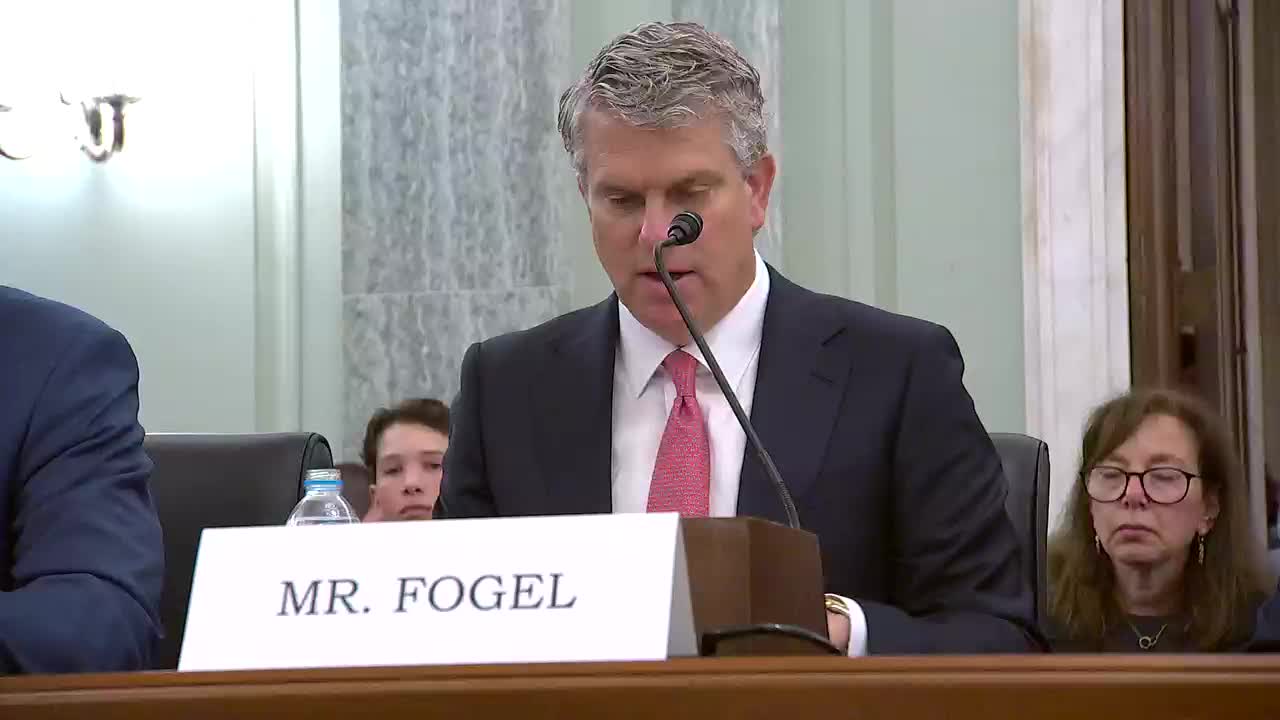
David Fogle, the nominee to be assistant secretary of commerce for global markets and director general of the U.S. and Foreign Commercial Service, told the Senate Commerce Committee he will target non‑tariff barriers to U.S. exports and work to attract foreign direct investment if confirmed.
Senators pressed Fogle about the administration’s tariff policy and how it affects exporters. Fogle said non‑tariff barriers — such as sanitary restrictions or technical import rules — are “more insidious than tariffs” and cited examples where U.S. beef exports have been blocked by foreign regulations. “Tariffs are simple to understand, difficult to deal with. But, I think non‑tariff barriers are even more challenging,” he said.
Fogle described his prior service in the first Trump administration at the Export‑Import Bank and the State Department, where he worked on programs intended to compete with China for overseas business. He told senators he would work with the Commerce Department’s Global Markets professionals and interagency partners to help U.S. companies navigate foreign markets and to bring investment into the United States through SelectUSA and related programs.
Several senators raised concerns that the administration’s tariff agenda would provoke retaliation and harm U.S. exporters; Fogle said he would seek to balance export promotion with national‑security and investment screening considerations and work with interagency partners on investment vetting. He also discussed rural‑export centers and the role of the Commercial Service in supporting small and rural businesses.
The hearing included no committee vote; senators said they will submit questions for the record.