Get Full Government Meeting Transcripts, Videos, & Alerts Forever!
Get email alerts on the Family Law Interstate topic
No spam. Unsubscribe anytime.
Appeals court hears argument over UIFSA jurisdictional limits after New York proceedings
Summary
Counsel disputed whether the Uniform Interstate Family Support Act (UIFSA) constrains Massachusetts courts’ ability to adjudicate child‑support matters when the children’s home state is another jurisdiction and a related custody proceeding exists in that other state.
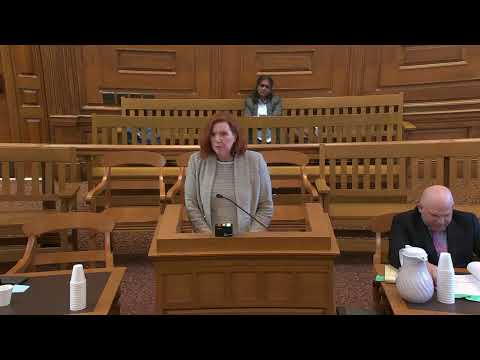
The Appeals Court wrestled with a jurisdictional challenge in a child‑support dispute where the children had been living in New York and parallel proceedings had been litigated there. Appellant counsel Matthew Barak argued Massachusetts lacked jurisdiction under the Uniform Interstate Family Support Act (UIFSA) and related provisions; appellee counsel Jennifer LaManna said the record and practice below show Massachusetts properly exercised jurisdiction.
Barak urged the panel that UIFSA creates a statutory framework allocating which state may adjudicate support when multiple actions are filed, and he said the statute’s use of the word “jurisdiction” should be read as a limit on a tribunal’s subject‑matter authority when another state is the children’s home state. He argued the New York courts were the proper forum and that Massachusetts lacked authority to enter final child‑support provisions under those statutory limits.
Jennifer LaManna, counsel for the mother, responded that the record shows father repeatedly contested New York jurisdiction and that New York courts dismissed support claims after procedural challenges; she said Massachusetts therefore acted permissibly when it entered temporary orders and later a final judgment addressing child support. LaManna told the panel she amended pleadings and pursued relief consistent with the statutes and that the argument now offered by the father — that UIFSA operates as nonwaivable subject‑matter jurisdiction barred Massachusetts from deciding the issue — was incorrect as a matter of law.
The panel closely questioned whether provisions in UIFSA that allocate priority to a child’s home state are best treated as personal‑jurisdiction rules or as limits on subject matter authority, and whether a party who successfully removes support proceedings from an out‑of‑state forum can later be estopped from arguing the foreign court should have retained authority. Judges also asked both counsel about the record in New York and whether New York’s dismissals were final and appealable.
No opinion was issued at argument; the court said it would examine the record, the parties’ filings in both states, and controlling UIFSA and related jurisprudence before issuing a written decision that could clarify when and how UIFSA controls competing interstate support claims.