Get Full Government Meeting Transcripts, Videos, & Alerts Forever!
Get email alerts on the Search And Seizure topic
No spam. Unsubscribe anytime.
Panel considers whether consent to search was voluntary after police threatened warrant in Greaney case
Summary
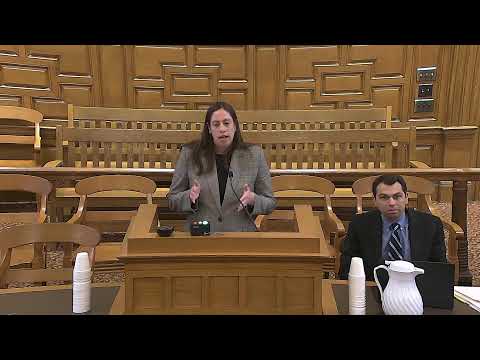
The Appeals Court heard argument in Commonwealth v. Stephen Greaney on whether the search of a former police officer’s home was supported by voluntary consent or was the product of coercion when the chief of police and officers confronted the defendant at work and then accompanied him to his home.
The Appeals Court heard argument in Commonwealth v. Stephen Greaney on whether the search of a former police officer’s home was supported by voluntary consent or was the product of coercion when the chief of police and officers confronted the defendant at work and then accompanied him to his home.
Kevin Connolly, arguing for the Commonwealth, said officers corroborated a supervisor’s report that city property had been taken from municipal premises and that surveillance corroborated the account. Connolly urged de novo review of the suppression ruling or, in the alternative, remand for the trial judge to make fuller findings: “I think it should be remanded. Actually, that's an alternative argument of mine,” he told the panel.
Defense counsel Ben Good Brooks defended the motion judge’s ruling suppressing evidence as a factual finding entitled to clear‑error review and argued the judge’s credibility determinations supported the conclusion that consent was involuntary. Brooks emphasized the totality of circumstances: the presence of the police chief and experienced detectives, the defendant’s being told officers could seek a warrant, Miranda warnings given at the scene, and the defendant’s ultimate signing of a written consent form in police custody.
The panel questioned whether the judge’s written, handwritten endorsement reflected a finding of fact or a legal conclusion, and whether the transcript and endorsements supplied the particularized factual findings necessary to review voluntariness. The attorneys debated whether police statements that they could obtain a warrant amounted to an unlawful coercion or were a permissible indication of investigative options; the parties also disputed whether the record shows the officers actually had probable cause.
At argument, counsel disputed the order of events at the library, whether the defendant expressly consented before or after being transported, and whether items found in the home — including controlled substances, a safe containing prescription drugs and cash, and a quantity of marijuana and scale — were located before or after any contested step in the search. The court took the appeal under advisement.