Get Full Government Meeting Transcripts, Videos, & Alerts Forever!
Get email alerts on the Energy Affordability topic
No spam. Unsubscribe anytime.
Gov. Maura Healey files Energy Affordability, Independence and Innovation Act to lower utility bills
Summary
At an event in Leominster, Gov. Maura Healey and state energy officials unveiled legislation they say will cut charges on utility bills, expand discounts for moderate‑income households and pursue new regional energy supplies, projecting more than $10 billion in savings over time.
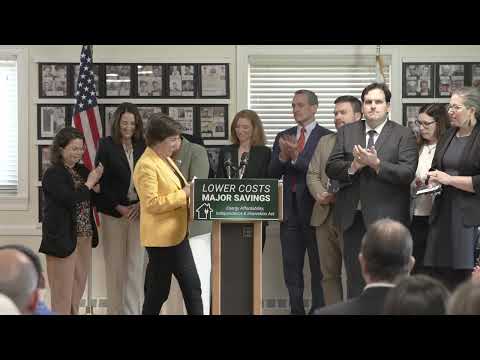
LEOMINSTER, Mass. — Gov. Maura Healey on Saturday filed the Energy Affordability, Independence and Innovation Act, a package her administration says will remove charges from customer bills, expand a moderate‑income discount to gas customers and pursue new regional energy supplies to lower costs for families and businesses.
The proposal, announced at the Veterans Center in Leominster, is the latest step in an administration effort Healey said will deliver more than $10 billion in savings over time and about $100 million in the first year. “Weare not about kicking the can down the road,” Healey said, arguing the bill will create “more accountability for our utilities” and ensure ratepayer dollars are used efficiently.
The measure would direct reforms the Healey administration says will phase out some customer charges, reform how programs such as Mass Save are financed, change net‑metering rules and give state officials more flexible procurement authority to bring additional energy into Massachusetts and the region. Rebecca Tepper, secretary of energy and environmental affairs, told the audience the bill would also ask the Department of Public Utilities to limit charges that spike seasonally and cap month‑to‑month bill increases where possible. “Customers should only be paying for what they need when they need it,” Tepper said.
Administrations officials and local lawmakers framed the bill as a two‑part approach: reduce the immediate cost burden on bills and increase the long‑term supply of reliable energy. Healey said the administration previously implemented a 10% rate reduction, a $50 one‑time rebate and measures that produced about $225 million in direct savings; the new legislation would expand an existing moderate‑income discount to include gas customers and pursue regional projects, including Canadian hydro and ‘‘cutting‑edge small‑scale nuclear technology,’’ to increase supply and lower prices.
State Sen. John Cronin and State Rep. Natalie Higgins, both present, praised the filing. Cronin called utility bills a top constituent concern, especially for seniors and veterans, and said the administrationand legislature must collaborate to deliver relief. Higgins highlighted local service organizations that assist residents with bills and said the legislation was welcome news for households that repeatedly struggle to pay monthly utility charges.
The bill as announced is a filed proposal; no vote was taken at the event. Officials said it will be carried through the legislature and involves changes that will require regulatory work by the Department of Public Utilities (DPU) and buy‑in from regional partners. Tepper said the administration negotiated permitting and siting compromises earlier this year and has reengaged with neighboring jurisdictions and Canada on supply projects.
Officials also proposed programmatic changes. Tepper said the administration would phase out the alternative portfolio standard, reform net metering, and alter Mass Save financing; she said these changes alone would save ratepayers “billions.” Healey and Tepper emphasized that bringing additional supply into the region is a core component, arguing that more supply will reduce market volatility that drives up consumer prices.
Several locally connected speakers praised the initiative and the governorfor her response after heavy flooding in the region in 2023; they also urged continued attention to implementation. Ellen DeGerano, introduced from the audience, and others noted the long history of high utility bills for older residents and small businesses in the region.
What happens next: the filing starts the legislative process. The administration said it will work with the legislature and with regulators to draft specific statutory language and to direct the DPU on elements that require administrative action. Officials did not provide a timetable for committee hearings or final votes.
—
Key details provided at the event: • Administration estimate of savings: $10,000,000,000+ over time; $100,000,000 in the first year. • Prior steps cited by the administration: 10% rate reduction in March–April; a $50 bill rebate; roughly $225,000,000 in direct savings delivered in recent months. • Policy levers mentioned: phase out of alternative portfolio standard; net‑metering reform; changes to Mass Save financing; expanded moderate‑income discount to gas customers; more flexible procurement authority; consideration of small‑scale nuclear technologies.
Officials and local lawmakers cautioned that the package requires legislation and regulatory action and that final implementation details, timelines and impacts on individual customers will depend on subsequent rulemaking and legislative amendments.