Get Full Government Meeting Transcripts, Videos, & Alerts Forever!
Get email alerts on the Criminal Appeals topic
No spam. Unsubscribe anytime.
Appeals panel hears challenge to prosecutor burden‑shifting and jury instructions in Lesage retrial
Summary
Appeals Court justices heard oral argument in Commonwealth v. Claude Amiee Le Sage over whether trial‑level errors — including a court‑invited prosecution response and missing‑witness instructions — unfairly tipped the scales at retrial.
Appeals Court justices heard oral argument in Commonwealth v. Claude Amiee Le Sage over whether trial‑level errors — including a court‑invited prosecution response and missing‑witness instructions — unfairly tipped the scales at retrial.
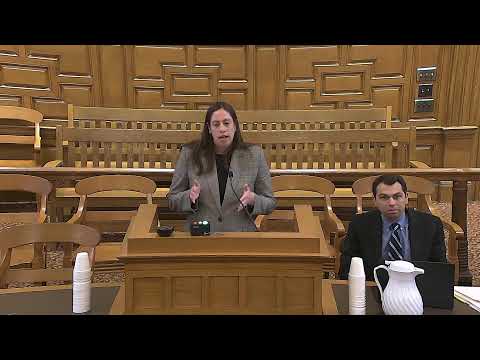
Defense counsel Lindsay Kanter told the three‑judge panel that multiple procedural failures at the trial “merit reversal,” focusing on what she called an “improper and prejudicial burden shifting” and the trial court’s missing‑witness instruction. She said the judge had “sua sponte ... invite[d] the prosecutor to burden shift” and that the resulting instructions and argument “put a thumb on the scale.”
Kanter argued the combination of the court’s conduct and the prosecutor’s closing argument undermined the presumption of innocence and the government’s burden to prove guilt beyond a reasonable doubt. She also urged the court to set aside admission of a 911 recording that, she said, was provided to the defense only the morning of trial and materially strengthened the Commonwealth’s case. “What the prosecutor and the court did here was tell the jury that if Mr. Lesage did not present his own accusers to testify in his favor, that could be held against him,” Kanter told the panel.
Assistant District Attorney Timothy Ferriter acknowledged portions of the prosecutor’s closing “came close to the line” but defended several contested choices as not reasonably likely to have changed the outcome. Ferriter told the panel the case had “overwhelming” elements — pointing to an officer’s eyewitness testimony and the 911 recording — and said he did not view the misstatements and investigatory missteps as necessarily dispositive. On the question of whether a curative instruction should have been given in response to argument about medical records, Ferriter said it “would have been better” but argued jurors had documentary evidence to assess the claim.
The justices repeatedly pressed both sides on preservation of objections and the applicable standard for reviewing trial error. Kanter urged reversal even under a mixed standard, invoking the SJC and Appeals Court precedents that found a “substantial risk of a miscarriage of justice” where burden shifting and missing‑witness instructions interact to prejudice a defendant. Ferriter countered that the defense had avenues to protect the record and that the jury here had been given exhibits that, in his view, contradicted an asserted misstatement of the medical record.
The parties discussed remedy. Kanter said a new trial would be required at least as to the assault and battery count; Ferriter said the conviction could survive if the court finds the admitted errors harmless by a substantial‑risk standard. The panel asked detailed questions about jury deliberation lengths, preservation of objections, and whether the defense’s closing arguments invited some of the disputed inferences. The court took the case under advisement.
The case is Commonwealth v. Claude Amiee Le Sage, Docket No. 2024‑0932; argument included Justices Vicky Henry and Chauncey Wood and the panel chairing the session.