Lifetime Citizen Portal Access — AI Briefings, Alerts & Unlimited Follows
House Ways and Means markup devolves into clashes over Medicaid, ACA subsidies and tax cuts for the wealthy
Loading...
Summary
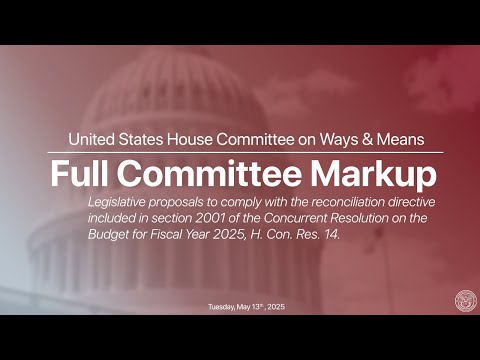
Wednesday’s Ways and Means markup produced repeated, sometimes heated votes on amendments to a GOP reconciliation tax package that Democrats say will cut health coverage for millions while delivering permanent tax breaks to the wealthiest Americans.
Republican lawmakers pressed ahead in a House Ways and Means markup of the party’s reconciliation tax bill as Democrats repeatedly warned the package would strip health coverage from millions of people while permanently extending large tax cuts for high-income households and pass-through businesses.
Representative Plaskett said at the committee microphone, “Giving money to the rich does not raise wages or grow new jobs,” summing a theme repeated across the Democratic side: the bill’s benefits tilt to the wealthiest while it reduces or fails to extend supports Democrats say working families need.
Why it matters: Democrats described a package that combines permanent tax reductions for high earners with policies they say would shrink federal roles in health care and safety-net programs. Members from both parties traded amendment votes through the night; many measures offered by Democrats — including attempts to preserve expanded Affordable Care Act subsidies, to extend Medicaid-equivalent protections in non‑expansion states, and to strengthen paid family leave — failed in party-line or near-party-line votes.
Most urgent: Democrats warned that the bill’s provisions would sharply raise the federal deficit and reduce coverage. Representative Suozzi cited committee analysis during debate: "As we heard earlier today, this is going to increase deficits by $4,000,000,000,000," he said. Representative Horsford argued an amendment to extend the ACA advanced premium tax credit was necessary to prevent “millions of working Americans from losing their health care coverage.” That amendment and others to preserve or expand health-care subsidies and patient protections were rejected by the majority.
What supporters say: Republicans framing in committee said the package is intended to jump-start growth, simplify business taxes, and deliver permanent relief to households. During the markup members repeatedly defended provisions such as expanded pass‑through deductions and limits on the state-and-local tax (SALT) relief as pro-growth, pro‑middle‑class measures.
What opponents say: Democrats and some moderate Republicans pressed a different narrative: the bill locks in permanent tax benefits for the highest earners and corporations while relying on savings that, they argue, come from cutting health-care programs and other supports. Representative Panetta questioned adding a debt limit increase into reconciliation; Representative Plaskett and others highlighted the disproportionate gains to ultra‑wealthy taxpayers. Representative Sanchez and others pointed to impacts on workers who would lose coverage or face higher premiums if the ACA credit is not extended.
Votes and outcomes: Committee roll calls repeatedly rejected Democratic amendments. Examples recorded during the markup: Rep. Panetta’s amendment to strip an embedded debt‑limit provision failed, 19 yes to 26 no; a separate amendment (Boyle) to require use of a current‑law baseline also failed by a similar margin; Rep. Horsford’s amendment to permanently extend the ACA advance premium tax credit was rejected in committee (yeses 19, noes 25). Several health‑care‑focused amendments and measures to preserve or expand the child tax credit, paid leave, and other supports were debated but not adopted.
Process and politics: Democrats said the reconciliation process and placement of provisions — for example, inserting large tax cuts and debt‑related language into a single reconciliation bill — prevented full debate and forced stark choices between deficit spending and program protections. Members repeatedly noted the limited time to review a lengthy bill and complained they received critical distributional data late in the proceedings. Republicans said the package was a consolidated plan to deliver tax relief and pro‑growth policy and defended the bill’s architecture and numbers.
What to watch next: If the committee report advances, the text will move to the House floor and to the Senate under reconciliation instructions; several Democrats and moderate Republicans said they wanted changes in the final text. Key near‑term questions include whether the bill preserves the ACA advanced premium tax credit, whether Medicaid funding or eligibility provisions survive, and whether clean‑energy tax credits and other industrial incentives are retained. Members on both sides flagged the potential for additional floor amendments and for Senate changes that could alter costs and coverage outcomes.
Background: The markup revisited many of the same policy and budget tradeoffs that have dominated the last year of fiscal and tax debate — the 2017 Tax Cuts and Jobs Act (TCJA), the Inflation Reduction Act and their distributional effects on incomes, and competing priorities for deficit reduction versus targeted relief. Members repeatedly referenced Territorial Medicaid history (including PROMESA for Puerto Rico) and prior tax bills as context for their amendments and criticism.
Ending note: The markup stretched into late hours with a series of procedural votes that left many Democratic priorities unmet and exposed deep partisan divisions over whether the bill’s permanent tax changes and deficit impact are justified. Several Democrats said they would press floor action and public messaging to try to preserve ACA subsidies, Medicaid access and family‑oriented supports before any final action in the House or Senate.