Get Full Government Meeting Transcripts, Videos, & Alerts Forever!
Get email alerts on the Bridgecard Application Portal topic
No spam. Unsubscribe anytime.
Lawmakers Question MDHHS BridgeCard Application Portal, Verification and Fraud Controls
Summary
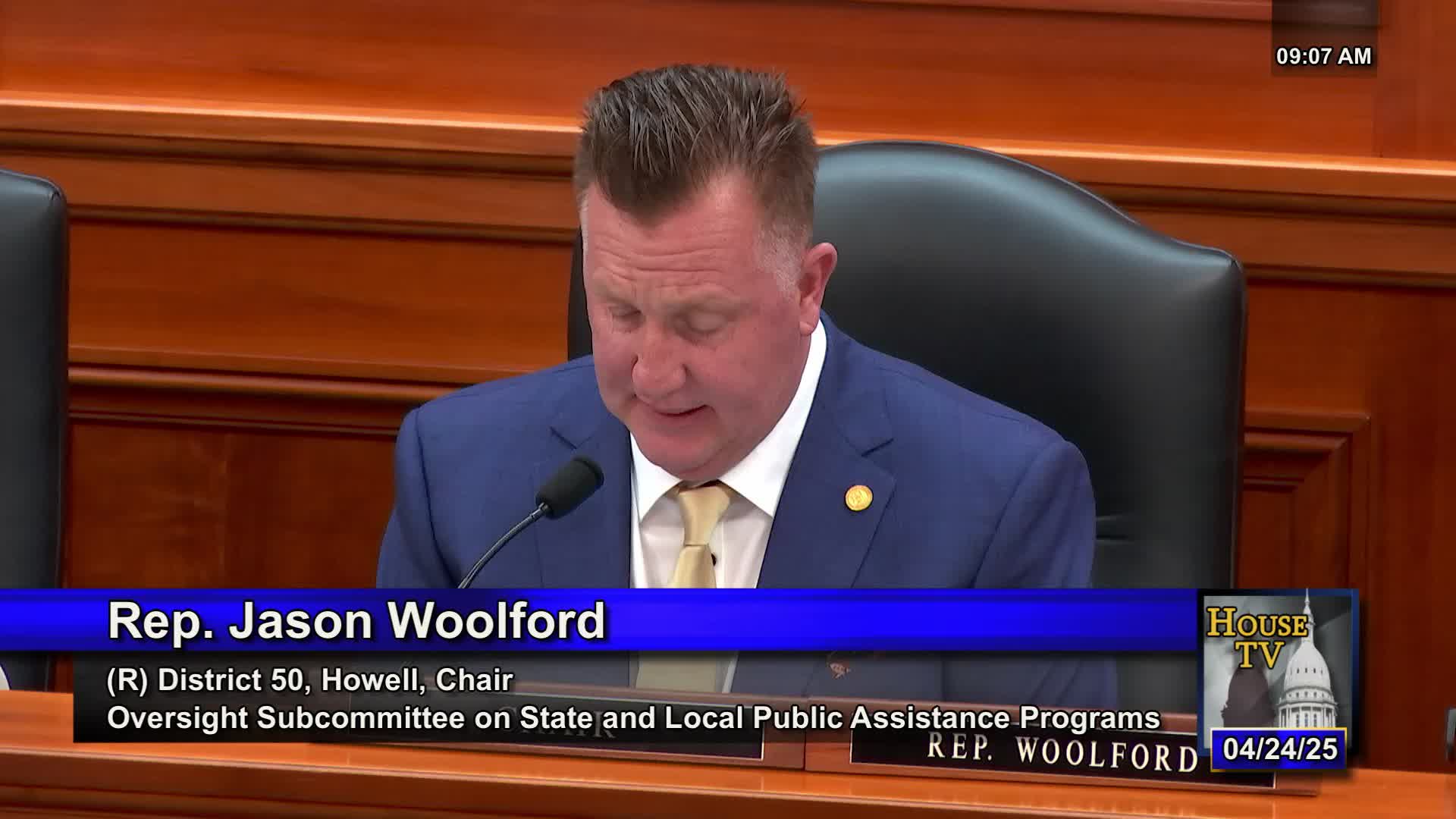
At an Oversight Committee hearing, Michigan Department of Health and Human Services (MDHHS) officials defended the MyBridges/BridgeCard application process while lawmakers pressed for data on unfinished applications, verification checks, fraud referrals and staffing for manual reviews.
At a meeting of the Oversight - State and Local Public Assistance Programs, lawmakers pressed Michigan Department of Health and Human Services officials about the BridgeCard and MyBridges online application portal, focusing on guest applications, identity and residency verification, expedited benefits rules, and fraud controls.
The committee’s questions ranged from why the portal allows a “guest” application without a Social Security number to how the department detects and refers suspected fraud. Duane Haywood, senior deputy director of the Economic Stability Administration at MDHHS, told the panel that “benefits are not issued until that certification is done and complete,” and described multiple back‑end crosschecks that occur after an initial submission.
Committee members said the front end of the portal lets applicants proceed with minimal information — in the committee’s test, only a name, date of birth and address were required to advance — and they asked whether that design increases the burden on MDHHS staff to verify submissions later. Haywood said the system is designed to capture as many applicants as possible, to accommodate people without reliable email, phone or device access, and that information entered as a guest is transposed into Bridges and run through systematic verification before any benefit is certified.
Lawmakers repeatedly asked about specific verification steps. Haywood said MDHHS uses automated cross‑matches with internal mainframes, the Social Security and IRS datasets and private services such as Equifax, and that the department uses the SAVE (Systematic Alien Verification for Entitlements) system for immigration verification. He said cases with inconsistencies are routed to specialists for interviews and to the Office of Inspector General (OIG) when fraud is suspected.
The committee pressed on several features raised in the panel’s test application: 1) the ability to submit an unfinished application; 2) the option to list other household members or apply on behalf of another person; 3) a page that appears for noncitizen claimants; and 4) the option to add an authorized BridgeCard user. Haywood said unfinished or incomplete records are followed up by specialists and that an application will not certify without required verifications. He also said MDHHS refers suspected fraud to OIG and that the department has “constant meetings” with fraud detection units.
Lawmakers asked for data and promised to follow up. Haywood agreed to provide the committee with verification checklists and multiple data requests the panel made, including counts and outcomes for unfinished applications, breakdowns of finished applications, cross‑match results used for citizenship verification, data on referrals to the OIG and any prosecutions that followed, and staffing counts for specialists who perform in‑person or telephone verifications.
Committee members also raised the federal timeline for expedited food assistance and how MDHHS meets it. Haywood described the federal expedited requirement: MDHHS must determine eligibility within six days and, if entitled, issue benefits on the seventh day; he said that federal timeline governs the department’s expedited process.
The hearing closed with a final line of questioning about a voter registration prompt that the committee’s test encountered near the end of the application, with lawmakers asking why MDHHS offers voter‑registration functionality on the same portal and whether that raises verification concerns. The committee adjourned after requesting the follow‑up materials from MDHHS.