Get Full Government Meeting Transcripts, Videos, & Alerts Forever!
Get email alerts on the Public Assistance Programs topic
No spam. Unsubscribe anytime.
House oversight panel hears overview of state public assistance programs and federal funding constraints
Summary
The House Oversight Committee on State and Local Public Assistance Programs heard a detailed briefing March 13 from Kevin Korstra, deputy director of the House Fiscal Agency, covering five primary Michigan assistance programs, recent caseload changes and how federal funding rules affect state budgeting.
The House Oversight Committee on State and Local Public Assistance Programs heard a detailed briefing March 13 from Kevin Korstra, deputy director of the House Fiscal Agency, on how Michigan’s primary public-assistance programs are funded, how eligibility is set, and how caseloads have changed in recent years.
Korstra told the committee the agency reviewed five main programs: the Family Independence Program (FIP), the Food Assistance Program (FAP, commonly called SNAP), State Disability Assistance (SDA), the State Emergency Relief program (including energy assistance), and the Child Development and Care (CDC) child-care subsidy program. He described their funding mixes, eligibility thresholds, and recent policy-driven caseload shifts.
Why it matters: the programs provide basic cash, food, energy and child-care support to low-income Michigan households and rely on a mix of federal block grants, federal entitlement funding and state dollars. Changes in federal guidance and one-time federal funds in 2020–2023 have altered how the state claims federal maintenance-of-effort (MOE) and how much state revenue must be pledged to keep access to federal block grants.
Korstra summarized program specifics and recent trends. He said FIP is a time-limited cash program for households with a dependent child and noted a 60-month lifetime limit for receipt of FIP cash benefits. "It doesn't have to be consecutive. It's from 1996 to now," he said, responding to a question about the 60‑month rule. Korstra reported the fiscal-year 2025 appropriation for FIP at about $104.8 million and that roughly 86 percent of that is financed through the federal TANF block grant, with the remainder from state restricted funds and general purpose revenue. He said Michigan sets benefit levels and some eligibility tests within federal TANF rules, including work requirements.
On food assistance, Korstra said benefits are 100 percent federally financed and administered with a federal-state cost‑share for program administration. He said eligibility generally reaches about 200 percent of the federal poverty level for the program’s household definitions and noted an asset limit of $15,000. He told the committee FAP caseloads peaked around 2011 near 2 million cases, fell through 2019, then rose again after 2020 and are the program most sensitive to changes in unemployment.
Korstra described SDA as a state‑funded cash program for disabled adults with a reported individual income threshold near $600 per month and an average maximum cash benefit cited at about $200 per month; he said SDA often provides transitional assistance while people apply for federal SSI. He said benefit amounts may vary for special living arrangements such as adult foster care.
On State Emergency Relief and energy assistance, Korstra said the state combines federal LIHEAP grants with the Michigan Energy Assistance Program (MEEP), which receives state restricted revenue from an energy bill surcharge. He described spikes in funding in FY2022–FY2023 driven largely by federal COVID‑era resources and said the state temporarily was able to provide larger one‑time payments during that period.
Korstra said the CDC child-care subsidy program serves families up to about 200 percent of federal poverty, varies reimbursement by provider type and quality rating, and totaled roughly $400 million in FY2025 with approximately 68 percent coming from a federal CCDF grant and state and TANF dollars filling remaining shares. He said the state retained some COVID‑era eligibility and rate increases into FY2024–FY2025 using a mix of federal and state dollars.
Korstra also reviewed TANF as a federal block grant that provides Michigan roughly $770 million annually and requires the state to identify a corresponding level of state maintenance of effort. He said federal guidance in recent years has narrowed what states can count as MOE, which changed how Michigan could claim certain K–12 and scholarship expenditures beginning in FY2024–FY2025.
Committee members followed with questions about work‑training programs, barriers to employment (child care and transportation), verification of household composition and citizenship, and how federal eligibility and verification systems (including SAVE) are used. Korstra said Michigan uses data matches and residency verification in eligibility reviews and that some programs (for example, emergency Medicaid for inpatient care) have different federal eligibility rules.
Votes at a glance: Representative Cara moved to adopt the minutes of the committee’s March 13, 2025 meeting; there were no objections and the motion prevailed by unanimous consent.
The committee did not take further formal actions on policy changes; members asked staff to provide additional details on disability exemptions, the definition of household composition for eligibility, and program participation rates for seniors.
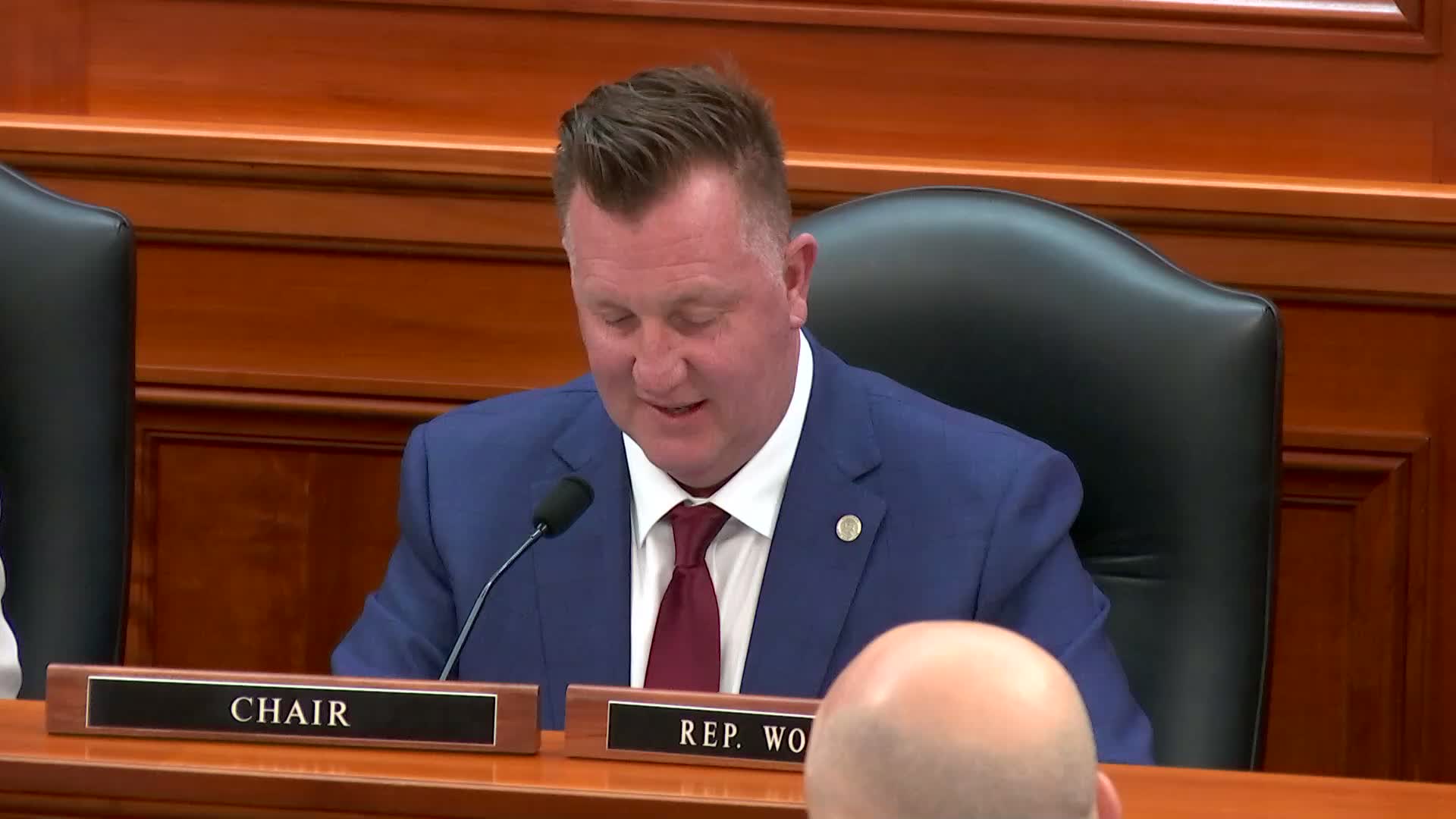
The session concluded after a question-and-answer period, and Chair Wilford adjourned the meeting.