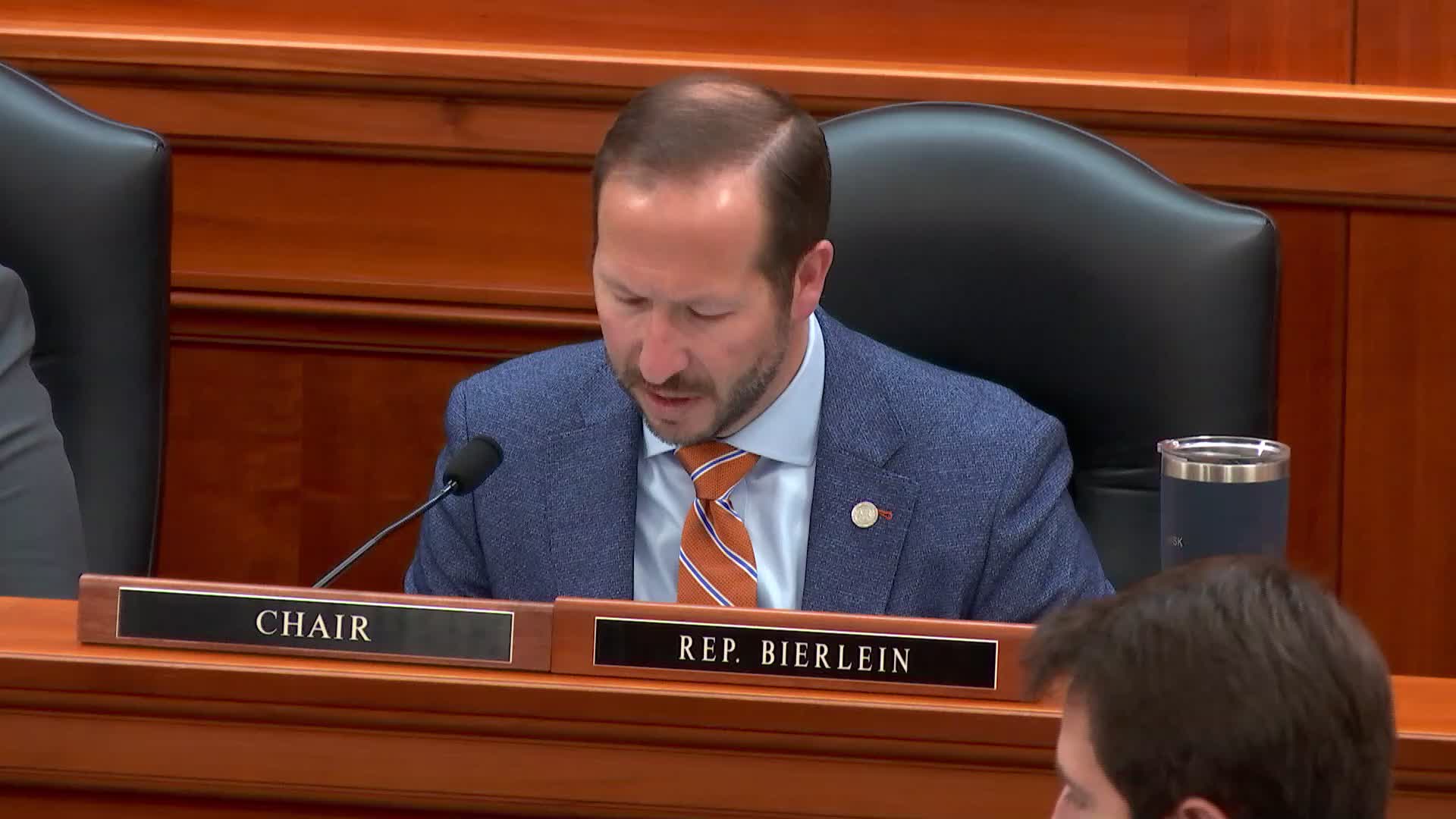
House Oversight panel questions Michigan Public Health Institute on funding, staffing and ties to MDHHS
Loading...
Summary
Lawmakers questioned Michigan Public Health Institute CEO Dr. Renee Branch Kennedy about the institute’s funding mix, staff assigned to the Michigan Department of Health and Human Services, its role during COVID and the effects of recent federal funding cuts.
The House Oversight Subcommittee on Public Health and Food Security heard from Dr. Renee Branch Kennedy, CEO of the Michigan Public Health Institute (MPHI), about MPHI’s structure, funding sources and its contractual relationship with the Michigan Department of Health and Human Services (MDHHS).
MPHI is a quasi‑nonprofit organization created by statute to extend public health capacity in Michigan through partnerships with the state and three research universities. “Public health is what we as a society do together,” Dr. Branch Kennedy said, describing MPHI’s role as a bridge among state government, universities and philanthropic funders. She told the panel that MPHI was designed to be at arm’s length from the state so it could pursue funding sources the state could not.
The committee pressed Dr. Branch Kennedy on MPHI’s budget and staffing. She said roughly 55% of MPHI’s overall budget comes from federal funding, and that about 86% of MPHI’s dollars now flow through MDHHS. She told the panel MPHI’s work represents about 0.5% of MDHHS’s budget. Regarding employees, Dr. Branch Kennedy estimated MPHI directly employs roughly 350–400 staff at its Okemos campus and has about 600 affiliate staff assigned to MDHHS; affiliate staff are MPHI employees who work exclusively under MDHHS direction.
Lawmakers pressed how MPHI’s affiliate staffing works in practice. Dr. Branch Kennedy said affiliate employees are paid and administered by MPHI but “get their direction…from the department.” She said MPHI seeks salary comparability with civil servants and works with MDHHS human resources and civil service to mirror state pay increases where directed.
Several representatives asked about the effects of recent federal funding cuts. Representative McDonald described lost county programs and asked whether terminated grants could be replaced. Dr. Branch Kennedy said MPHI’s budget is “about 55% federal dollars” and acknowledged the Centers for Disease Control funding reductions have “trickled down” to MPHI. She said MPHI is seeking other grants, philanthropy and contract work to “gap stop” losses and is working with MDHHS to reassign or transition affected staff where possible.
Members asked about MPHI’s contracting role during the COVID‑19 response. Dr. Branch Kennedy characterized MPHI’s role as transactional: MDHHS made decisions about distributing funds and choosing partners; MPHI executed contracts and performed due diligence. She confirmed MPHI facilitated contact‑tracing contracts on MDHHS’s behalf and that the department sometimes issued stop‑work orders when requested.
Committee members also sought examples of MPHI projects. Dr. Branch Kennedy cited child death review, overdose fatality review, opioid task force support, epilepsy control, ACEs (Adverse Childhood Experiences) work, perinatal regional collaboratives and programs such as Senior Project FRESH and community health assessments. She said MPHI partners variably with Michigan State University, Wayne State University and the University of Michigan—sometimes as prime applicant and sometimes as a subcontractor—and that MPHI brings operational capacity (evaluators, project managers, statisticians) to university‑led research.
On governance, Dr. Branch Kennedy said MPHI’s bylaws make the MDHHS director the board chair or permit a designee to serve. She told the committee that arrangement was intentional to balance accountability and operational distance.
The committee requested documentation: Dr. Branch Kennedy said MPHI produces a comprehensive deliverables report for MDHHS and that she would provide committee members with the link. She also agreed to supply precise staff counts, lists of vendors used for contact tracing, and a more detailed project list and funding breakdown.
Votes at the meeting included approval of the minutes of the April 15, 2025 meeting (motion by Representative Green; approved by unanimous consent) and a motion to excuse absent members (motion by Representative McDonald; approved by unanimous consent).