Get Full Government Meeting Transcripts, Videos, & Alerts Forever!
Get email alerts on the Cme And Licensing topic
No spam. Unsubscribe anytime.
Physicians and attorneys tell lawmakers Michigan's CME rules and licensing sanctions create career risks
Summary
Physicians and a health‑care attorney told the oversight subcommittee that Michigan's continuing medical education (CME) mandates and licensing disciplinary practices are onerous and can trigger cascading professional penalties; they urged statutory reforms, non‑disciplinary corrective actions and clearer, narrower sanctions.
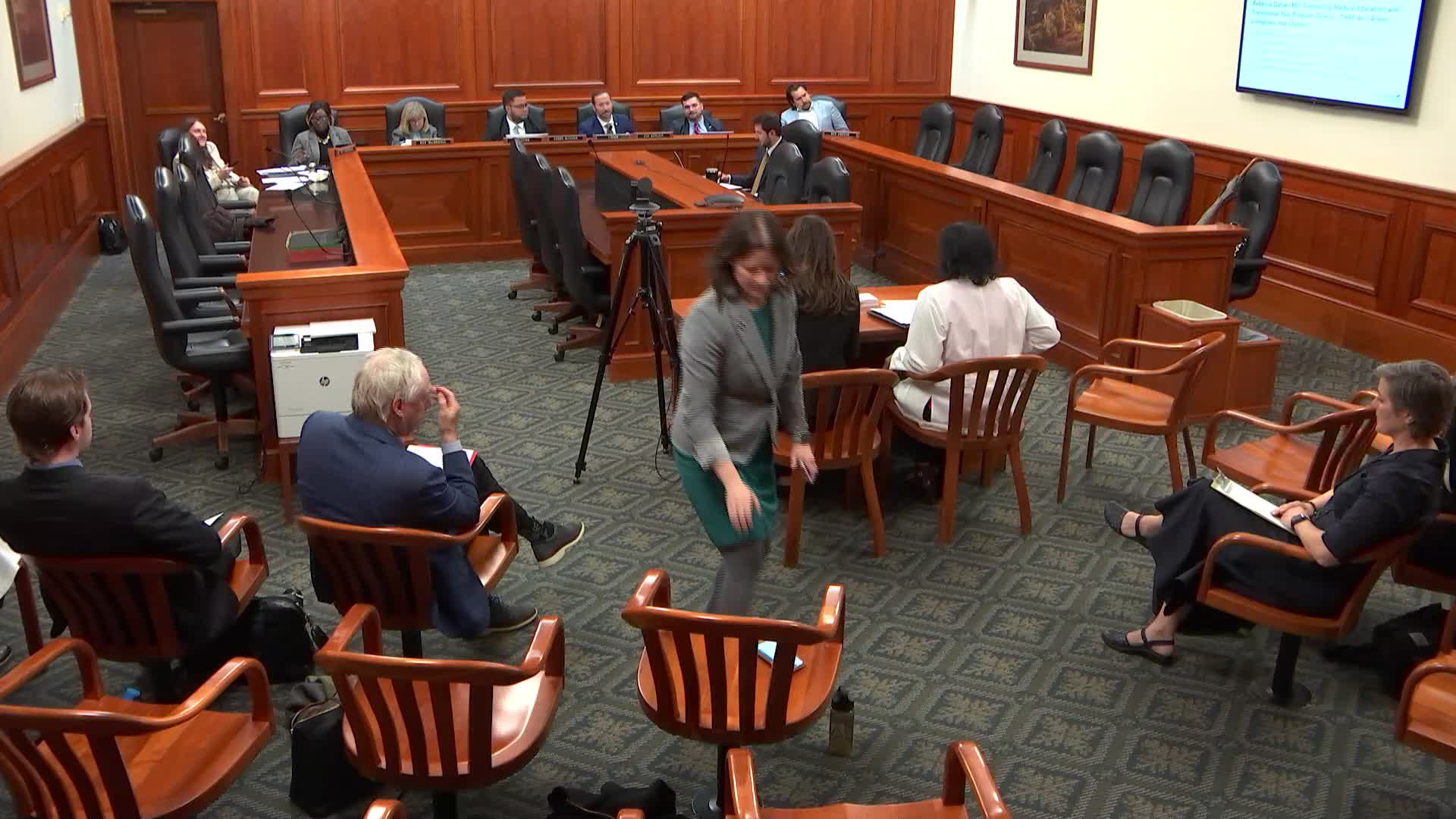
Physicians, medical‑education leaders and a health‑care attorney told the House Oversight Subcommittee on Public Health and Food Security that Michigan's continuing medical education rules and licensing sanctions can have disproportionate career consequences and should be reformed.
Dr. Rebecca Daniel, a physician and medical‑education leader at Trinity Health Ann Arbor and an ACCME board member, told the committee that Michigan requires 150 hours of CME every three years, including 75 hours of Category 1 credits, and that the volume of mandated topics and documentation requirements is burdensome and can pull clinicians away from patient care. "CME is not the only source of education that we pursue," Daniel said, urging lawmakers to reduce Michigan's CME requirement to align with the national average and to reduce topic‑specific mandates.
Kathleen Westfall, a health‑care attorney who represents physicians in licensing matters, described how common enforcement tools can have collateral, long‑term effects. She explained that a routine CME audit can lead to a sanction such as fines or probation if a licensee cannot produce documentation. "By having an encumbered license through being on probation even temporarily or even for a day, you can risk losing your board certification status," Westfall said, and that loss can cascade to limits on insurance participation, hospital privileges, higher malpractice premiums and career disruption.
Westfall recommended legislative changes including wider use of non‑disciplinary corrective action for minor violations, statutory expungement timelines for certain sanctions, clearer use limits for probation and enhanced transparency in the disciplinary process.
Witnesses gave examples they said illustrate the mismatch between documented compliance failures and clinical competence: Daniel said she had encountered a long‑time, high‑quality clinician who faced sanctions for a recordkeeping gap and was pulled out of clinical practice despite otherwise strong performance measures.
Committee members heard several reform proposals: reduce the overall hours required for CME, remove or narrow mandatory topic lists so physicians can direct education to practice gaps, replace career‑jeopardizing sanctions for paperwork lapses with administrative fines or non‑disciplinary corrective actions in appropriate cases, and clarify the licensing code so probation serves its original fitness‑to‑practice purpose rather than functioning as a collateral punishment.
The committee did not take legislative votes during the hearing. Speakers provided contact information for follow‑up and asked the committee to consider statutory fixes that would preserve public safety while reducing undue career harms.