Get Full Government Meeting Transcripts, Videos, & Alerts Forever!
Get email alerts on the Oversight Homeland Security And Foreign Influence topic
No spam. Unsubscribe anytime.
Retired general tells Michigan oversight panel U.S. Air Force is "smallest, oldest, least ready" since 1947
Summary
At a meeting of the House Oversight Committee on Homeland Security and Foreign Influence, Brig. Gen. Doug Slocum (ret.) warned that U.S. airpower faces shrinking fleets, aging aircraft and strained munitions stockpiles while committee leadership laid out a mission focused on foreign influence, including the Chinese Communist Party.
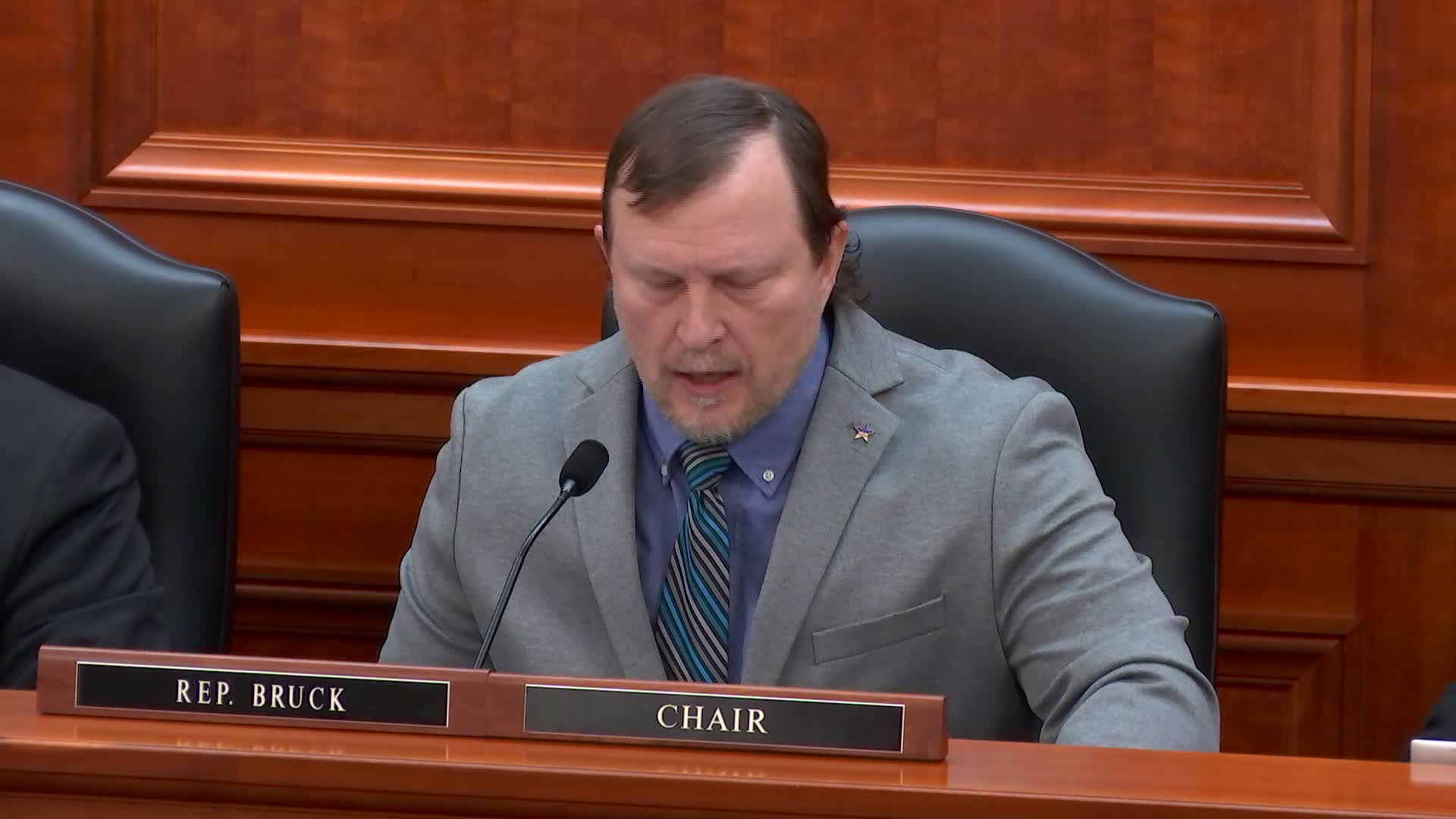
At a meeting of the House Oversight Committee on Homeland Security and Foreign Influence, Chair Brock read a committee mission statement and Brigadier General Doug Slocum (retired) told members the U.S. Air Force is "the smallest, it is the oldest, and it is the least ready that it has ever been in its history since 1947."
The committee chair said the panel’s mission is "to enhance the awareness and to safeguard Michigan by investigating, analyzing, and exposing breaches in homeland security and hostile entities or countries of concern specifically the Chinese Communist Party's influence and impact on security." The chair described four tactical outputs the committee will produce: letters of recommendation, letters of concern, letters of awareness to citizens, and hearings intended to position Michigan as a model for state-level oversight.
Nut graf: The hearing combined the committee’s inaugural framing of its oversight role with a defense-focused briefing from a retired Air Force officer. Slocum warned members that shortages of aircraft, spare parts and munitions, plus limited production capacity, reduce U.S. force posture — an argument the committee chair said underscores the need for state-level attention to homeland security and foreign influence.
Slocum, who identified himself as the state president of the Air and Space Forces Association and a former commander at Selfridge Air National Guard Base, gave what he described as three main points: the Air Force is smaller, older and less ready than at any time since its 1947 founding. He detailed fleet trends, saying the services are programmed to retire "almost a thousand aircraft" in the next five years while procuring roughly 250, and he pointed to supply-chain and production limits that constrain recapitalization.
He cited specific program shortfalls: the F-22 was capped at 187 aircraft rather than the roughly 1,000 once studied; only 21 B-2 bombers were purchased (he said one was lost, leaving 20 at a single base); and many legacy platforms remain in service after extended modernization. Slocum said F-35 mission-capable rates have been below 50 percent on some measures, and he gave an aggregate figure that the Air Force has about 1,206 combat-capable fighter aircraft but, applying typical mission-capable rates, roughly 700 fighters available worldwide on any given day. For bombers he said roughly 54 were available for worldwide operations after accounting for testing/training and readiness rates.
Slocum tied readiness shortfalls to procurement and budget history, saying about $1.3 trillion of planned Air Force recapitalization was reprioritized after the end of the Cold War and during long counterinsurgency campaigns, leaving the force older and more expensive to sustain. He also highlighted munitions and supply-chain limits exposed by recent conflicts, including increased global demand for 155 mm artillery and naval missiles used in Red Sea operations.
Committee members questioned Slocum on causes and implications. Representative Conlin asked whether investment in drones has been treated as a substitute for recapitalizing manned aircraft; Slocum answered that unmanned systems have important and expanding roles but do not today replace the capabilities demonstrated by manned platforms such as the F-35. Representative Schreiber raised concerns about foreign influence and personnel with dual citizenship; Slocum said screening and security-clearance practices should focus on individuals’ risk regardless of citizenship and urged robust vetting. Several members, including Representative Minster and Representative Merritt, asked about Selfridge Air National Guard Base: Slocum described Selfridge as host to multiple homeland-security tenants (including Air and Marine operations and border-patrol components), noted the base’s unique ranges and capacity, and warned that losing a fighter mission would erode locally based skills and community economic impact.
The committee’s chair framed the panel as a "first-mover" statewide committee intended to produce policy recommendations, letters of concern, and public awareness products on topics the chair identified as priorities: fentanyl, human trafficking, higher education, technology, homeland readiness, and critical resources. The chair said the committee expects to cover those topics across the next 25–30 sessions and signaled an aggressive timeline to produce results within approximately 22 months.
Ending: The meeting adjourned after a period of questions and closing remarks. The chair and witnesses said they would continue to provide material to the committee; Slocum offered the Air and Space Forces Association as a resource for future briefings.