Get Full Government Meeting Transcripts, Videos, & Alerts Forever!
Get email alerts on the Child Welfare topic
No spam. Unsubscribe anytime.
Advocates urge child-centered reforms; committee adopts regular meeting schedule
Summary
The House Oversight Subcommittee on Child Welfare System heard a presentation from the Center for Rights of Abused Children on legal reforms, data on child maltreatment and foster-care outcomes, and state policy options. Lawmakers adopted a regular Tuesday meeting time and confirmed appointed members.
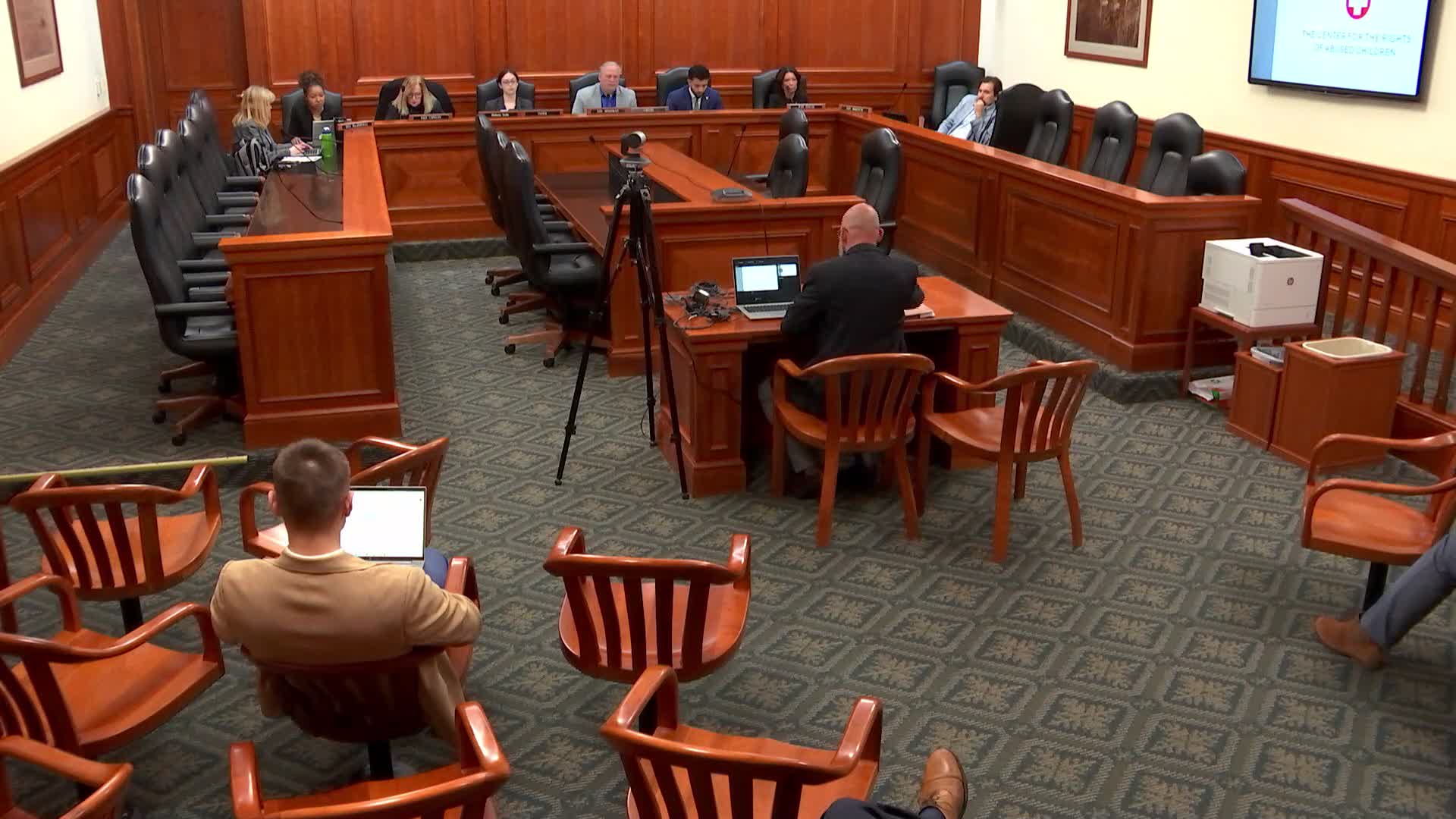
The House Oversight Subcommittee on Child Welfare System met Jan. 30 and heard a presentation from Bradley Gilbreth of the Center for Rights of Abused Children outlining nationwide child-welfare data and possible reforms to give children stronger legal protections and improve permanency outcomes.
Gilbreth told the committee that “everybody had a voice except the child,” arguing that many child-welfare proceedings lack child-directed legal representation and citing national research that, he said, shows poor outcomes for children who lack counsel. He urged Michigan lawmakers to consider steps other states have taken, including guaranteed legal counsel for children, enforceable bills of rights for children and caregivers, stronger fatality-review processes, and clearer statutory kinship-search requirements.
The presentation framed reforms around four pillars — justice, safety, family and future — and included national and state figures Gilbreth attributed to federal data. Highlights cited to the committee included: that about 50% of children experience reabuse within three years of reunification; that national child maltreatment fatality rates have risen by more than 30% since 2010; that roughly 20,000 children each year disappear from foster care; and that in Michigan federal data reported 35 child maltreatment fatalities (2.04 per 100,000), an average time in care of 28.8 months and that more than 25% of children spend three or more years in care. Gilbreth summarized the stakes bluntly: “These are dismal outcomes that we can and should change.”
Committee members asked detailed questions about practices other states use. Gilbreth pointed to Utah’s use of earlier and more frequent permanency review meetings, and to Arizona laws that give children a right to counsel and that bar use of a child’s Social Security benefits to pay for care. He described Arizona changes requiring thorough relative searches, reporting missing children to the National Center for Missing and Exploited Children and keeping cases open until recovery, and said those steps were intended to reduce the number of children who go missing from care and to improve recovery efforts.
Lawmakers discussed tradeoffs repeatedly raised in the presentation: the tension between parental rights and child safety; the need to distinguish neglect that rises to state intervention from poverty or noncriminal parental decisions; and the challenges of providing timely services that make reunification safe. Several members raised questions about kinship placements, how states prioritize relatives versus long-term foster caregivers when both are interested in permanency, and whether fiscal pressures can drive premature case closures or premature reunification.
The subcommittee took two formal, procedural actions during the meeting. Members confirmed appointments read into the record by letter from Jay DeBoer: Representative Luke Meerman as chair, Representative Angela Regas as vice chair, Representatives Brad Paquette and Jennifer Conlin as members, and Representative Sharon McDonald as a member. The committee then adopted a regular meeting schedule, naming Tuesdays at 10:30 a.m. in Room 308 of the House Office Building as the normal day, time and location. Representative Angela Regas moved to adopt the schedule; the roll-call vote was 5-0-0 in favor (Chair Luke Meerman: yes; Representative Rodriguez: yes; Representative Brad Paquette: yes; Representative Jennifer Conlin: yes; Representative Sharon McDonald: yes).
No statutory proposals were voted on at this session; the hearing was structured as an informational briefing and Q&A. Members indicated interest in follow-up briefings on topics Gilbreth raised, including (1) models for guaranteed counsel or enhanced guardian-ad-litem programs, (2) statutory kinship-search requirements and how states document and notify relatives, (3) policies and protocols for missing children from care and interagency reporting, and (4) measures to expedite permanency or adoption for older youth. Gilbreth offered to provide research and model statutory language to committee members.
The subcommittee convened with a quorum and adjourned after members gave brief personal introductions. With the schedule adopted and the speaker’s materials on the record, members directed staff to schedule additional informational sessions in coming weeks to examine policy options and state examples in more detail.