Get Full Government Meeting Transcripts, Videos, & Alerts Forever!
Get email alerts on the Child Welfare topic
No spam. Unsubscribe anytime.
Michigan child advocate outlines authority, child-death review process and training needs for MDHHS
Summary
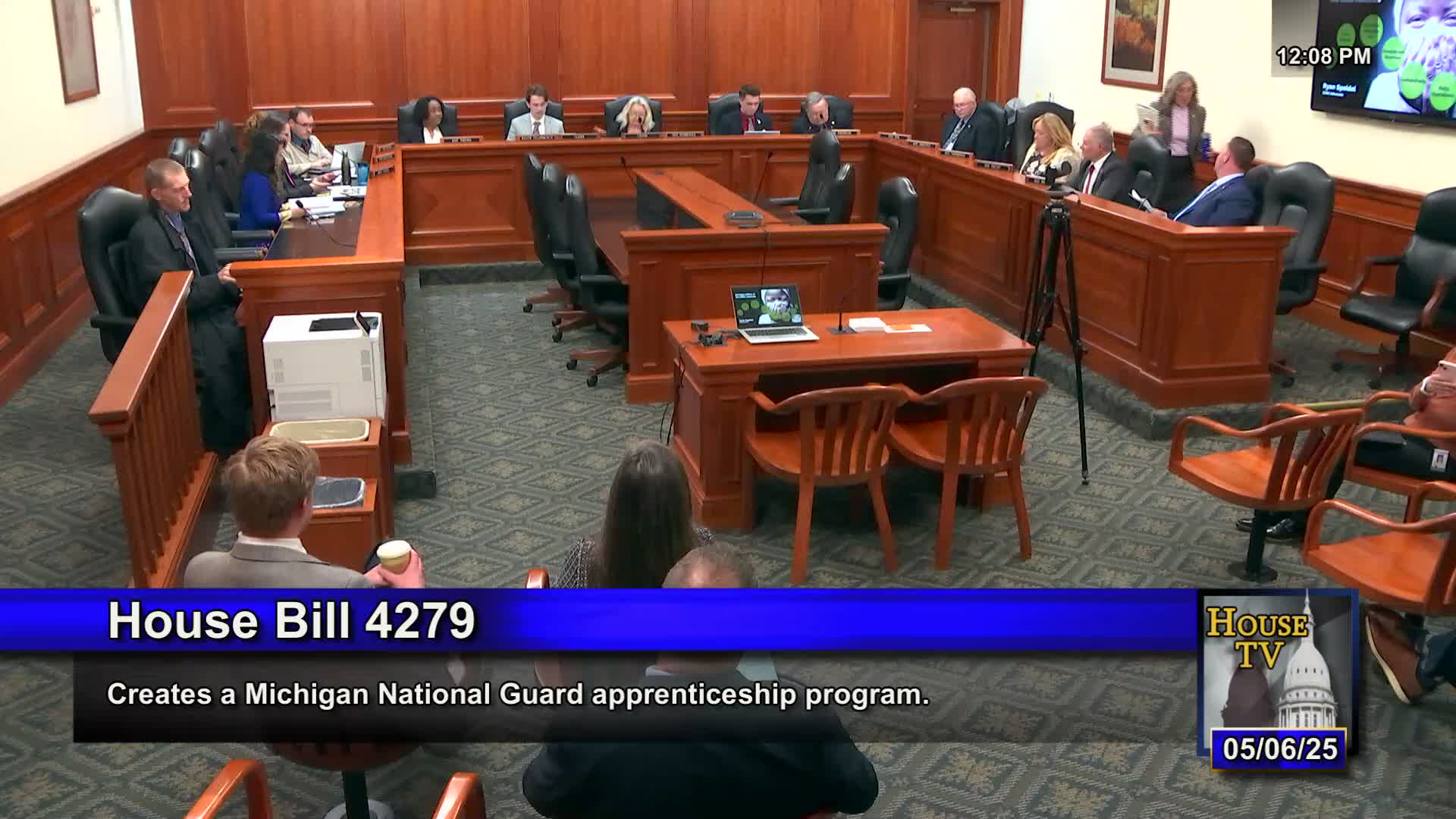
Ryan Bridal, Michigan’s child advocate, told the House Families and Veterans Committee his office investigates cases tied to child welfare, conducts child-death reviews, can seek real-time compliance from MDHHS and is pursuing data-driven work on unsafe-sleep deaths; he described staffing, budget and confidentiality rules.
Ryan Bridal, Michigan’s Child Advocate, told the House Families and Veterans Committee that the Office of Child Advocate investigates complaints tied to child welfare programs administered by the Michigan Department of Health and Human Services, conducts child-death reviews for cases where MDHHS had prior contact with a family, and can take steps — including contacting department staff in real time — to seek compliance with law, administrative rules and department policy.
Bridal said the office, housed administratively in the Department of Technology, Management and Budget, reviews roughly 350 to 400 child-death alerts a year — out of about 1,000 child deaths statewide — that involve families with prior department contact. “We’re just getting notified of the ones where the department had interaction with that family prior to the death,” Bridal said. He described the office’s role as producing findings and recommendations from long-term investigations and, when necessary, intervening during an active case to correct actions as they occur.
The office’s annual report and a binded compilation of findings and recommendations were provided to the committee. Bridal said those documents contain legislative recommendations developed from case investigations and that the office publishes investigative reports 30 days after closing a case, with redactions to protect victim information.
On causes of child deaths, Bridal said unsafe-sleep cases and substance exposure often appear in the office’s reviews. He told the committee that in the population of unsafe-sleep deaths his office tracks, roughly 20% of the infants had substance-positive births. He said the office wants to partner with the University of Michigan data lab to mine case narratives for patterns and to guide prevention work.
Bridal described the office’s legal powers: advocacy with legislators, public education, complaint intake and long-term investigations; a statutory authority to “pursue all necessary legal action to protect the health, safety, and well-being of a child,” and the specific ability, under law, to submit a petition for removal of a child from a home if the department is not acting when the office believes removal is necessary. He emphasized the office is not a regulatory agency and said it seeks compliance through reports and real-time interventions.
He told representatives the office has a budget of roughly $3.1 million and about 23 staff members, and that about 94% of the budget goes to staffing. The office received roughly $40,000 in its budget for public-service announcements last year and produced a training video that cost “a little over $100,000,” Bridal said. The office is funded entirely from the state general fund, he said.
Committee members pressed Bridal on the separate audit and reporting by the Office of Family Advocate (an MDHHS entity). Bridal said the Office of Family Advocate is a separate entity and that its recent audit findings — which alleged some death reviews were not properly investigated — related to that office’s protocol and not to the Office of Child Advocate. Bridal declined to speak for MDHHS on that audit and said questions about that audit should be addressed to the department.
Bridal described confidentiality controls: the office’s work is exempt from the Freedom of Information Act and not subject to subpoena or court order, which Bridal said is necessary to protect complainants and witnesses. He said the office has read-only access to the state child-welfare information system (MiSACWIS) and other MDHHS intake portals to follow referrals and investigations.
On staffing and training, he told the committee that a core problem in MDHHS protective services is new-employee preparation and that “experiential learning” and better training could help retain staff and reduce missed work. He said long-term investigations can take four months to a year; one foster-care investigation mentioned in testimony is about three years long.
Committee members asked about federal prevention programs; Bridal said his office is funded by the state general fund and does not receive federal funding, and he said the federal defunding of the Safe to Sleep campaign would likely be “very bad” for preventing unsafe-sleep deaths, while noting he could not predict the future.
Bridal closed by repeating the office’s mission: to advocate, review, recommend and educate to improve child-welfare outcomes, and said the office seeks to work with MDHHS through mediation, reports and direct contacts to remedy compliance problems.