Get Full Government Meeting Transcripts, Videos, & Alerts Forever!
Get email alerts on the Corrections Safety Audit topic
No spam. Unsubscribe anytime.
Auditor general finds safety, security lapses at three Michigan prisons; corrections department vows statewide fixes
Summary
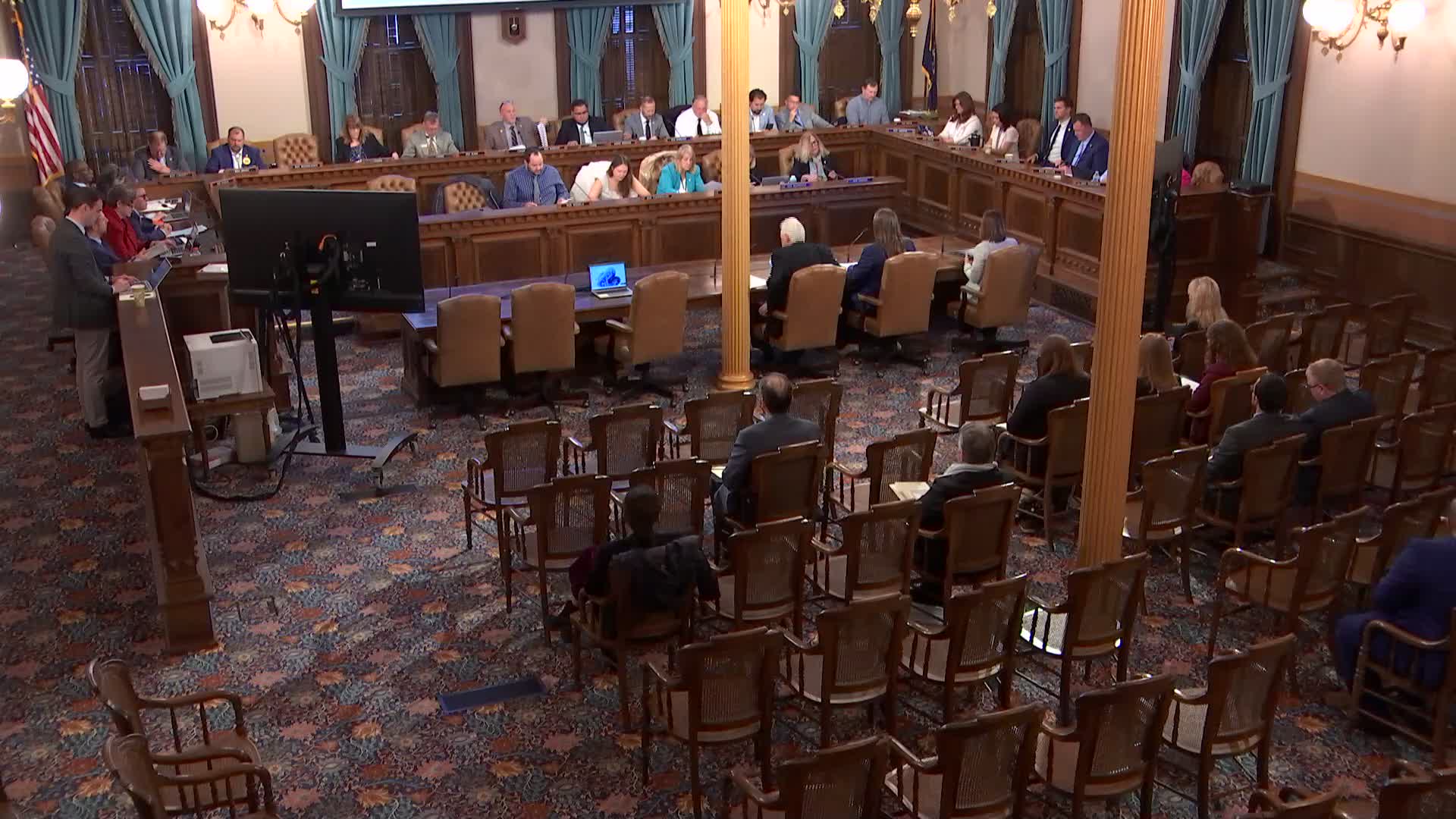
The Office of the Auditor General told a joint hearing of the Michigan House Committee on Oversight and the House Appropriations Subcommittee on Corrections and Judiciary that performance audits of Baraga Correctional Facility, Ionia Correctional Facility and the Richard A. Hanlon Correctional Facility found widespread noncompliance with selected safety-and-security policies.
The Office of the Auditor General told a joint hearing of the Michigan House Committee on Oversight and the House Appropriations Subcommittee on Corrections and Judiciary that performance audits of Baraga Correctional Facility, Ionia Correctional Facility and the Richard A. Hanlon Correctional Facility found widespread noncompliance with selected safety-and-security policies.
"We concluded the facilities partially complied with this objective," Audit Division Administrator Leah Decker said, noting the audit teams reported a total of 18 findings across the three reports, 10 of which the office classified as material conditions.
The findings matter because they involve routine procedures designed to prevent contraband and maintain staff and prisoner safety. The audits documented problems with cell searches, key access controls, metal detectors, tool inventories, segregation reviews, security rounds and gate manifests — and included both direct video evidence and record reviews.
Audit manager Lori Leaming told lawmakers the teams saw frequent mismatches between written logs and surveillance footage. "Thoroughly completed cell searches help to detect and confiscate contraband in prisoners' possession that could compromise the safety and security of staff and prisoners," Leaming said. The audit found that officers documented searches while video showed they did not enter the cells: 38% of documented searches at Ionia, 26% at Baraga and 4% at Richard A. Hanlon could not be corroborated by video. The audits also measured how quickly searches were performed: 46% of Baraga searches observed on video lasted less than one minute, 34% at Richard A. Hanlon and 31% at Ionia.
Other notable findings included key-control weaknesses at Baraga: auditors found 30 of 191 people (16%) with active access to electronic key cabinets were no longer employed there, and their access had remained active for an average of roughly 2.5 years after departure. At Ionia, auditors reported that nearly 30% of required uses of an upright CellSense metal detector did not occur or were bypassed; about 24% of the time prisoners were allowed to hold property above a detector and no subsequent search was performed. Auditors also reported that some walk‑through metal detectors failed tests of smaller metal objects and that statewide policy lacked guidance on detector sensitivity and appropriate test pieces.
Tool-control problems were cited at Baraga (critical tools omitted from inventories in 24% of reviewed tool areas) and Richard A. Hanlon (15% of sampled daily tool inspections and 23% of monthly tool inspections were not performed). Auditors reported segregation-review problems at Baraga, including a sample in which the warden did not approve or document initial segregation placement within 72 hours in 24 of 25 applicable instances and other lapses in required reviews.
The reports also documented missed security rounds at Ionia (officers sometimes walked hallways without opening cell windows to verify prisoner presence), gate-manifest and search lapses at all three facilities, missing daily prisoner counts at Baraga (25% of sampled informal counts) and incomplete radio checks at Baraga (18% of required checks not timely; 7% of base-station checks missed). The Baraga report included an additional objective presenting staffing exhibits and a 162-officer survey of which 40 responded; many respondents reported concerns about overtime and safety.
The auditors said the Michigan Department of Corrections had agreed with the findings and, in written responses included in each published report, indicated it had begun actions such as additional training and policy revisions. "MDOC agreed with all of our finding recommendations across the reports," Decker said.
Kyle Kaminski, representing the Michigan Department of Corrections, told the committees the department accepted the findings and is applying lessons statewide. "One of the first things I want to stress is while these audits relate to three of our facilities, we are applying the lessons from these audits to all 26 facilities," Kaminski said. He said the department had stress‑tested metal detectors statewide, recalibrated some units and in some cases purchased newer equipment; it also opened investigations when video suggested documented searches had not occurred and has treated falsification of records as a potentially dischargeable work‑rule violation.
Several legislators pressed auditors and department witnesses on causes and consequences. Representative Paquette asked whether the audit linked contraband-related violent incidents to the specific control gaps; auditors said that question was outside their compliance‑scope and pointed members to the department's critical‑incident processes. Representative Merriman and others asked about the last time similar audits were conducted; auditors said Baraga's last facility audit dated to 2001 and the Ionia and Richard A. Hanlon sites had audits about 15 years ago, with some earlier reports showing continuing topics such as cell-search practices.
Committee members also asked about investigations and discipline. Auditors said disciplinary cases were opened where their evidence suggested searches documented in logs did not appear on video; the department said investigations had been initiated and that discipline up to discharge is possible depending on investigation outcomes. Kaminski said the department is prioritizing coaching and supervisory mentoring, investments in technology to reduce manual paperwork, and targeted capital purchases (for example, package scanners and newer metal detectors) to reduce the operational burden on front‑line staff.
Looking ahead, the Office of the Auditor General indicated the department will provide a more formal corrective‑action plan in roughly 60 days, and auditors said they typically follow up on material findings in about 12 to 18 months. The department said some changes — such as recalibrating or replacing detectors, launching investigations, and piloting package‑scanner technology — are already underway or being rolled out more broadly across facilities.
The joint hearing included extended questioning of both audit staff and corrections officials; committee leaders did not take a formal vote on any policy change during the session. The published audit reports include page references and exhibits for readers seeking the detailed tests and supporting data.
(Ending) The full Office of the Auditor General reports and the department's written responses are posted with the published audit packages; lawmakers said they expect to review the department's corrective‑action plan when it is submitted and may revisit the issues in a follow‑up review.