Get Full Government Meeting Transcripts, Videos, & Alerts Forever!
Get email alerts on the Water Quality Pfas topic
No spam. Unsubscribe anytime.
Huron River Watershed Council praises EGLE's role on PFAS and dam work but calls for more resources
Summary
The council told the committee that EGLE has been central to PFAS response and dam‑removal planning, but underfunding slows monitoring, cleanups and volunteer programs; the council urged increased agency funding.
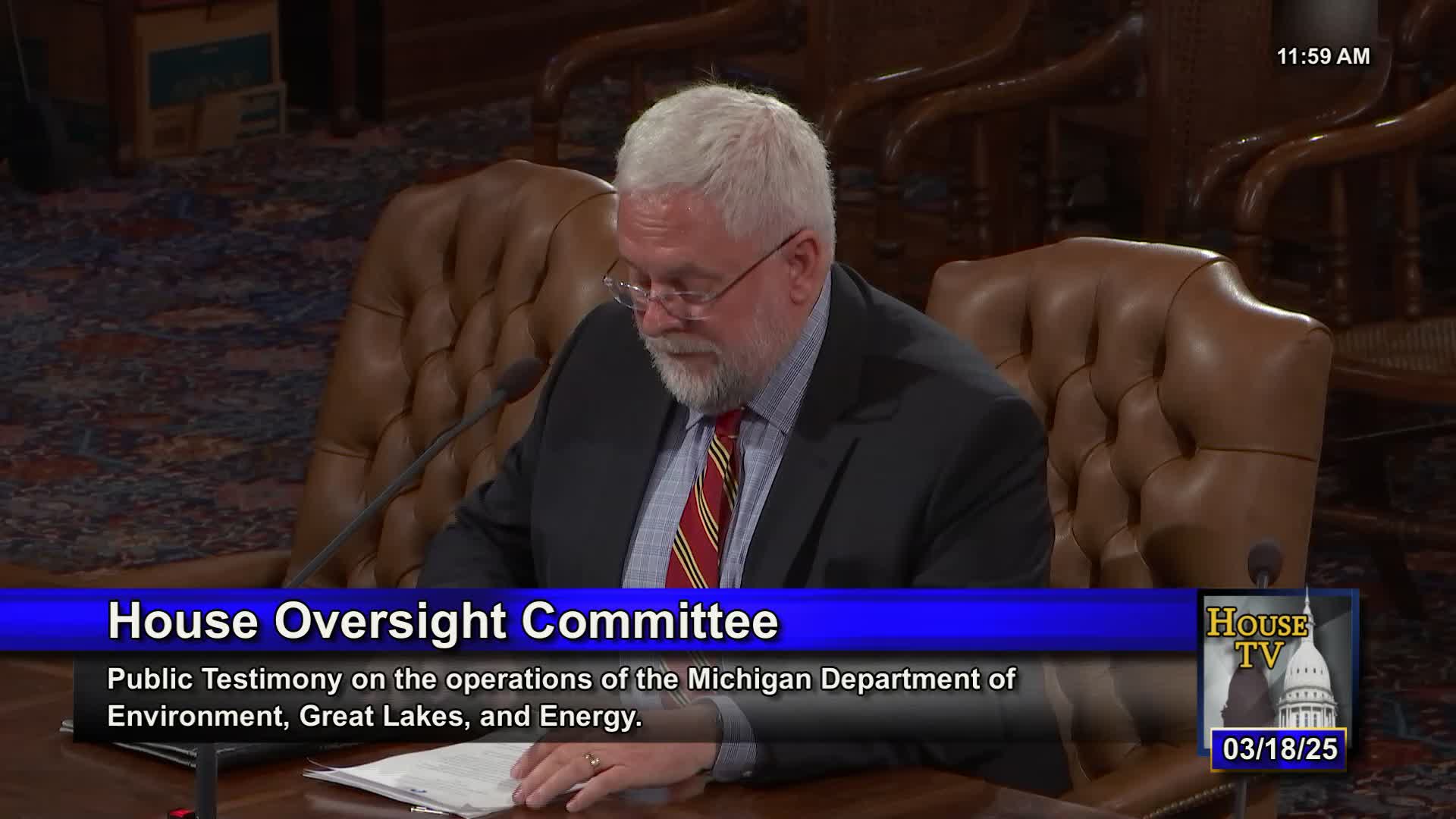
David Lawson, senior director (testimony submitted) of the Huron River Watershed Council, told the House Oversight Committee the council relies on EGLE for monitoring, response and funding partnerships and that state programs are essential for addressing PFAS, hexavalent chromium risks and dam removals in the watershed.
Lawson summarized the council’s multi‑decade work protecting a watershed that serves about 600,000 residents and said EGLE’s Michigan PFAS Action Response Team (MPART) and other EGLE programs helped define protective contaminant levels, coordinate monitoring and advise remediation after a 2018 release of PFAS‑containing material into wastewater upstream of the Huron River. "EGLE's contributions to environmental health are substantial," Lawson said, while also adding the caveat that the agency needs adequate resources to maintain monitoring and to implement best practices.
The council is working with EGLE and federal partners on dam removals and restorations, including grant work on the Peninsular Dam in Ypsilanti; Lawson said the group has helped assemble about $14 million in grants for design and removal work and expects removal in the 2026–2027 window if funding and permitting proceed. The council also participates in statewide volunteer monitoring (MiCorps) and urged the committee to consider increased multi‑year funding for those citizen‑science programs.
Why it matters: Local watershed groups and municipal drinking‑water systems rely on consistent monitoring and agency guidance to detect and respond to contaminants with potential public health implications; witnesses said underfunding can delay protective actions and degrade long‑term planning.
Next steps: Lawson asked lawmakers to consider stable funding for monitoring and for continued coordination among EGLE, local governments and federal agencies on remediation and dam removal projects.
Ending: The council’s testimony framed EGLE as a key partner for protecting drinking water and habitat but urged stronger resources and continued collaboration to manage contaminants and infrastructure work across the watershed.