Get Full Government Meeting Transcripts, Videos, & Alerts Forever!
Get email alerts on the Egle Permitting Enforcement topic
No spam. Unsubscribe anytime.
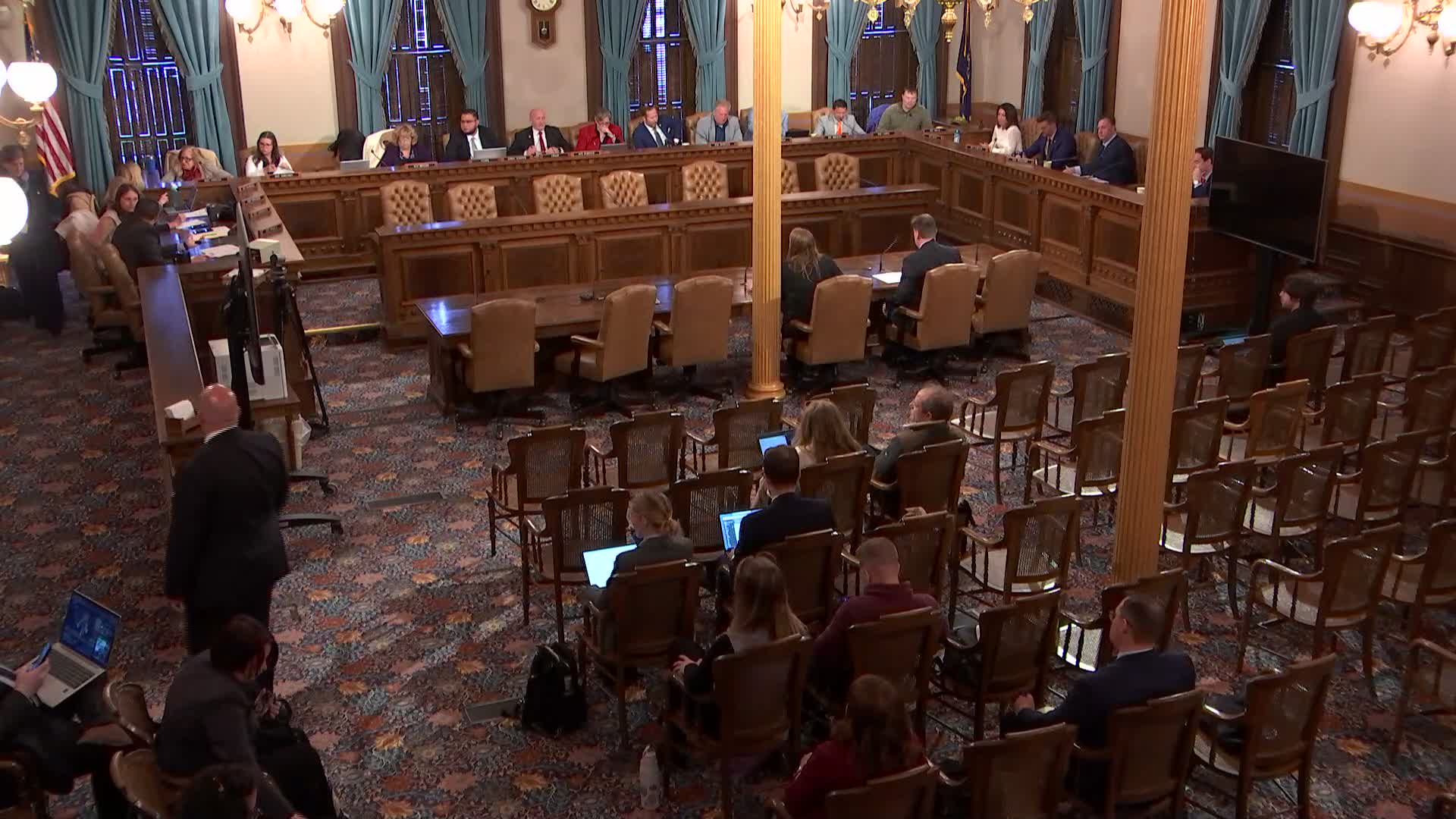
EGLE officials defend permitting and enforcement decisions, acknowledge communication and staffing challenges at House Oversight hearing
Summary
Chief Deputy Director Aaron Keatley and legislative liaison Sydney Hart told the House Oversight Committee that EGLE makes permitting and enforcement decisions under statutory and federal requirements, and that the agency is working to reduce permit backlogs and improve communications.
Chief Deputy Director Aaron Keatley and legislative liaison Sydney Hart appeared before the House Committee on Oversight to respond to concerns raised at prior hearings about permitting, enforcement, and permitting-related communications.
Keatley said EGLE "does not operate based on philosophical preference" and that the agency's work "is directed and defined by law," describing permitting, compliance, remediation and enforcement as statutory responsibilities. He told committee members that many regulatory decisions reflect federal delegation requirements, and that failing to meet those standards would risk losing delegation and federal funding.
The session covered a range of operational issues raised by members and public testimony at earlier hearings. Keatley said EGLE has reduced some permit backlogs, expanded electronic application processes, and added staff funded by recent budgets, but that progress has been slowed by waves of retirements that reduced institutional expertise. He said the agency is working to increase staffing in high-demand permitting programs and to provide more pre-submittal guidance to reduce deficient applications.
Committee members raised repeated accounts from constituents who said they feared enforcement consequences or retaliation for speaking publicly. Keatley acknowledged the agency must improve communications and offered to work with legislators on constituent cases; he emphasized that the agency's normal progression is corrective and collaborative. He provided a summary of EGLE's enforcement pipeline: about 10% of violation notices move to escalated enforcement, roughly 10% of those escalated cases result in assessed penalties, and a small fraction go to formal legal proceedings; Keatley presented those figures as context for a progressive enforcement approach that seeks remediation before penalties.
Members asked several technical questions: Representative McDonough pressed for details about the Fremont digester matter discussed at an earlier meeting. Keatley said that commercial digesters can accept diverse carbon-based materials, and that in that facility's lagoon EGLE found PFAS and heavy metals at concentrations that raised concern. He said statutory changes (cited in the hearing as "Part 115" changes) left limited options for that facility to manage liquid byproducts other than land application, trucking to a treatment plant, piping to a plant, or on-site treatment and discharge; the facility chose land application and EGLE said some of the solids were later disposed to landfill because of PFAS concentrations.
Members also asked about surprise inspections, appeals and administrative processes. Keatley said some programs, including federally delegated programs, require unannounced inspections and that field staff exercise professional judgment under statutory and program guidance. He described administrative appeals and enforcement escalation: if a negotiated resolution is not reached, the department refers cases to administrative law judges for formal hearings; circuit court review is also available after administrative remedies are exhausted.
On staffing and customer service, Keatley and Hart described agency efforts: training for new staff, a centralized compliance assistance team that offers technical outreach, and a Vision 2027 strategy to improve customer service and transparency. Members asked for more detailed data on hiring and permitting timelines; Keatley agreed to provide program-level permit processing data and headcount details and said he would share benchmarking materials the agency uses.
Ending note: Keatley invited members to bring constituent-specific cases to his attention and said EGLE would work to resolve misunderstandings or perceived unfair treatment. The department acknowledged it must do better on transparent communications, electronic records access and pre-application guidance while continuing obligations enforced under statute and federal delegation.