Get Full Government Meeting Transcripts, Videos, & Alerts Forever!
Get email alerts on the Water Withdrawal Program topic
No spam. Unsubscribe anytime.
Auditor General flags gaps in Michigan water‑withdrawal program; enforcement, tools and recordkeeping cited
Summary
An Auditor General report told the House Oversight Committee that the Department of Environment, Great Lakes and Energy(EGLE) has deficiencies in data tools, enforcement and documentation for Michigan's water withdrawal program, including discrepancies between analysis tools and thousands of unpaid or written-off reporting fees.
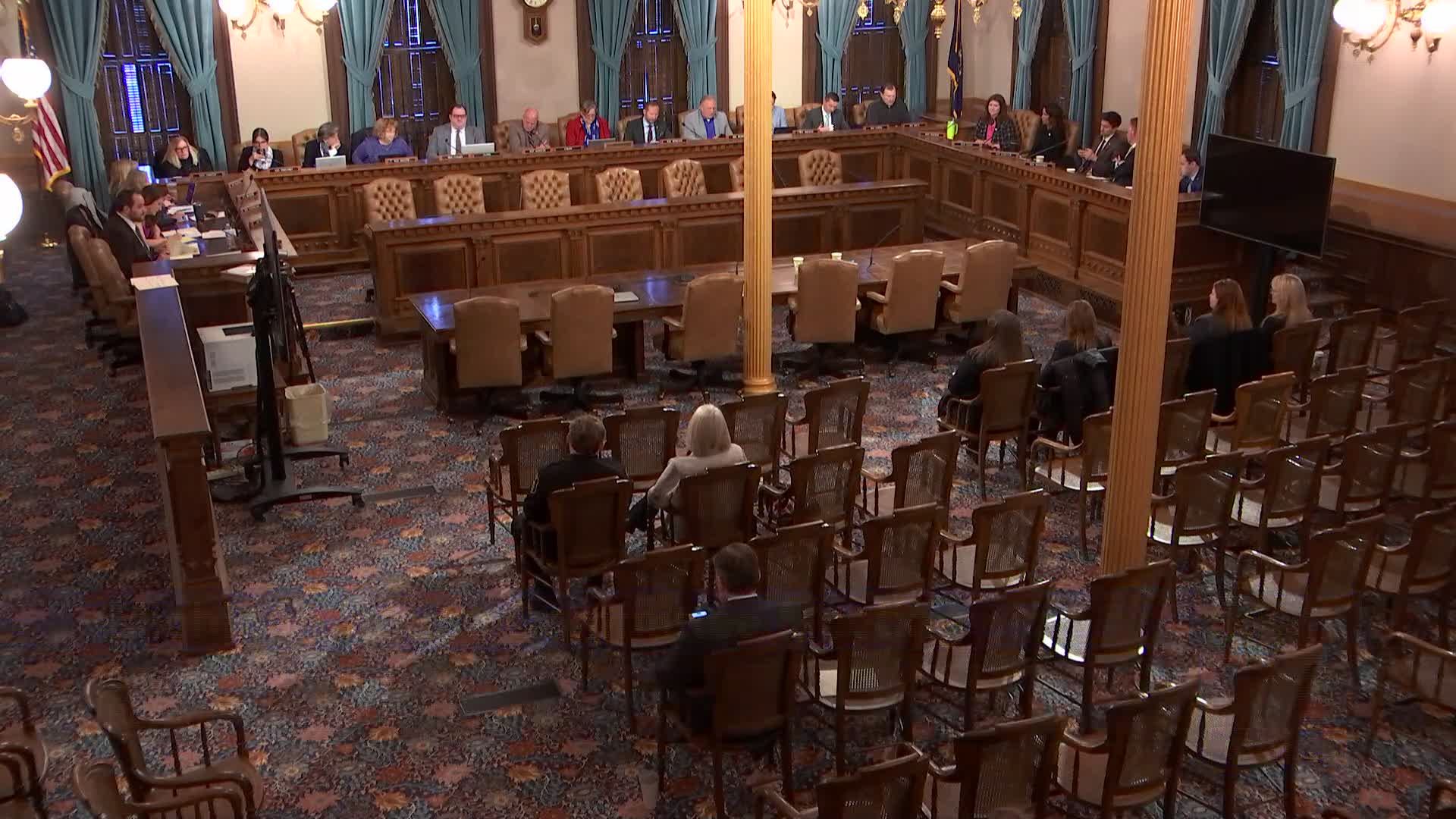
The House Committee on Oversight heard March 11 from Michigan's Office of the Auditor General that the state's water withdrawal program has material weaknesses in its analysis tools, compliance monitoring and recordkeeping.
Auditor Nancy Bayshore, an audit manager with the auditor general's office, described the audit's scope and findings. "Michigan and other Great Lakes states and provinces have enacted laws to regulate water uses within the Great Lakes Basin in accordance with the Great Lakes Saint Lawrence River Basin Water Resources Compact," she said. Jessica Armstrong, the audit supervisor, told the committee the office "determine[d] the division's administration of the program to be sufficient with exceptions." The audit generally covered January 2022 through June 2023.
The nut of the report: auditors identified three material findings and two reportable conditions. The first material finding said the assessment tool used to automatically evaluate proposed withdrawals produced different stream‑depletion results than the alternative batch tool used for site‑specific reviews. For four of 14 registrations reviewed, differences ranged from a negative 2,400,000 to a positive 4,700,000 gallons per year; one of those registrations was near a management area's limit, the audit said. The auditors called these discrepancies a material condition because the tools' outputs inform approval and monitoring decisions.
The audit also found the batch tools were stored on an unsecured shared network drive and that changes to critical assessment configurations were not logged. Armstrong told the committee those gaps could allow unauthorized changes and make it impossible to trace when or why results diverged.
A separate material finding said the assessment unit did not sufficiently document, track or monitor assessments to ensure accuracy and compliance with the Great Lakes Preservation Act. Auditors reported that 241 registrants had 393 unpaid annual invoices between 2016 and 2023 totaling $78,900 as of June 30, 2023; 238 unpaid invoices totaling $47,600 tied to 93 registrants were later written off, and auditors noted about 74% of those write‑offs were golf and country clubs. The auditors said the unit's reporting database did not capture the fields needed to compare registered withdrawal amounts to reported use, so staff could not verify whether users exceeded approved limits.
The audit raised concerns about the site‑specific review (SSR) process as well. Armstrong said the office found SSRs were often not completed within statutory timelines: "There were 16 that took 31 days to 317 days to complete," she said. The auditors described that as a reportable condition.
In reviewing compliance reviews, auditors found inconsistent communication with property owners and slow follow‑up on violations. Of 60 compliance reviews examined, the assessment unit failed to notify property owners of violations in 12 cases and did not timely notify owners within the 30‑day window for 5 of 48 reviews with violations. The unit did not escalate enforcement in six of six cases after lack of response to second notices, and in some cases it registered unregistered wells using an average pumping schedule rather than actual pumping records, the audit said.
Committee members pressed the audit team on causes and remedies. Representative Green asked whether the list of registrants is public; auditors said the assessment unit maintains a list but could not confirm public access and suggested EGLE staff could answer. Several members pressed whether the problems were personnel shortages or technology failures; auditors deferred detailed explanations about staffing or enforcement to EGLE.
Committee members also asked about follow up. Armstrong said the auditor general's office expects to conduct a follow‑up audit after EGLE submits a corrective action plan, typically within 12 to 18 months, and that the office has asked EGLE for that plan.
Votes at a glance: At the start of the hearing Representative Bruck moved to approve the minutes from the committee's Feb. 25 meeting; the chair asked if there were objections and, hearing none, the minutes were approved.
The audit prompted multiple requests from legislators that EGLE provide clarifications and corrective actions. The committee asked the auditor general's office to keep members apprised of EGLE's corrective action plan and follow up timing.
The committee recessed to the next agenda item after questioning the auditors and asking for updates on EGLE's response.