Get Full Government Meeting Transcripts, Videos, & Alerts Forever!
Get email alerts on the Auditor General Briefing topic
No spam. Unsubscribe anytime.
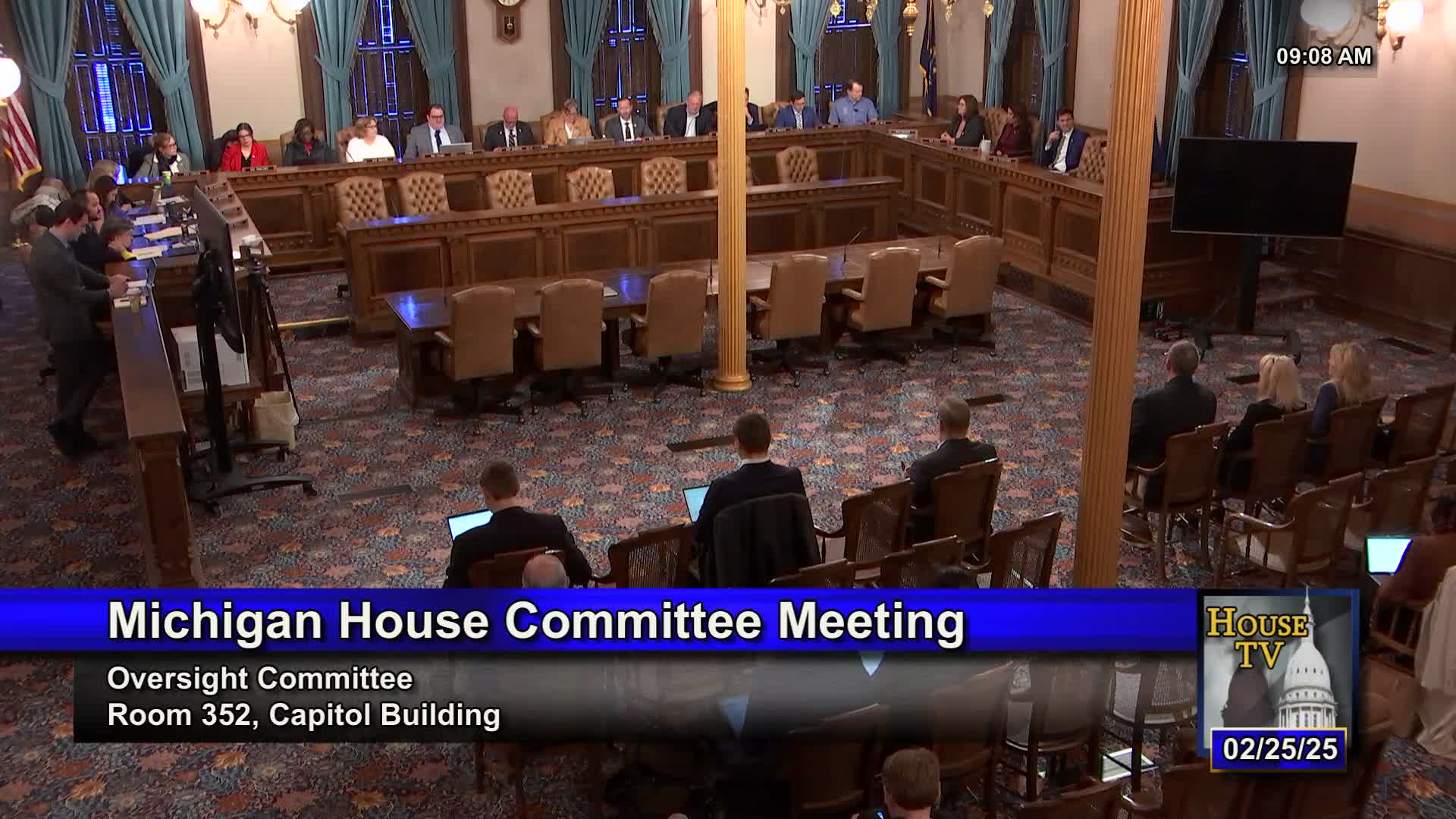
Auditor General briefs House Oversight Committee on audits, subpoena power and public reporting
Summary
Auditor General Doug Ringler and Deputy Auditor General Laura Hurst outlined the Office of the Auditor General’s role, audit products, typical timelines and follow-up process; they discussed confidentiality, subpoena authority, FOIA exemptions and a public reporting portal and email the committee announced for oversight tips.
The Office of the Auditor General told the House Oversight Committee that it conducts financial, performance and investigative audits intended to provide independent facts and recommendations to improve state government operations.
Auditor General Doug Ringler and Deputy Auditor General Laura Hurst presented an overview of the office’s role, statutory basis and audit products, explaining how reports are structured and how agencies respond and follow up on recommendations. Ringler said, “We are a legislative agency. We’re here to be independent fact finders and fact providers to assist you in your decision making.”
Why it matters: Audit reports can identify material weaknesses, projected cost savings or risks to public safety and are referred to this committee under House rules. The office’s work informs legislators and executive-branch managers and can prompt corrective action, follow-up audits and, in cases of potential criminality, referrals to prosecutors.
What the office does and how it reports The auditors described three primary audit products: financial audits (assurances about financial statements), performance audits (comparisons of applicable criteria to agency activity to assess efficiency and effectiveness) and investigative audits (limited-scope reviews of alleged fraud, waste or abuse). Hurst described the office’s shift toward more performance audits, saying, “We are trying to tilt that a little bit towards more performance audits because we do find the performance audits provide, more recommendations and opportunities to improve state government operations.”
Staffing, budget and scope Ringler said the office’s gross budget is about $31,000,000, roughly two-thirds of which is general fund. He said the office employs about 68 staff, of whom 51 are CPAs and 22 hold master’s degrees. The office maintains its own data center and most staff are classified civil servants.
Typical workload and cost Ringler and Hurst said the office often has 30 to 40 audits in progress at once. In 2024 the office did 17 performance audits and 17 financial audits. Hurst estimated a typical performance audit requires roughly 2,000 staff hours; Ringler said the office’s billing rate equates to about $100 per hour, which yields a rough cost of about $200,000 for a typical performance audit, though both speakers stressed scope and sampling methods affect reported projections.
Report structure, agency responses and follow-up Hurst walked members through a typical report structure: a one- or two-page report summary up front, objectives and conclusions grouped by audit objective, findings and recommendations, and a supplemental section that can include maps, photos and a glossary. Reports include the agency’s preliminary response and, when applicable, an auditor comment if the response conflicts with findings. Agencies must submit corrective action plans to internal audit services in the state budget office; the auditor’s office posts those plans with the report when received. Ringler said follow-up audits typically target material findings and generally occur about 15–24 months after the initial report.
Example: State park concessions audit Hurst used the State Park Concessions, leases and operating agreements audit as an example, noting that report pages identify objectives, conclusions and whether a finding is material. She said the audit surveyed 89 managers and supervisors across 99 parks and that one material finding was classified as such because of the level of exceptions and risk to public safety.
Enforcement, confidentiality and legal limits Ringler said the auditor’s office does not have enforcement power: “we don’t have enforcement power, so we just report what we found, our position, their position, then it would be up to the executive branch and the legislature to decide.” He also told the committee the office has subpoena authority and statutory access to confidential records when necessary, though he said subpoenas against state agencies have been used rarely. Ringler noted audit work papers collected during an audit are not subject to the state Freedom of Information Act and that the office protects confidential data.
Whistleblower reports and referrals The auditors described the office’s intake for allegations and Q&A requests. Ringler said the office will keep complainant information confidential to the extent allowed by law but that anonymous complaints can limit investigation effectiveness when follow-up questions or evidence are needed. He provided the office’s recent intake breakdown: last year the office referred 52 matters to other agencies, deemed 95 to be outside its authority, found 44 had insufficient information, handled 22 matters internally and forwarded 16 to other agencies; he said the total intake numbered in the “several hundred.”
Questions from legislators Committee members asked about the agency agreement process, how material findings are classified, whether on‑site corrections are noted in reports, the time required for audits and when the auditors refer potential criminal conduct to the attorney general. Ringler and Hurst reiterated that the office documents what was seen during the audit period, notes if an agency corrected an issue during field work, and will pause audit work and coordinate with prosecutors if evidence suggests criminal conduct.
Public access and committee intake Chair Jay DeBoer announced two public intake paths for oversight information for the committee: an email address, oversight@house.mi.gov, and a web portal at mioversight.com. DeBoer said the committee will share substantive submissions with committee members and that the portal will allow anonymous reporting to the committee.
What the committee did not decide No enforcement action, statutory changes or new audits were ordered during this session. The presentation and Q&A provided information that legislators can use to decide whether to request audits or pursue statutory or administrative remedies.
Ending The committee adjourned after the morning’s presentation and questions. The auditors offered to meet individually with members or their staff to discuss potential audit requests and next steps.