Get Full Government Meeting Transcripts, Videos, & Alerts Forever!
Get email alerts on the Special Education Finance Blueprint topic
No spam. Unsubscribe anytime.
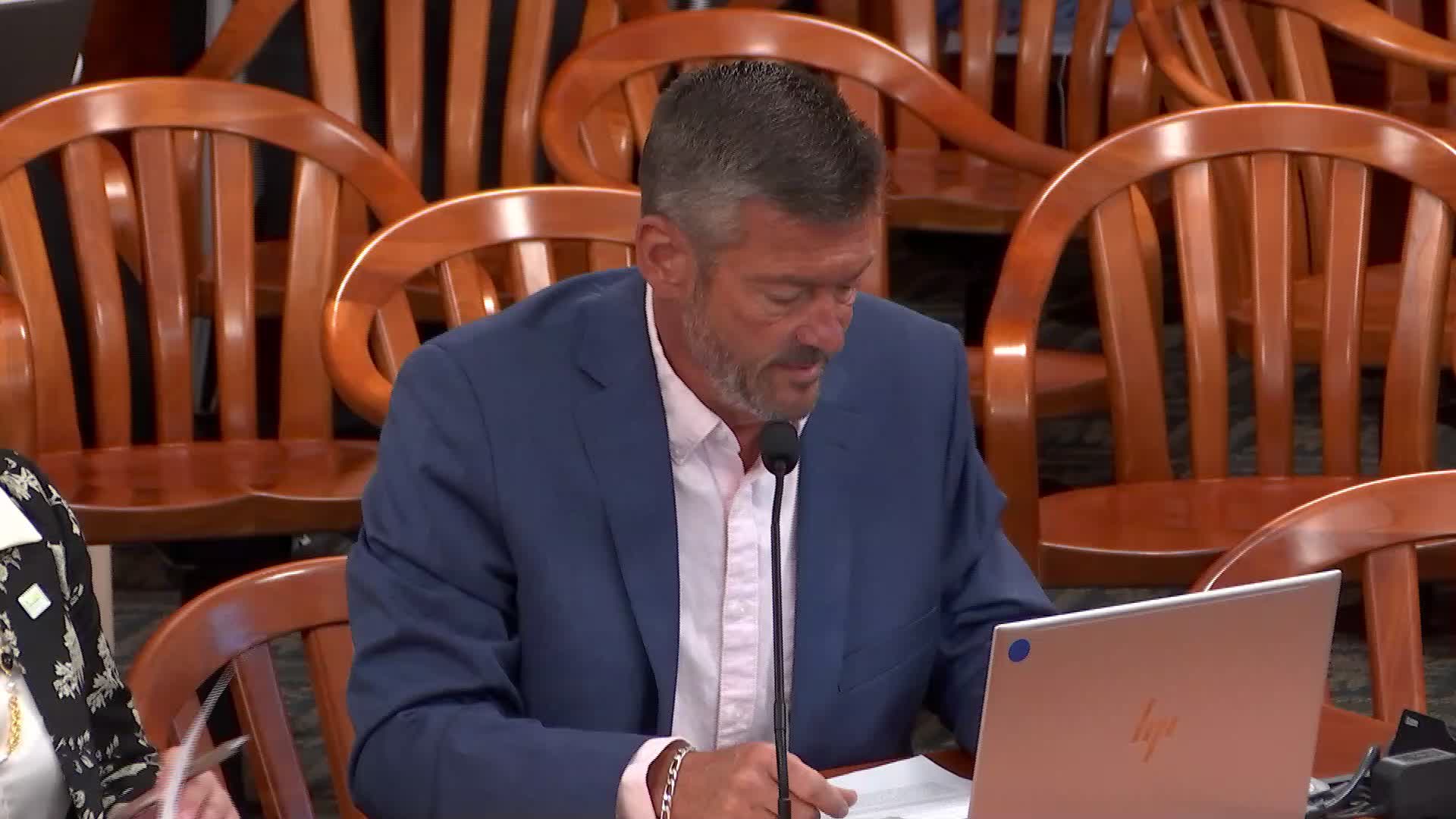
House subcommittee hears plan for statewide special-education finance 'blueprint' study
Summary
Clinton County RESA and Autism Alliance of Michigan described a state-commissioned study to model a new weighted special-education funding formula, update the estimated funding shortfall and propose cost-sharing options; final framework due October 2025.
The House Appropriations Subcommittee on School Aid and Department of Education heard a presentation on a state-funded study to redesign Michigan's special-education funding system, officials said.
Scott Kenishnick, superintendent of Clinton County RESA, told the committee the project, called the My Special Education Finance Reform Blueprint, was commissioned under the state budget "Section 51h" with Clinton County RESA serving as the fiduciary and Autism Alliance of Michigan, Public Sector Consultants and national consultant Max Marcitello contracted to do the work.
Committee members were told the study will model how Michigan currently funds special education, test alternative weighted-student funding models, and develop recommendations on how costs should be shared between state and local sources. Kenishnick said the project will produce an actionable framework and related policy and implementation recommendations to be delivered by October 2025.
Kenishnick said the revenue gap identified in an earlier 2017 analysis had been nearly $693,000,000 and that bipartisan investments since then have reduced the shortfall to "approximately $350,000,000." He added that because "special education services are mandated by federal law through a student's IEP," districts must cover unmet costs from general funds unless state and federal revenue fully pay for services.
Colleen Allen, president and CEO of Autism Alliance of Michigan, described the alliance's role and said the group's statewide survey and stakeholder convenings informed the project's design. Heather Eckner, director for statewide education initiatives at the Autism Alliance, said the team has collected input from parents, educators and administrators and reported nearly 900 survey responses so far.
Max Marcitello, the project's national consultant, said other states have recently overhauled school finance and pointed to Colorado, Mississippi and Tennessee as examples that moved toward weighted-student models. He also referenced a 2022 costing study in Ohio that attempted to quantify the cost of evidence-based special-education supports and said Michigan's study will use that and other research in its modeling work.
Presenters outlined three primary analytic steps: (1) model Michigan's current special-education finance system and update shortfall estimates; (2) test alternative models, including those recommended by the School Finance Research Collaborative (SFRC); and (3) develop cost-sharing options showing how much should come from local versus state sources. Eckner emphasized that the work is designed to be "unconstrained by existing structures" so stakeholders can think innovatively about a new funding approach.
Committee members asked how the project would interact with efforts to address teacher and paraprofessional shortages. Kenishnick and Eckner said workforce development efforts (referenced elsewhere in the meeting) are related but distinct: a better-aligned funding structure can ensure resources are available at the building level, but separate initiatives address recruitment and retention.
No vote or formal committee action was taken on the blueprint at the hearing. Presenters said the team will post project materials on a public website, submit reports to House and Senate fiscal agencies and the State Budget Office, and brief legislative committees as required by the boilerplate.
The subcommittee approved the meeting minutes from April 29, 2025, by unanimous consent earlier in the session; no other formal funding decisions were made for the blueprint study during the hearing.