
Michigan Saves tells House subcommittee it can leverage $100M+ in loans if state sustains loan‑loss reserve
Get AI-powered insights, summaries, and transcripts
Subscribe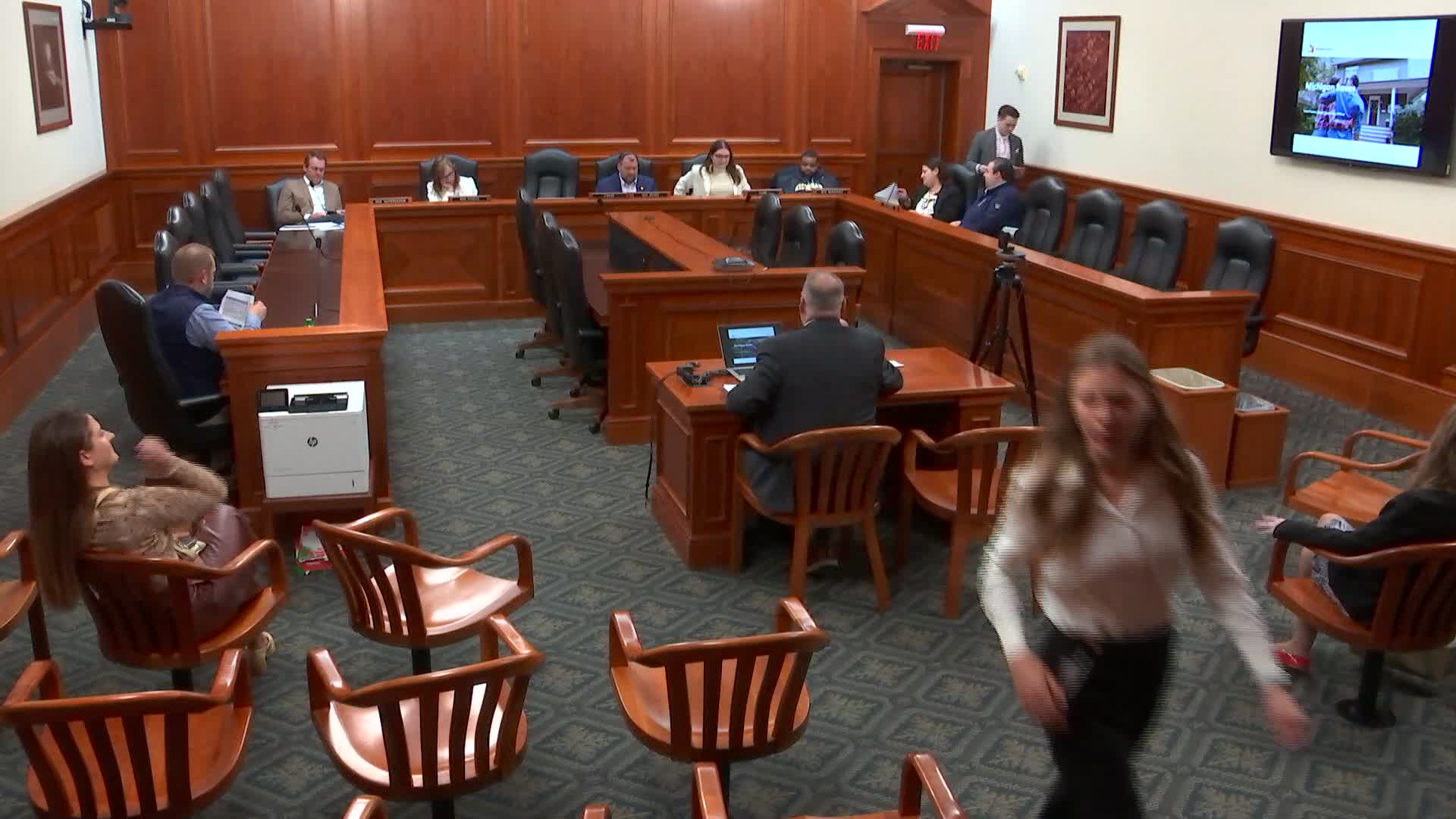
Summary
Michigan Saves asked the House Appropriations Subcommittee to continue state support for its loan‑loss reserve to sustain and expand financing for residential and commercial energy efficiency and renewable energy projects, describing program results, recent state appropriations, and a request-level capacity estimate.
Todd Parker, chief operating officer of the nonprofit Michigan Saves, told the House Appropriations Subcommittee on Licensing and Regulatory Affairs, Insurance and Financial Services that the organization can support roughly $100 million to $120 million in annual loan volume at its current capacity if it can secure a loan‑loss reserve in the $5 million to $6 million range.
Parker said Michigan Saves is the nation’s first nonprofit green bank (incorporated in February 2009 with initial funding from the Michigan Public Service Commission) and uses a loan‑loss reserve as credit enhancement to expand underwriting criteria, lower rates and extend terms. He said the reserve is leveraged at about 30‑to‑1 and supports financing for residential measures (about 70% high‑efficiency furnaces, water heaters, air conditioning and boilers; roughly 20% windows, doors and insulation; about 5% solar PV) and commercial projects.
Parker described program results and recent state support: Michigan Saves estimates it has leveraged more than $675 million in private capital since inception, supported nearly 52,000 projects statewide, and that the investments will save an estimated $300 million in electric bills and $146 million in gas bills over the useful life of financed measures. He said roughly 60% of loan capital has flowed to low‑ and moderate‑income customers and that the organization uses partnerships with more than 1,200 authorized contractors and a network of lenders (including several large credit unions) to reach customers.
On the committee’s funding questions, Parker said the organization is financially self‑sustaining for operations and uses appropriations to bolster the loan‑loss reserve. He told members that last fiscal year the state appropriated $5,000,000 to Michigan Saves for the loss reserve (the prior year appropriation was $5,500,000), that the original seed funding for the reserve included $6,500,000, and that some federal funding early in its history supported program rollouts. He said Michigan Saves currently reports roughly $13,000,000 in loss‑reserve funds, of which about $7,000,000 is encumbered supporting active loans.
Parker described specific programs: the Home Energy Loan Program (unsecured personal loans and an alternative underwriting option for credit‑invisible borrowers), a Lead Poisoning Prevention Fund (50/50 cost share grant program with DHHS for lead abatement), a septic‑replacement loan program funded by an EGLE grant, a tax‑credit bridge financing product that monetizes direct‑pay Inflation Reduction Act credits for tax‑exempt entities, and an on‑bill financing pilot run in partnership with Traverse City Light & Power. He referenced examples including a residential boiler financed through a Detroit pilot and a $23,000 bridge loan for Saint Philip’s Episcopal Church in Beulah that Parker said cut the congregation’s utility bills significantly.
Committee members asked for more district‑level data, cost‑per‑project figures for residential solar measures, and details on contractor participation in specific districts. Parker said Michigan Saves can provide project‑level funded amounts and cost‑per‑watt figures and that the organization would supply the committee with the requested county and district data.
No appropriation vote or formal action to change funding was taken during the meeting; members discussed possible future support. Michigan Saves said its near‑term capacity target is $100 million to $120 million in annual loan volume and that sustaining or increasing the loan‑loss reserve would allow it to meet that target.