Get Full Government Meeting Transcripts, Videos, & Alerts Forever!
Get email alerts on the Skilled Trades Education topic
No spam. Unsubscribe anytime.
Sam Buford Woodworking Institute asks state for $12 million to expand skilled‑trades training
Summary
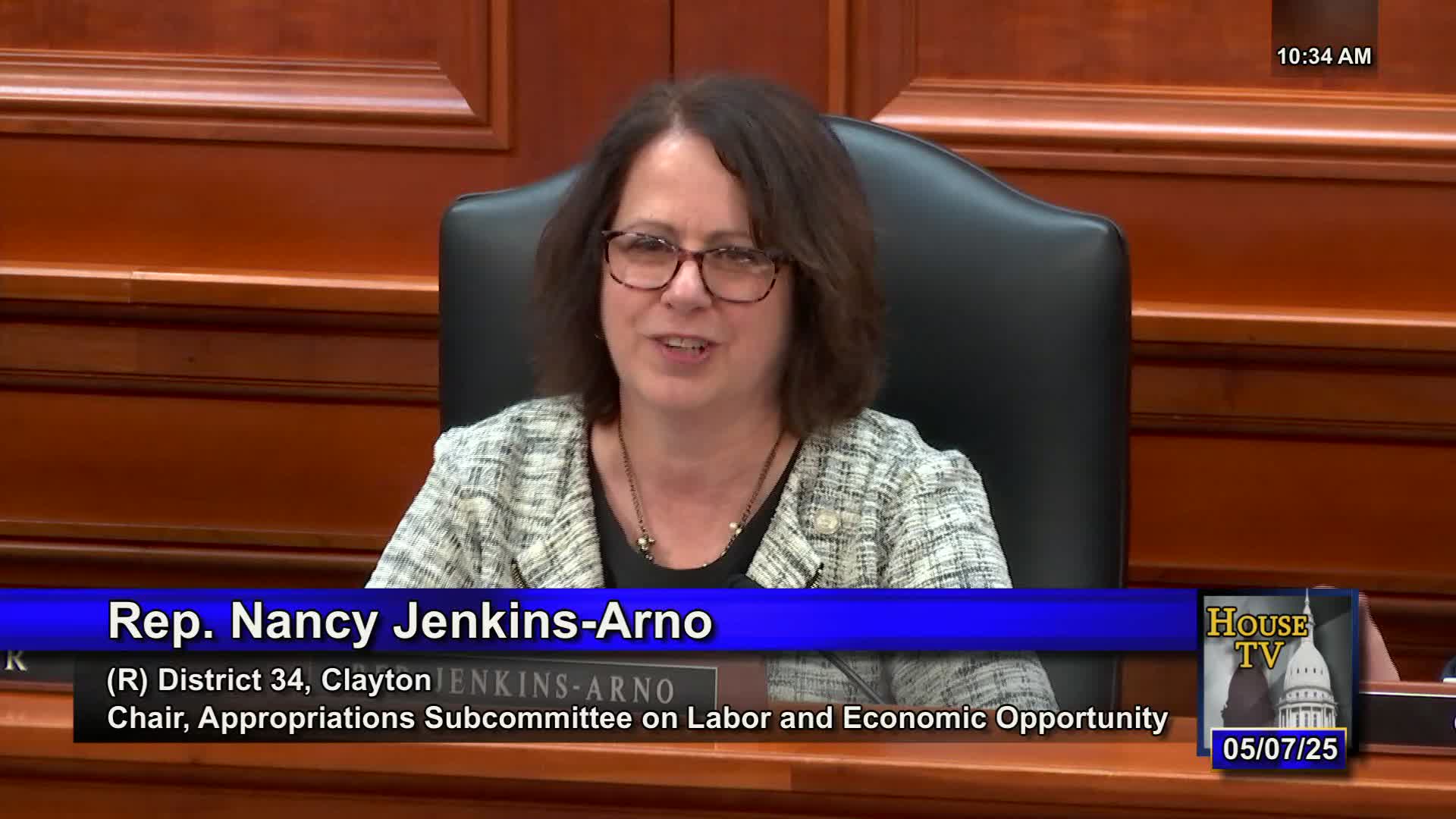
Sam Buford Woodworking Institute founder Luke Barnett asked a House appropriations subcommittee on Tuesday for a one‑time $12,000,000 state capital investment to complete the first phase of a $48,000,000 master plan that would raise the school’s annual graduates from 24 to 60 and expand continuing education courses.
Sam Buford Woodworking Institute founder Luke Barnett asked a House appropriations subcommittee on Tuesday for a one‑time $12,000,000 state capital investment to complete the first phase of a $48,000,000 master plan that would raise the school’s annual graduates from 24 to 60 and expand continuing education courses.
The request comes as Barnett and the institute argue Michigan faces a widening shortage of carpenters, plumbers and other skilled tradespeople that is slowing construction, infrastructure and other projects statewide. Barnett told the Subcommittee on Labor and Economic Opportunity that the institute’s expansion would also support growth in Michigan’s forest‑products sector and the emerging mass‑timber construction market.
Barnett, founder and president of the Sam Buford Woodworking Institute in Adrian, said the school currently admits 24 students a year, is turning away “five students to every one that we accept,” and has a 100 percent employment rate for the 2023 graduating class. “Right now, we’re in a crisis that’s being felt all throughout the United States,” Barnett said, describing a stigma against trades education and an industry‑wide shortage of skilled labor.
Barnett provided financial and program details: a phased $48,000,000 master plan with a Phase 1 capital cost of $16,200,000 to scale students from 20 to 60 per year, and an already secured $4,200,000 in local investment. He said requested state funds would be for capital costs only and that operational costs are covered by tuition revenue. Barnett said tuition for the one‑year program is $16,000 and that graduates’ starting salaries range from about $52,000 to $60,000.
Barnett also described recent institutional milestones: state licensure as a post‑secondary school, approval in 2022 for veterans to use GI Bill benefits, an August 2024 accreditation through the Accrediting Commission of Career Schools and Colleges, and employer recruiting from firms including MOD Interiors, Vogue Furniture, Joseph Joop and Inception Woodworks. He said international and out‑of‑state continuing education students and visiting employers such as luxury interiors firm Metrica demonstrate demand beyond Michigan.
Barnett said the institute is working with Adrian College to create credit pathways that combine hands‑on training and academic credentials, and with the Community College Association on a pilot to grant higher‑value college credits for trades training. He argued state investment would boost the local economy by attracting students and workers, supporting tourism from continuing education courses, and helping address project delays caused by the trades shortage.
Subcommittee members asked Barnett about program scale and employer demand. Barnett said 100 percent employment was “a particularly good year” but that employers routinely recruit students on campus; he said he expects placement rates to remain high if the program preserves its quality. A student, William Toth, described hands‑on instruction and employer engagement as central to his decision to enroll.
No formal appropriation vote occurred during the hearing. The subcommittee approved routine minutes earlier in the meeting; Rep. Cabot moved to approve the April 30 minutes and the chair reported there were no objections and the minutes were approved.
Barnett closed by urging legislators to treat trades education as a primary pathway for well‑paying work, not an “alternative” route, and to consider the institute’s capital request as part of broader workforce and economic development in Michigan.