Get Full Government Meeting Transcripts, Videos, & Alerts Forever!
Get email alerts on the Community College Funding Equity topic
No spam. Unsubscribe anytime.
Grand Rapids Community College urges state to create funding floor for community colleges
Summary
Lisa Freiberger, interim president of Grand Rapids Community College, told the Appropriations Subcommittee that the state’s current distribution method for community college operational dollars compounds historical inequities and urged consideration of a funding floor to raise low-funded colleges.
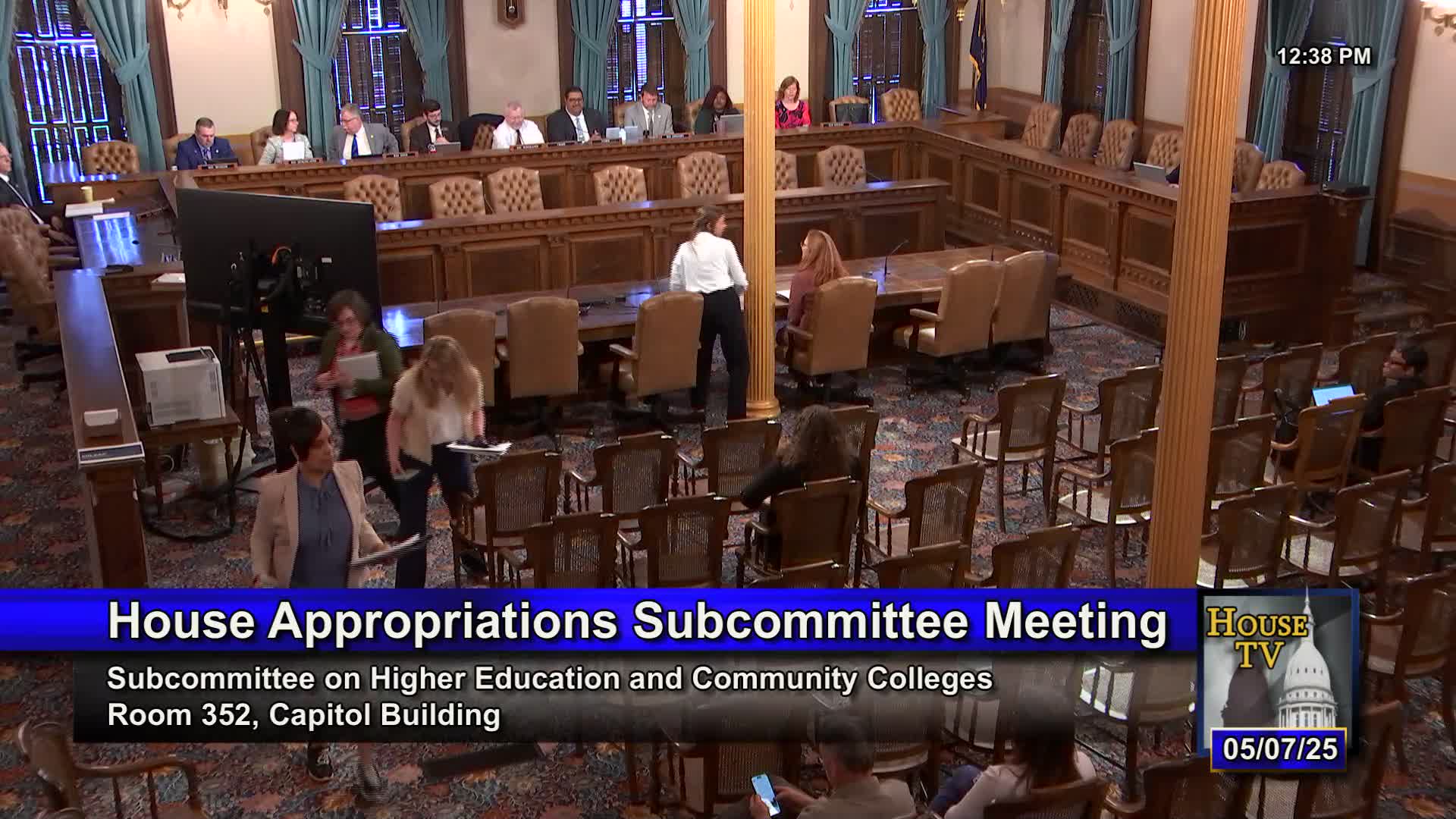
Lisa Freiberger, interim president of Grand Rapids Community College, told the House Appropriations Subcommittee on Higher Education and Community Colleges that state operational funding for community colleges is inequitable and that the annual formula's reliance on prior-year allocations compounds disparities.
Freiberger urged the subcommittee to consider establishing a funding floor so that no community college receives less than a minimum per-student state allocation. "The current process is so inequitable that what we are looking for or recommending for your consideration is the development of a funding floor," Freiberger said.
Why it matters: Under the existing formula, 30% of new operational dollars are distributed based on what a community college received the prior year. That means colleges that historically received lower per-student state aid continue to fall behind, Freiberger said, and the gap widens over time unless the formula is changed.
Key details and figures
- Grand Rapids Community College reported it serves more than 12,000 credit-seeking students and approximately 15,000 additional students in non-credit, apprenticeship and customized training programs. (Presented by Freiberger)
- Freiberger presented per-student state funding examples: the highest-funded community college cited was Gogebic (in Michigan’s Upper Peninsula) at about $9,433 per student for the cited year; the statewide average cited was $4,290 per student; Grand Rapids was cited at $2,723 per student; and the lowest-funded college in the cited year was Washtenaw at about $2,100 per student. (Presented by Freiberger)
- Freiberger said the operational formula has been used since 2016 and that 30% of annual increases are based on prior-year state aid, which perpetuates existing disparities. She recommended considering a phased-in funding floor over multiple years to limit budget shock and to make the change fiscally manageable.
Committee reaction and follow-up
Representative Rogers asked whether a fiscal analysis had been completed; Freiberger said she had run scenarios but had not proposed a specific floor number. "If you run a floor at 3,500, which is one example, it would likely need to be phased in over 5 to 10 years, and it is multiple million per year," she said.
Representative Rogers said he was sympathetic but cautioned against creating winners and losers if any formula adjustments reduce funding for universities or other institutions.
What the testimony did not do
Freiberger asked for consideration and further study; no legislative action or vote occurred during the hearing. The subcommittee indicated openness to additional conversations and possible follow-up hearings to examine funding scenarios.
Ending
Freiberger concluded by asking the subcommittee to consider policy options to address the gap and suggested a phased approach; committee members signaled interest in further study before any budget or statutory change.