Get Full Government Meeting Transcripts, Videos, & Alerts Forever!
Get email alerts on the Early Education Childcare And Higher Education Budget topic
No spam. Unsubscribe anytime.
MyLeap director outlines FY2026 budget to expand pre-K, childcare scholarships and college aid
Summary
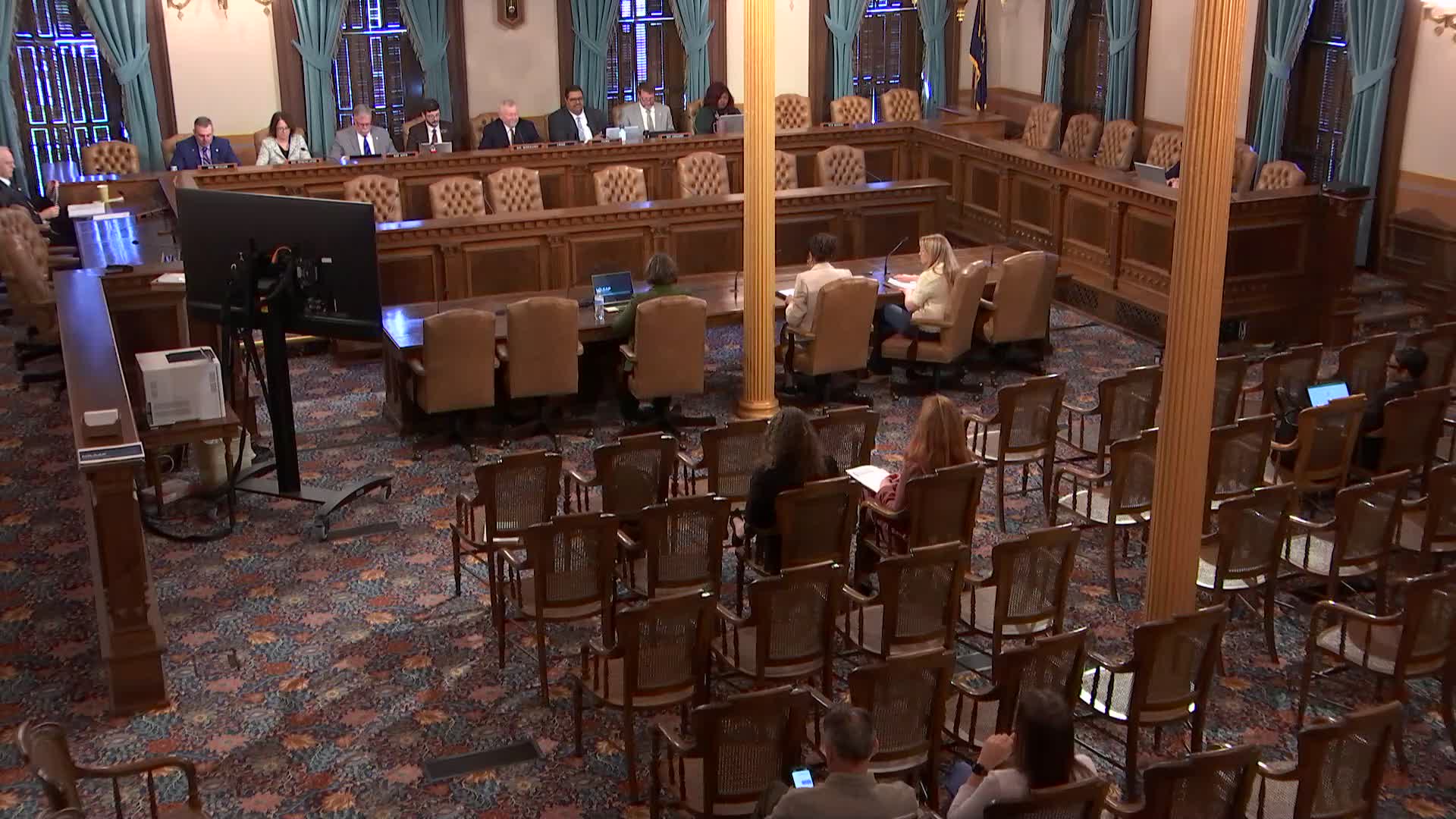
Dr. Beverly Walker Graffea, director of the Michigan Department of Lifelong Education, Advancement and Potential (MyLeap), told the House Appropriations Subcommittee on Higher Education and Community Colleges that the department’s FY2026 executive budget recommendation would continue existing programs and add new investments to expand early education and lower college costs.
Dr. Beverly Walker Graffea, director of the Michigan Department of Lifelong Education, Advancement and Potential (MyLeap), told the House Appropriations Subcommittee on Higher Education and Community Colleges that the department’s FY2026 executive budget recommendation would continue existing programs and add new investments to expand early education and lower college costs.
MyLeap’s budget request includes funding to continue pre-K for all through the Great Start Readiness Program (GSRP), increased per-child allocations, larger scholarship funding for childcare, and an increase to the Michigan Achievement Scholarship, the director said. "Our mission is to improve outcomes from birth to post secondary so all people can succeed with a path to a high demand, high paying career right here in Michigan," Graffea said.
The nut graf: The proposal directs state general fund and School Aid Fund dollars, along with federal funds, to expand access to affordable childcare and to increase college affordability. Key items in the executive recommendation described at the hearing would affect thousands of families, early educators and college students statewide and include both ongoing and new investments.
Most important budget details presented
- The executive recommendation proposes $676,100,000 to continue pre-K through GSRP, including a $392 increase per child to $10,577 per student and $25,000,000 in startup grants to attract new providers. The presentation identified GSRP enrollment as up 24% since the pre-K for all initiative launched in 2023 and estimated the state is serving about 56% of 4-year-olds through free, high-quality pre-K programs (including Head Start and special education programs). (Presented by Graffea)
- Childcare and scholarship investments: $63,000,000 in state funding for the Child Development and Care scholarship (maintaining a 15% reimbursement increase implemented this year); $28,400,000 for Early On Michigan (services for infants and toddlers with developmental delays); and continued funding for the Tri Share employer cost-sharing program. The department said it has opened or expanded more than 3,600 child care programs through the Caring for My Future initiative and that Michigan licenses more than 7,800 child care facilities. (Presented by Graffea)
- New early childhood investments: $61,000,000 to expand the Strong Beginnings pilot to serve 3-year-olds (the program currently serves 392 children in 28 Strong Beginnings sites across 10 ISDs and the proposed funding would expand to serve 4,003-year-olds in 100 classrooms by 2029); and $50,000,000 to meet new federal requirements for the Child Development and Care scholarship so the state can shift to prospective payments to providers. (Presented by Graffea)
- Out-of-school-time and higher education supports: $50,000,000 proposed for competitive out-of-school-time grants (with $371,000 for administration). For higher education, the proposal includes $350,000,000 for the Michigan Achievement Scholarship (an increase of $50,000,000 from the current budget) and $28,500,000 for the tuition incentive program due to increased participation. The proposal also called for codifying the Michigan Achievement Scholarship statute into law. (Presented by Graffea)
Questions and follow-up requests
Committee members asked about licensing, quality metrics and program details. Representative Ralph asked whether child care licensing remained with MyLeap following the department’s creation; Graffea said licensing was transferred when MyLeap was established and enforcement sits with MyLeap. Representative Ralph also asked whether the Michigan Achievement Scholarship funding would include private colleges; Laura Hall, MyLeap’s director of policy communications and engagement, clarified, "it is for both private and public."
Representative Longjohn pressed for confirmation that quality rating and improvement systems (QRIS) remain in place alongside licensure; Graffea said QRIS "sits next to licensure" and continues to operate to track quality beyond basic health and safety standards. Longjohn also asked about evidence that out-of-school-time programs reduce summer learning loss; Graffea said staff would try to pull relevant data for the representative.
Budget context and funding sources
Graffea described MyLeap’s funding sources as a mix of general fund, School Aid Fund and federal dollars. She said the executive recommendation shows increases in school aid and general fund dollars, with federal funding roughly consistent year to year. The department also flagged a participation-driven increase in the Child Development and Care scholarship and included $50,000,000 to implement prospective provider payments required by federal changes.
Operational details
Graffea noted the department has an Office of Early Education, an Office of Education Partnerships, an Office of Higher Education and a new Office of Strategic Talent Preparation that focuses on outreach in disparately impacted communities. She described partnerships with MEDC, LEO, MDE, MDHHS, LARA and DTMB on various operational and programmatic areas. Graffea also drew attention to public dashboards and data resources for scholarship and school data.
What the presentation did not decide
The hearing was a presentation and question-and-answer session; no appropriation or statutory changes were voted on by the subcommittee during this meeting. Committee members requested follow-up materials on scholarship eligibility and program data; Graffea and staff agreed to provide additional information.
Ending
Subcommittee members expressed interest in details and follow-up before any formal appropriation decisions. Graffea closed by offering department contacts and materials and introduced Laura Hall as the legislative liaison available for follow-up.