
Michigan DTMB details consolidated IT model, procurement alternatives and modernization roadmap
Get AI-powered insights, summaries, and transcripts
Subscribe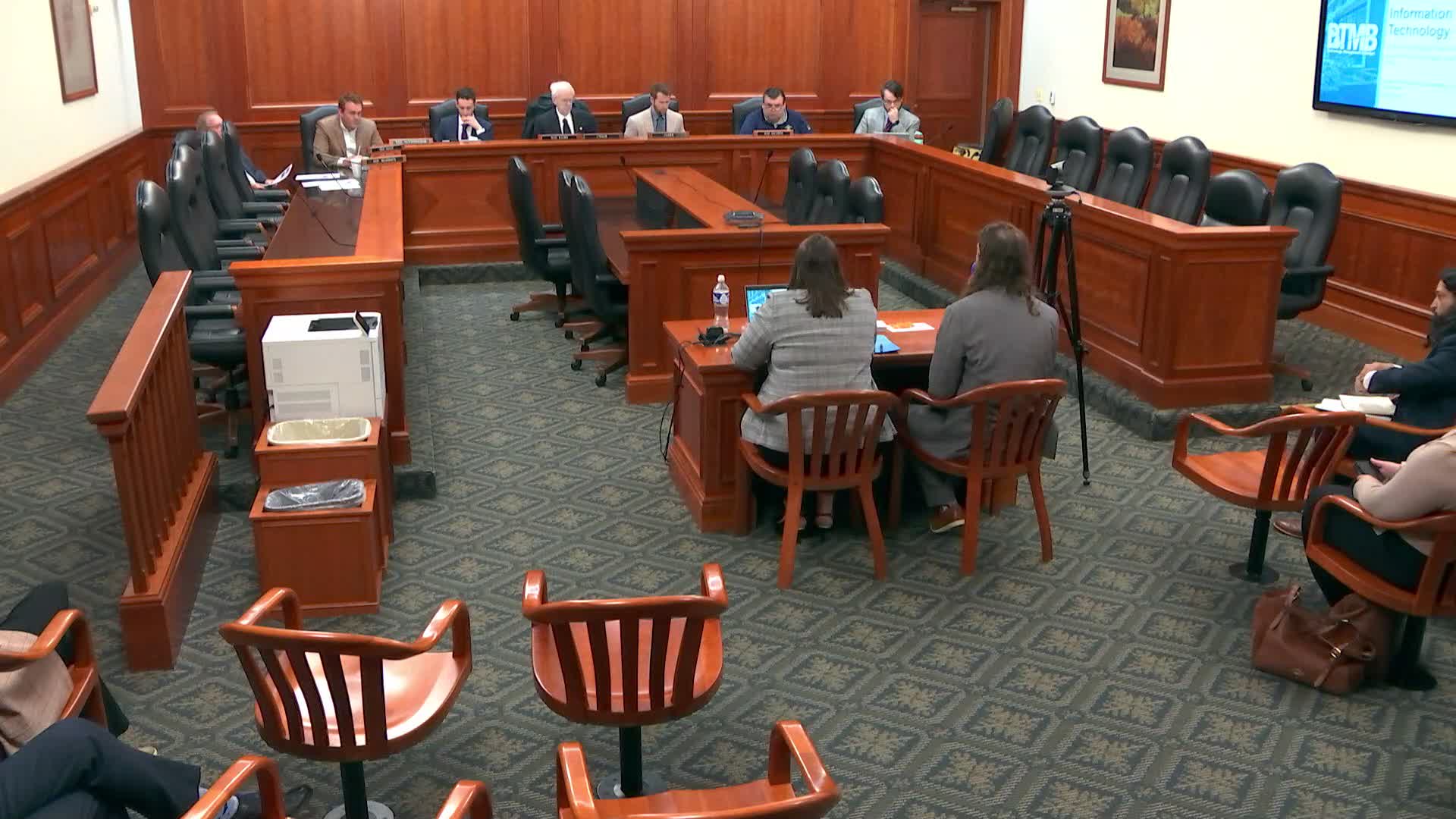
Summary
The Department of Technology, Management & Budget (DTMB) told the House Appropriations Subcommittee on General Government that Michigan’s consolidated IT model is designed to “help, connect and solve” state technology needs and to reduce cost and risk through shared services and centralized procurement.
The Department of Technology, Management & Budget (DTMB) told the House Appropriations Subcommittee on General Government that Michigan’s consolidated IT model is designed to “help, connect and solve” state technology needs and to reduce cost and risk through shared services and centralized procurement.
DTMB Chief Information Officer Laura Clark briefed the subcommittee on the department’s IT life cycle, cybersecurity posture, procurement alternatives and modernization efforts. Chief Procurement Officer Jared Ambrosier described solicitation types DTMB uses to test and buy technology, including “request for solution” solicitations and competitive proofs of concept.
The presentation outlined key benefits of consolidation, including bulk licensing, a single enterprise identity and access management system, shared infrastructure and centralized incident defenses. Clark said the consolidated model supports local governments as well: “Our shared services model also can support local governments,” she said, citing the Michigan Public Safety Communication System (MPSCS), which currently includes 73 counties and connects local, state, federal and tribal public safety responders.
Why it matters: State IT systems underpin many services Michiganders use daily. Centralized management can reduce duplication, standardize security controls and give smaller local governments access to enterprise systems. At the same hearing, lawmakers pressed DTMB for more detail on procurement practices, contract length and vendor accountability.
What DTMB presented
- Consolidation and scale: Clark described consolidation of state IT under DTMB (initially consolidated by executive order under Gov. John Engler and later codified in the state’s management and budget framework) and summarized the department’s inventory: more than 58,000 desktops, laptops and mobile devices, roughly 4,100 servers and about 1,700 business applications supported across state agencies.
- Lifecycle and governance: DTMB presented a lifecycle model that begins with an agency identifying a need, completing a readiness form, performing market research, and moving into procurement and implementation with DTMB technical staff, agency subject-matter experts and DTMB’s Enterprise Project and Portfolio Management Office (EPMO). Clark said projects typically move through initiation, planning, execution and closeout, and that benefits measurement can take two to five years.
- Development and security practices: Clark said DTMB is moving from monolithic application architectures to modular, containerized services using a DevSecOps approach and integrating security scans earlier in development. “We build these components, we connect these components together,” she said, describing modular development as a way to scale and reuse code.
- Cloud strategy: Under a “Cloud Smart” approach DTMB uses a multi‑cloud strategy (private cloud plus multiple public cloud tenants) to avoid vendor lock-in and match hosting characteristics to application needs.
- Human-centered design and MiLogin: Clark described DTMB’s human‑centered design work beginning in 2021, including a MiLogin usability assessment that reduced abandonment and help‑desk calls; DTMB has created a prequalified vendor pool and an internal UX/UI classification to staff design work.
- Procurement approaches: Ambrosier described alternative solicitation methods aimed at reducing procurement risk: “The request for solution, or RFS, is an objective focused solution that uses problem statements and high level requirements to allow bidders to present solutions that they believe meet our needs the best,” he said. He also described the competitive proof of concept as a “try before you buy” pilot that evaluates vendor solutions in two stages before a full contract is negotiated.
Awards and external guidance
DTMB noted outside recognition and guidance it uses: Michigan received repeated high grades from the Center for Digital Government in recent years and has been recognized by procurement and CIO organizations. DTMB also said it looks to recommendations from organizations such as 18F and the U.S. Digital Response when those recommendations align with state needs and practices.
Legislative questions and concerns
Lawmakers asked detailed questions about procurement and vendor management, and requested follow-ups for figures DTMB did not have at the hearing.
- Contract length and modular contracting: Multiple representatives pressed DTMB about limiting long, large-dollar contracts and increasing shorter, modular procurements. Clark said DTMB “right sizes” contract length to the purchase; some enterprise systems, she said, cannot be procured in short modular increments, and certain large investments may require multiyear contracts.
- Vendor performance and transparency: Representative Snyder criticized a separate Department of State vendor system (for personal financial disclosure and lobbyist reporting), saying some users could not log in before a reporting deadline and calling the failure “the most embarrassing thing I’ve ever seen in state government when it comes to transparency.” (Representative Snyder raised the remark during the committee’s questions to DTMB.) DTMB staff said the State of Michigan owns the contract for that system but identified it as a vendor‑hosted, vendor‑supported solution.
- UIA modernized system status: In response to a question about the Unemployment Insurance Agency modernization, Clark said DTMB is in system integration testing for UIA’s phase 1 and expects that phase 1 “is on track to be released in December.” The vendor named in the hearing for the UIA project was Deloitte.
- Data requests: Representatives asked for counts DTMB did not have on hand: the number of unused software licenses, the number of MiDeal (local/educational) members and purchasing totals already cited ($120,000,000 in FY24 purchases through DTMB IT contracts), and the number of state-issued purchase cards. DTMB said it would follow up with the committee.
Decisions and next steps
The hearing was a briefing and question period; no policy or procurement actions were voted on at the meeting. The subcommittee approved routine minutes and excused absent members by unanimous consent.
The presentation closed with DTMB staff available for follow-up questions; lawmakers requested additional data on contract modularity, maturity of DevSecOps training and counts of licenses/credit cards.