Get Full Government Meeting Transcripts, Videos, & Alerts Forever!
Get email alerts on the Beef Production Processing topic
No spam. Unsubscribe anytime.
Lawmakers press MDARD on Michigans low beef production, call for more processing and TB protections
Summary
Representatives pressed Michigan Department of Agriculture and Rural Development leadership about the states 39th-place ranking in beef production, gaps in processing capacity, and what the department can do to incentivize producers and protect split-state TB status.
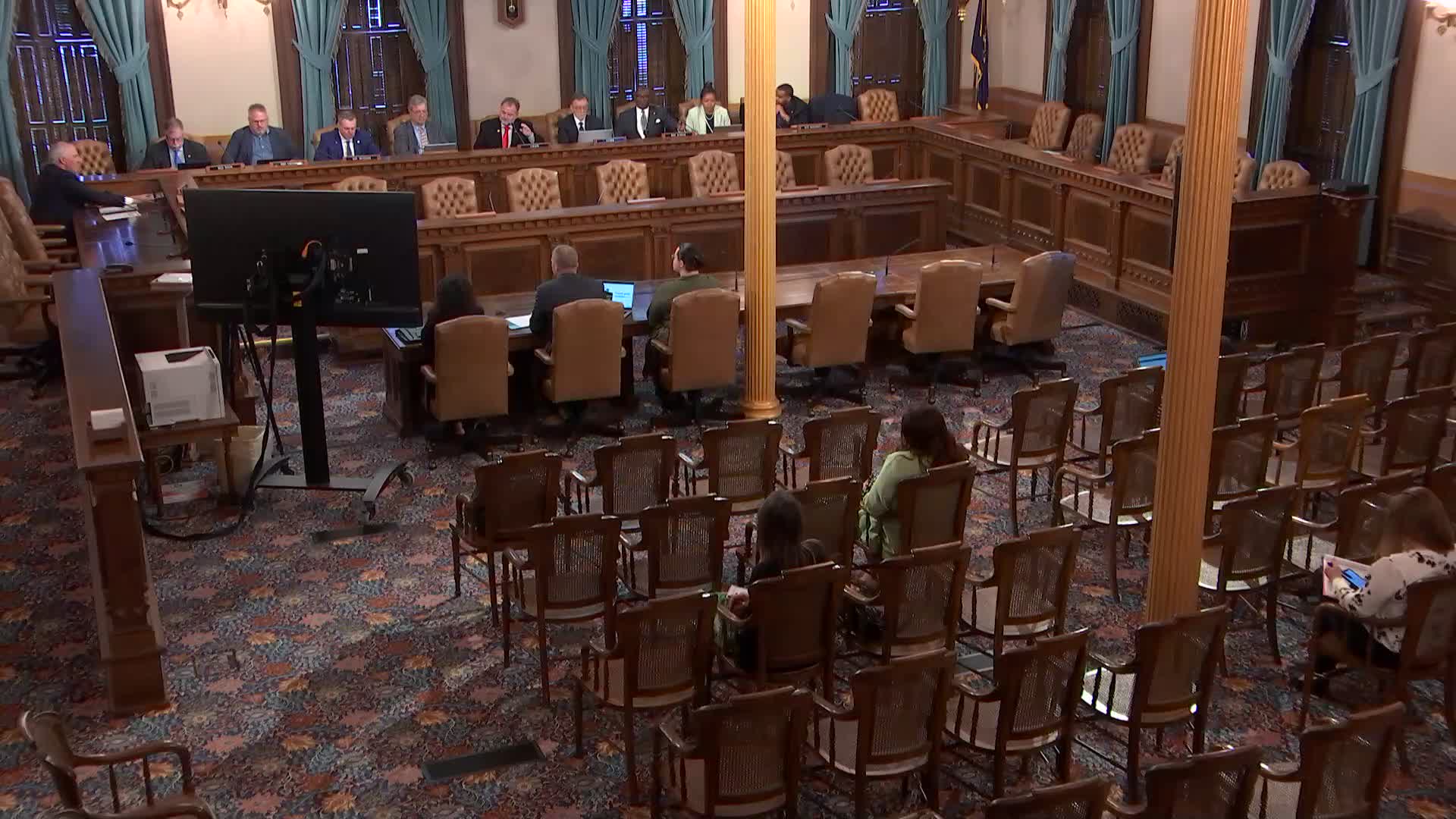
Representatives on the House Appropriations Subcommittee on Agriculture and Rural Development and Natural Resources questioned Michigan Department of Agriculture and Rural Development officials about the state’s relatively low beef inventory and limited processing capacity, and asked what the department can do to encourage expansion and protect market access.
Representative DeSana cited state statistics during questioning: “Michigan is 39th in beef production … at 96,000 cows. Indiana at 185,000,” she said, asking why Michigan lags peer states and how state policy can encourage producers and processing infrastructure.
Why it matters: limited processing capacity and disease-control status affect producers’ ability to scale operations and sell product into broader markets; expanding the beef sector could increase local food supply and farm viability.
MDARD Director Tim Boring acknowledged structural constraints and pointed to several priorities rather than a single fix. He emphasized maintaining Michigan’s split-state status on bovine tuberculosis as a precondition for some market access while also noting the need for increased processing capacity, infrastructure investments (for example fencing and herd management tied to TB mitigation) and distribution strategies to get product to retail.
Boring urged looking beyond acreage increases to higher per-acre value: “If the only way that you grow a farm is adding more acres, that’s a recipe for fewer and fewer farms over time. Get more value out of the acres that we have,” he said, advocating for livestock integration onto row-crop operations and for support to help with fencing and technical expertise.
Committee members and staff discussed a range of approaches legislators could explore: incentives for processors, grants or technical assistance to reduce startup costs for small processors, targeted investments to preserve disease-status protections, and programs to help producers access retail markets (including freezer-beef and consignment retail models).
Representative DeSana mentioned a proposed Michigan meat inspection program she has discussed; no formal action was taken at the hearing. MDARD described existing federal-state relationships around inspection and suggested state-level strategies to increase processing and market access while coordinating with USDA where required.
Discussion vs. decision: the exchange was exploratory and policy-oriented. No motions or regulatory changes were proposed or adopted during the session; legislators requested follow-up engagement with MDARD staff on incentives and processing capacity options.
Next steps: MDARD offered to participate in district roundtables to hear producer concerns and to work with legislators on potential incentive or infrastructure proposals; legislative liaison Mikaela Heffernan was identified to coordinate follow-up.