Get Full Government Meeting Transcripts, Videos, & Alerts Forever!
Get email alerts on the Forest Management topic
No spam. Unsubscribe anytime.
Timber leaders tell appropriations panel ice storm wiped red pine stands; ask state help with replanting, biomass markets and limits on solar projects
Summary
Representatives of the Michigan Association of Timbermen told the House Appropriations subcommittee that a recent ice storm devastated red pine stands across the state, creating urgent needs for seed sources, replanting funding and biomass demand; members urged protecting productive forest land from proposed state solar projects.
Representatives of the Michigan Association of Timbermen told the House Appropriations Subcommittee on Agriculture, Rural Development and Natural Resources that a recent ice storm damaged large swaths of red pine across state and private lands and that the industry needs state help to salvage, replant and manage the resulting debris.
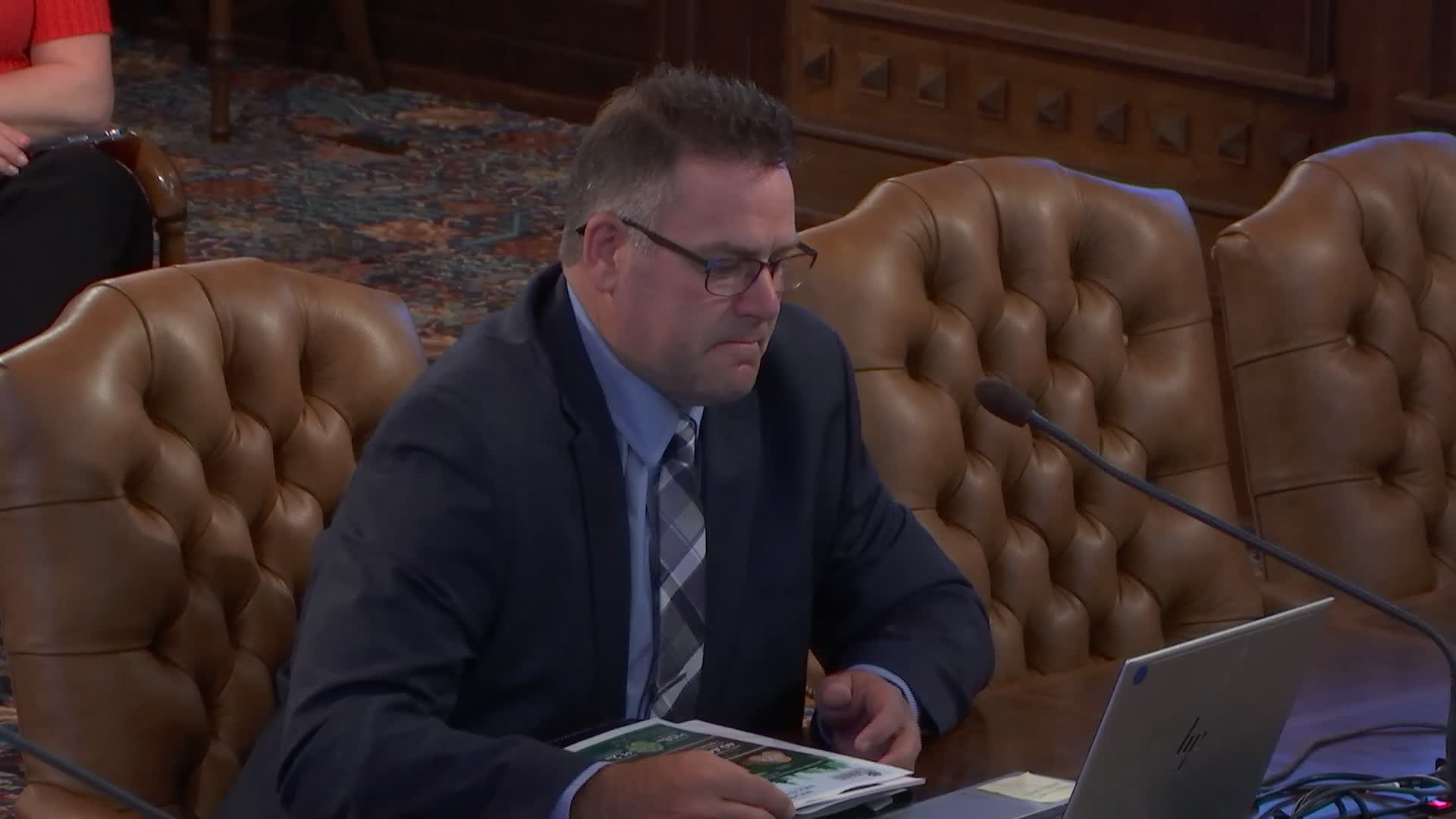
At a committee hearing, Jim Mader, Government Affairs Chairman for the Michigan Association of Timbermen, said the association represents logging, trucking, sawmill and manufacturing businesses statewide and cited state figures showing the sector directly employs about 40,000 people, supports roughly 90,000 more and generates about $12 billion annually. He told lawmakers the immediate priority is salvaging red pine before insect and bacterial stain reduce its value and securing an adequate seed base to replant long‑rotation stands.
Mader said red pine plantations do not regenerate on their own and typically require replanting and multiple decades of management: "your first thinning on a red pine plantation is, usually around 30 years and then it's subsequently managed in rotational basis after that," he said. Joe Doyle, past president of the association, urged faster replanting capacity and told the committee that Michigan's Department of Natural Resources has historically replanted about 4,000 acres a year and that the state may need to increase that to 7,000–8,000 acres annually for an extended period to restore lost red pine stands.
Committee members and presenters discussed how the damage affects mills and communities. Mader and Doyle warned that the loss of a long‑term, rotational red pine supply could shrink outlets for loggers, harm major consuming mills and damage the local economies that depend on them. Doyle said two major red pine consuming mills — one near McBain and a Potlatch facility in Michigan’s Upper Peninsula — account for large shares of the state's red pine demand and could face supply shortfalls if replanting does not occur at scale.
Speakers pressed the committee on markets and debris removal. The association asked the state to treat biomass‑power facilities as a critical outlet for tops and nonmerchantable material needed to clear sites for replanting and to reduce wildfire fuel. The witnesses listed several biomass plants and locations (Cadillac, McBain, Flint/Genesee and Manistee) and said some were not operating at full capacity; they said bringing plants to higher output would help absorb salvage material and reduce fire risk.
Doyle read a passage describing current DNR guidance for timber sales affected by storm damage, saying initial assessment of sales under contract remains the purchaser's responsibility but that the department is offering a single free extension for contractors continuing harvest on storm‑damaged sales and for purchasers of new salvage sales. He said the DNR is making case‑by‑case adjustments on badly damaged contracts.
The association also opposed converting productive forest land on state property to utility‑scale solar. Chair Borden told the committee that he had discussed the issue with the Department of Natural Resources and said, "they've agreed to halt all proposed solar projects on state forest across the entire state" and that going forward contractors would be instructed to "go to the legislature first and get our approval before they even come back to the DNR." The statement was presented to the committee as a DNR commitment to consult the Legislature before pursuing solar on state forest land.
Lawmakers asked about federal trade and tariff impacts, the size of the salvageable market, mechanisms for working with private landowners, and the need for workforce development and industry capital. The association proposed creating an industry development fund to provide low‑interest grants or loans to help small operators modernize equipment and stay competitive.
No formal committee action on funding or legislation was taken at the hearing; members thanked the presenters and moved to adjourn after the testimony and questions.