Get Full Government Meeting Transcripts, Videos, & Alerts Forever!
Get email alerts on the Coastal Redevelopment topic
No spam. Unsubscribe anytime.
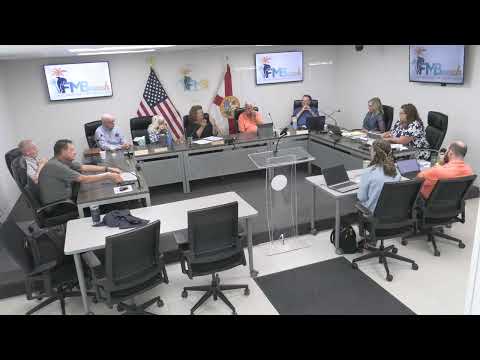
LPA backs Estero Island Beach Club rebuild, citing economic benefits and public access improvements
Summary
The Fort Myers Beach LPA unanimously recommended approval of a CPD rezoning to rebuild the Estero Island Beach Club (1836 Estero Boulevard) to the pre‑storm 75‑unit timeshare configuration with a revised five‑story design, added public beach access improvements and on‑site parking under the building.
The Local Planning Agency on May 13 unanimously recommended that the Town Council approve a Commercial Planned Development (CPD) allowing reconstruction of the Estero Island Beach Club (EIBC) at 1836 Estero Boulevard to the pre‑Hurricane Ian total of 75 timeshare units.
The applicant resubmitted a redesigned project that reduced the maximum mass compared with a prior proposal and kept the FAR at the CPD standard of 1.2 by putting parking under the building. The LPA recommendation approves four deviations the applicant requested, most prominently an 18‑foot increase above the baseline 30‑foot allowable height measured from the design flood elevation in certain portions of the site to allow a five‑story configuration with rooftop amenities.
Nut graf: Applicant and staff described multiple public benefits tied to the project: replacement of the original 75 units, improved beach access amenities including a new MobiMat for beach access, a new sidewalk and parallel parking on Miramar Street to support public access, repaired pool and decking landward of the Coastal Construction Control Line (CCCL), and an economic analysis estimating annual local spending by EIBC visitors.
Staff and applicant presentations
Jason Smalley, senior planner for the town, summarized the application and staff analysis and noted that the redevelopment would reproduce the pre‑storm unit count and that staff concluded the proposal met the applicable CPD criteria with the recommended conditions. The applicant team said the proposal reduces tower massing from earlier iterations, maintains the 75‑unit density, and includes a menu of public benefits intended to be conveyed to the town.
For the applicant, Amy Sarris Tobo said, "We are requesting to rebuild the 75 multifamily timeshare units that existed prior to Hurricane Ian." The applicant’s planner, Fred Dralwick, added that the redesign lowered the highest portions of the project and that the plan includes enhanced landscaping, a 15‑foot setback along Estero Boulevard, and active rooftop terraces.
Public benefits, parking and height
The applicant offered several public improvements as part of the CPD package: construction of a sidewalk and parallel public parking spaces on Miramar Street (to be built by the applicant and conveyed to the town for long‑term maintenance), replacement of a MobiMat beach access mat, re‑surfacing a previously hard‑packed section of Miramar, and refurbishment of the pool deck and associated amenities landward of the CCCL.
On parking and FAR, staff and the applicant showed the design accommodates 91 parking spaces under the building (more than the pre‑storm count) using the downtown‑district parking discount. The key deviation is height: portions of the building will rise to roughly 48 feet above the design flood elevation (about 18 feet above the 30‑foot standard), which the applicant justified to achieve modern unit sizes and rooftop amenity space while keeping unit count unchanged.
Economic impact and ownership process
The applicant presented an economic analysis estimating the rebuilt timeshare would host about 11,100 visitor stays annually, generating roughly $11 million in local expenditures and producing approximately $620,000 in annual sales tax revenue for local governments. Jim Murley, president of the EIBC board, described the property’s long ownership history and said the board must return plans to owners for approval and secure financing after any council approval; he asked for the LPA’s support to allow the ownership process to proceed.
Vote and next steps
The LPA motion recommended approval with staff conditions, including final architectural details and coordination on public improvements and signage for safe pedestrian crossing near the site. The motion carried unanimously (recorded votes: Jim — Aye; Don — Aye; Doug — Aye; Jane — Aye; John — Aye; Anita (chair) — Aye). If the Town Council approves the ordinance, the applicant must still obtain required development orders, building permits and state approvals before construction.
Ending: The applicant said it will present the proposal and financing plan to timeshare owners if council approval is obtained; the board intends to move quickly to an owner vote and to follow the permitting and construction schedule if owners approve financing.