Get Full Government Meeting Transcripts, Videos, & Alerts Forever!
Get email alerts on the Property Conveyance topic
No spam. Unsubscribe anytime.
Committee reviews bill to transfer Standish correctional facility property for public sale
Summary
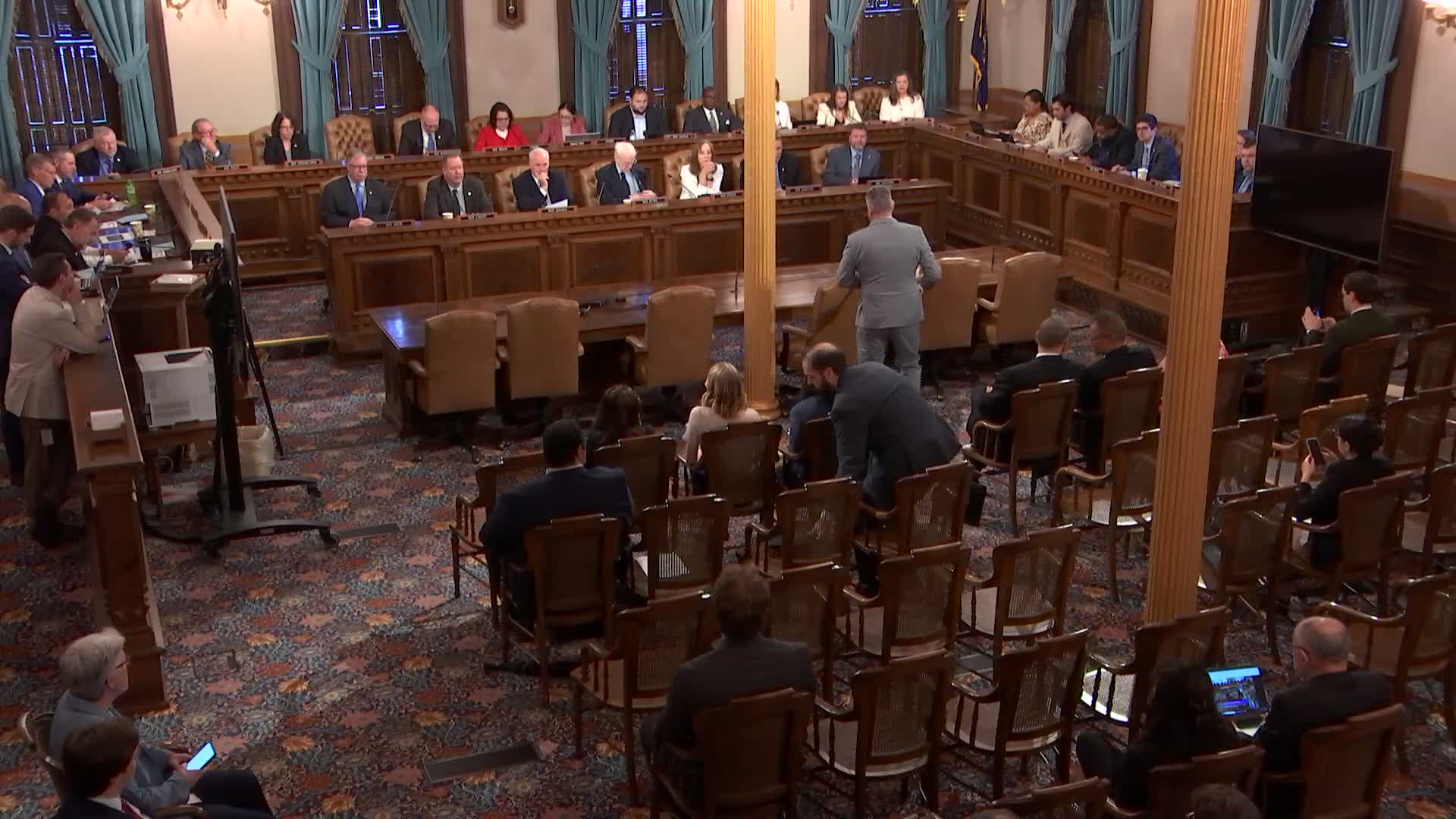
The House Appropriations Committee heard testimony on House Bill 4011, which would transfer state-owned land that contains the Standish Maximum Correctional Facility in Arenac County from the Michigan Department of Corrections to the Department of Technology, Management and Budget for public sale.
The House Appropriations Committee heard testimony on House Bill 4011, which would transfer state-owned land that contains the Standish Maximum Correctional Facility in Arenac County from the Michigan Department of Corrections to the Department of Technology, Management and Budget for the purpose of selling the property.
Sponsor Representative Hoadley told the committee the facility, which opened in 1990 and was occupied for 19 years until October 2009, has sat empty and “now sits empty and deserted.” He described the complex as having “5, 88 bed housing units and another unit comprising a 64 beds,” along with administrative and recreational buildings, and said the site has experienced break-ins while vacant. “Michigan is facing a mental health epidemic,” Hoadley said, and he advocated repurposing the property to meet local needs.
The bill is limited to declaring the property surplus and transferring ownership to DTMB so the agency can conduct a real-estate process. Kyle Kaminski of the Michigan Department of Corrections told the panel the department supports the conveyance, saying the sponsor’s account and the department’s review led to the conclusion that “declaring the property surplus and moving forward with conveyance was, certainly in the best interest of the local community.”
Neil D’Souza of the Department of Technology, Management and Budget described the state’s sale process: once an agency declares a property surplus, DTMB runs a full real-estate process that includes contacting other agencies, obtaining an appraisal after the legislation passes, and selling to the best offer. “The state is obligated to take the best offer,” D’Souza said. He also said proceeds from a sale would be deposited into the state’s general fund.
Committee members asked about ongoing maintenance and costs. Kaminski said Standish is maintained on a minimal basis by staff borrowed from the Saginaw Correctional Facility who mow and perform emergent repairs; there is not a dedicated, ongoing annual budget for Standish, though the department has made intermittent investments such as roof repairs. When pressed for dollar amounts, Kaminski said exact totals of periodic repairs were “not specified” in testimony but offered to follow up with details.
Committee members also asked about community interest and acreage. Hoadley said he and local stakeholders have sought potential buyers and hosted a tour for local mental-health, hospital and law-enforcement officials to spur interest but cautioned there are “no guarantees” about what a private buyer would do. On acreage, a committee member initially heard the parcel described as 39 acres; later in the hearing a committee speaker clarified that “this parcel itself is actually 78 acres.”
No committee vote on the bill was held during the hearing. Committee members requested follow-up information from DTMB about the surplus process and asked DTMB to provide a list of vacant or partially vacant state properties for the committee’s review. The bill remains in the committee stage.