Get Full Government Meeting Transcripts, Videos, & Alerts Forever!
Get email alerts on the Contaminated Sites Community Engagement topic
No spam. Unsubscribe anytime.
State auditor: most contaminated sites in Washington lack required community engagement
Summary
The Office of the Washington State Auditor told the Joint Legislative Audit and Review Committee that the Department of Ecology conducts or supervises community engagement at only a small share of the state's contaminated sites, creating gaps in public and tribal outreach.
The Office of the Washington State Auditor told the Joint Legislative Audit and Review Committee that the Department of Ecology conducts or supervises community engagement at only a small share of the state's contaminated sites, creating gaps in public and tribal outreach.
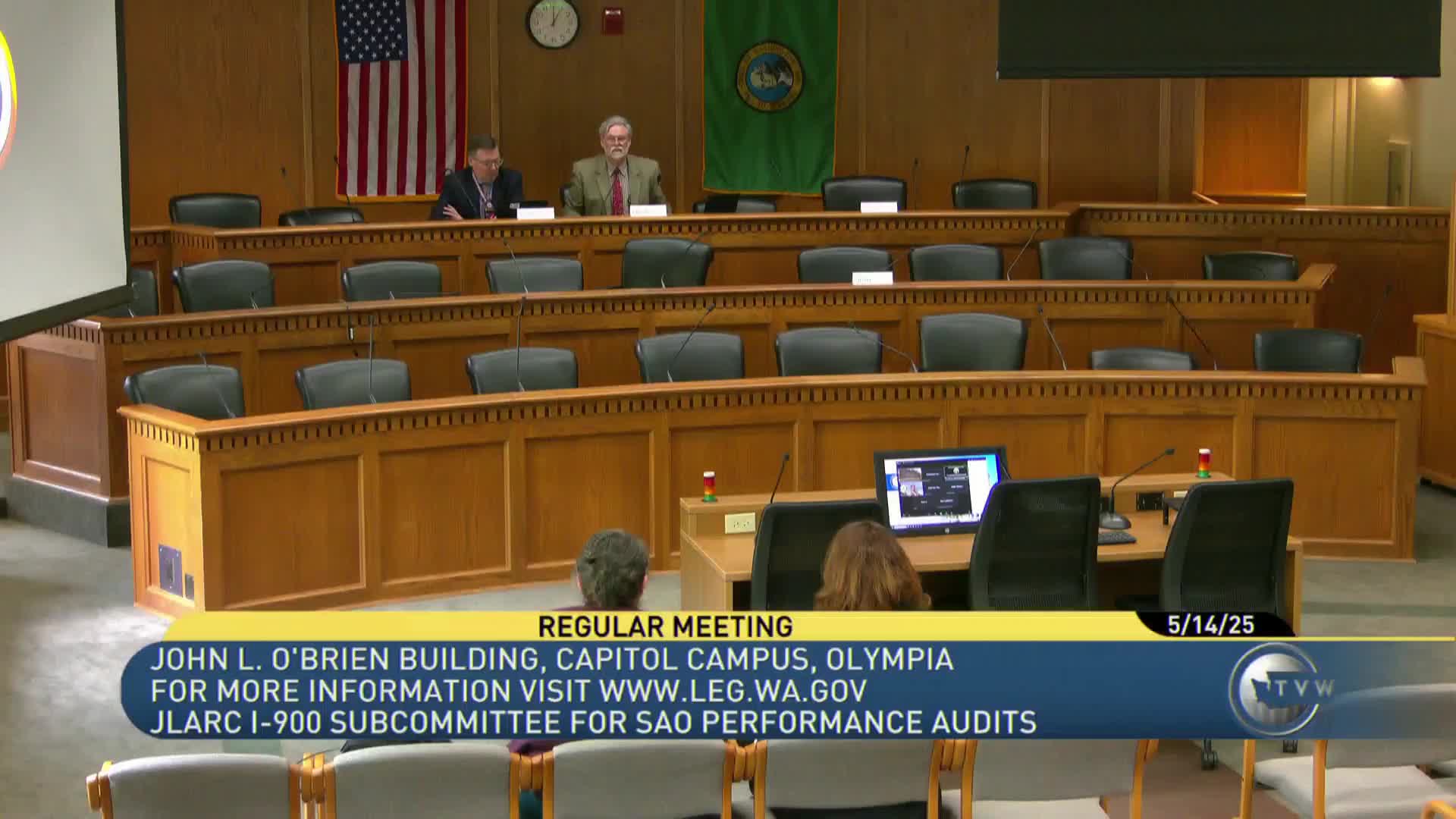
"Ecology manages only 8% of Washington's contaminated sites," said Marissa Sanchez Reed, a staff auditor who worked on the review, during the JLARC I‑900 subcommittee hearing. The auditors reported that as of August 2024, Ecology conducted or supervised 493 active sites listed on the agency's website while the majority of sites are managed by independent third parties.
The audit said the Model Toxics Control Act (MTCA) and its regulations set community‑engagement and tribal‑consultation requirements for sites Ecology conducts or supervises, but those requirements generally do not apply to independent or voluntary cleanups run by private parties. "Independent cleanups are not subject to the community engagement requirements that apply to ecology conducted or supervised sites," the auditors wrote.
Why it matters: contaminated sites often sit near vulnerable populations and can affect soil, water and air. The audit noted that when third parties manage cleanups, Ecology typically does not oversee their community engagement activities and the agency lacks consistent information about outreach at those sites. The auditors found 212 third‑party‑managed sites ranked as high or moderate‑high risk and 125 planless sites ranked high or moderate‑high risk; the report flagged 1,598 sites as not currently managed by any party.
The auditors evaluated a sample of Ecology‑managed sites and found the agency generally met legal requirements at those sites but was inconsistent on leading practices. Carolyn Cato, who led the audit, said Ecology "met most legal requirements for community engagement activities," but the office identified a recurring shortfall: Ecology lacks a systematic process to evaluate outreach effectiveness. Only two of six audited sites had conducted lessons‑learned evaluations, the auditors said.
Tribal engagement was a focal point. The audit found mixed responses from tribal representatives: some said Ecology's level of engagement met their needs while others sought earlier or more tailored outreach. The audit recommended clarifying tribal engagement expectations and implementing a tribal engagement plan template that identifies affected tribes and communication approaches.
Auditors also flagged inconsistent collaboration between Ecology and the Department of Health. "Health's involvement depends entirely on whether an Ecology site manager knows to contact its staff," the auditors wrote, and they recommended joint training and clearer guidance on when the agencies should coordinate.
Reaction from agencies: Heather Bartlett, deputy director at the Department of Ecology, told the committee the agency is "proud of the work" it has done and agrees it can improve. Bartlett said Ecology will "develop a plan that annually identifies the highest risk sites and the resources needed to address them, including community engagement," and that the agency has already begun actions such as new guidance for staff and a public subscription system to receive automated updates for site status changes.
Lauren Jenks, assistant secretary for environmental public health at the Department of Health, said the department values the partnership with Ecology and supported efforts to document and train staff on collaboration protocols.
Public comment: Katie Burns, Toxics and Stormwater Policy Senior Manager at Washington Conservation Action, praised the audit and urged funding for implementation. "People deserve to know if they're living near a toxic site, but most do not," Burns said, and called for fully funding MTCA to allow Ecology to expand outreach beyond traditional meetings.
What the auditors recommended: require or clarify community and tribal engagement expectations for third‑party cleanups at higher‑risk sites; establish a proactive plan to evaluate and prioritize planless or high‑risk sites; implement consistent lessons‑learned evaluations of outreach; and improve Ecology–Health coordination through training and clearer guidance.
What was not decided: JLARC received the audit and questioned Ecology and Health, but there were no binding votes or new statutory changes at the hearing. Committee members asked follow‑up questions about Ecology's authority to require public involvement from liable parties and how sites are scored and prioritized; auditors and Ecology said those topics may require further work and resources.
Looking ahead: Ecology told the committee some recommendations will require additional funding or staff to implement fully. The audit authors said their findings could prompt follow‑up reviews; committee members suggested the audit opened a larger conversation about transparency, oversight and the meaningfulness of public engagement across thousands of contaminated sites in Washington.