Get Full Government Meeting Transcripts, Videos, & Alerts Forever!
Get email alerts on the Juvenile Rehabilitation topic
No spam. Unsubscribe anytime.
JLARC begins study of juvenile rehabilitation: safety, security and program access among proposed questions
Summary
JLARC staff presented proposed study questions May 14 to review safety and security practices, staffing, and program access in the Department of Children, Youth and Families’ juvenile rehabilitation system; preliminary report set for July 2026 and proposed final report in September 2026.
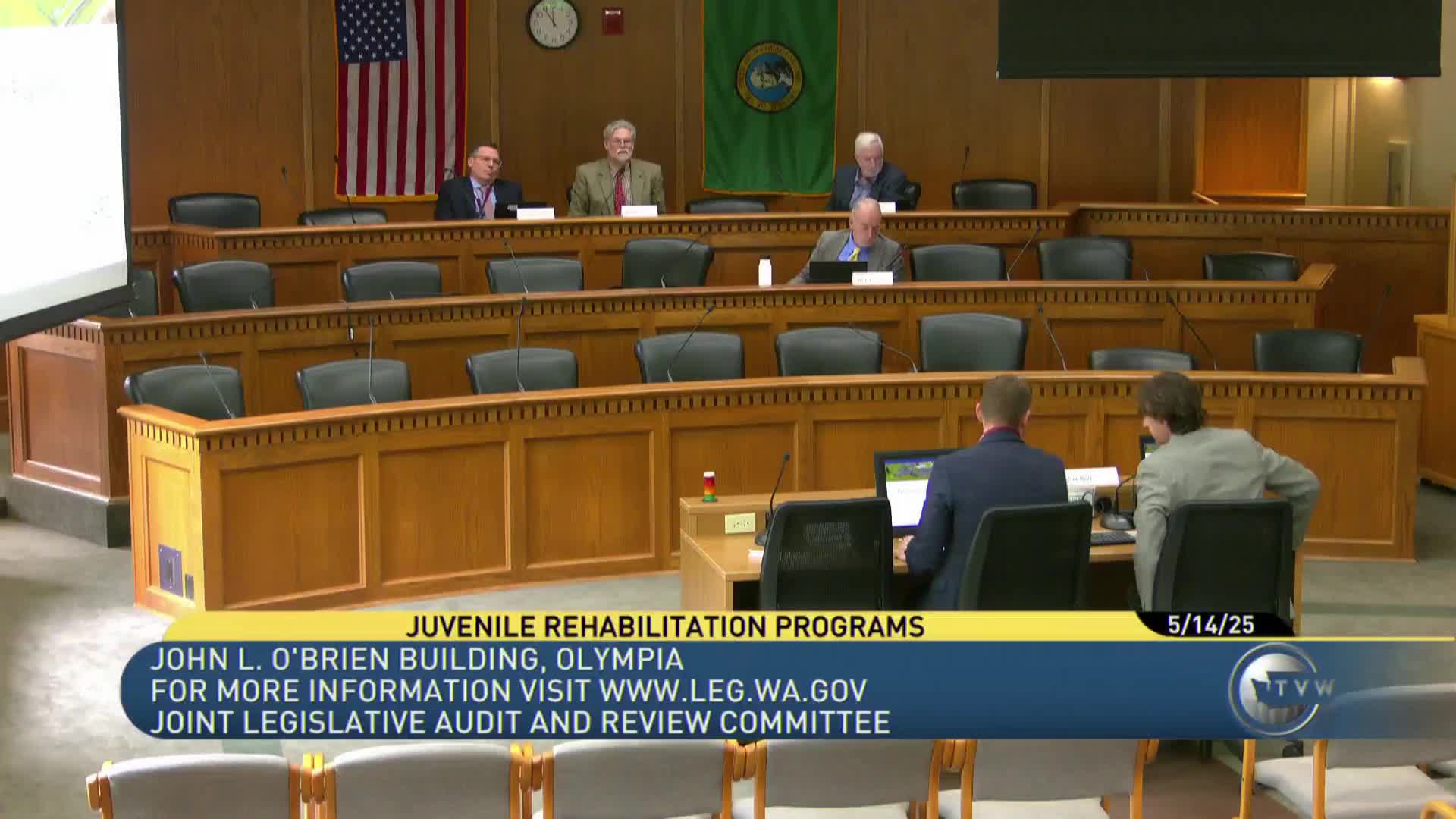
The Joint Legislative Audit and Review Committee on May 14 opened a new study of juvenile rehabilitation programs run by the Department of Children, Youth and Families, presenting proposed study questions that focus on safety and security at facilities and on access to treatment, education and reentry services.
Casey Radestitz and Zane Kelly, JLARC staff assigned to the study, said the 2024 legislature directed JLARC to review program access, how DCYF ensures the safety and security of youth and staff, staffing challenges including recruitment and training, and how Washington compares to other states and best practices.
JLARC staff described the scope and timetable: juvenile rehabilitation serves individuals through age 25; DCYF operates two secure facilities, eight community facilities and community transition services (figures rounded to year‑end 2024). Study questions will examine factors that affect safety and security (facility design, contraband control, staffing levels, and risk assessment), DCYF’s ability to plan for changes in the population and staffing needs, whether security measures are applied equitably and effectively, and evidence‑based availability of programs such as education, vocational training and behavioral health services.
JLARC plans to compare Washington’s practices to other states and recognized best practices and to return to the committee with a preliminary report in July 2026 and a proposed final report in September 2026. Committee members asked clarifying questions about the scope of education services and whether facility security reviews will include contraband control and escape prevention; JLARC staff said the study will address education services provided inside facilities and will examine facility characteristics related to security and contraband.
JLARC staff said the study is at an early stage and will refine methodologies as it proceeds.